
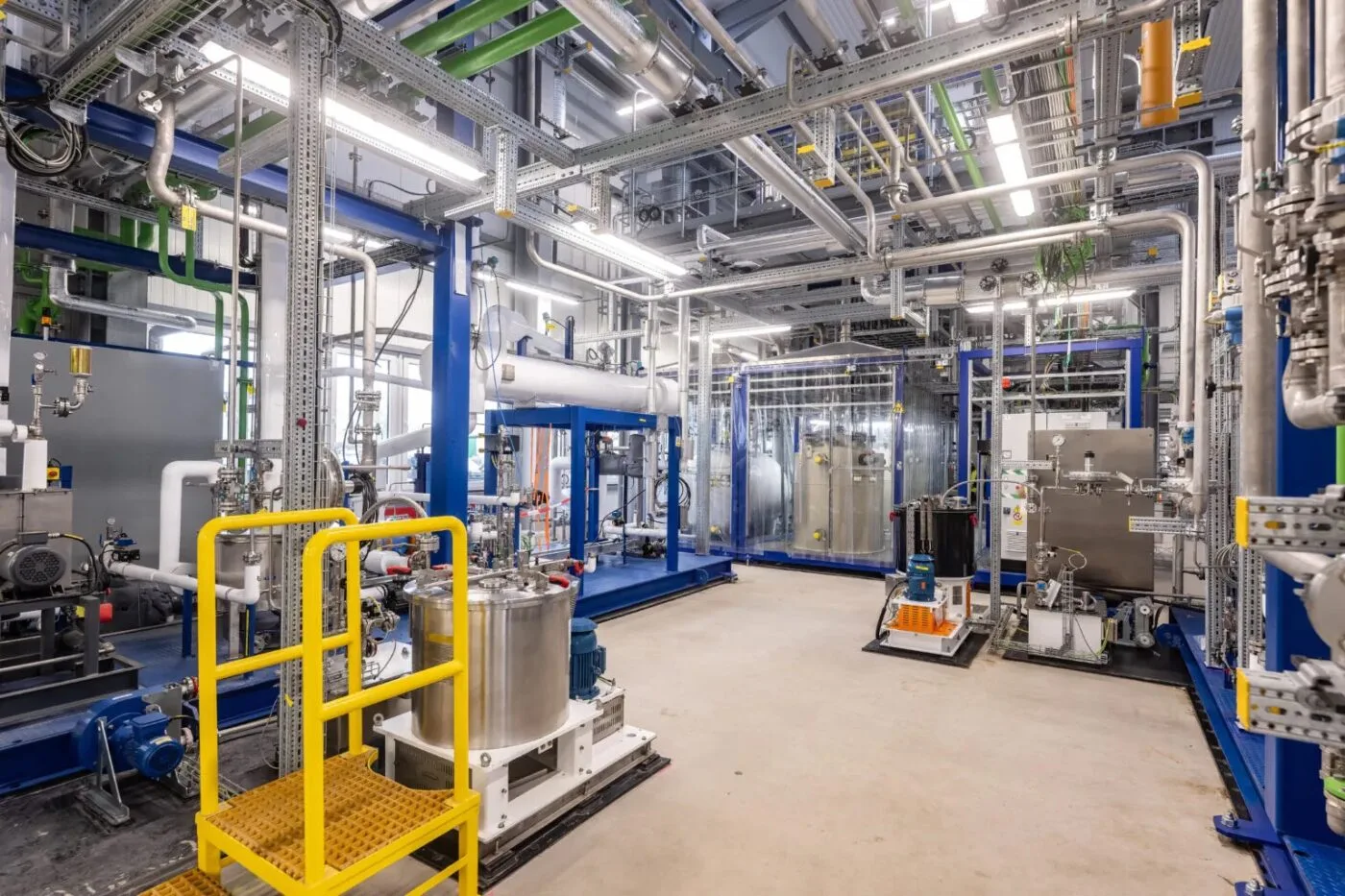
Vulcan Energy has received approval to build a commercial lithium processing plant in Frankfurt-Höchst, the German-Australian company said on Thursday, marking a key step in its plan to supply sustainable lithium to Europe’s battery and automotive sectors.
The Central Lithium Plant (CLP), as it is known, will process lithium chloride extracted from geothermal brine at Vulcan’s upstream facility in Landau into battery-grade lithium hydroxide monohydrate (LHM). In its initial phase, the plant is expected to produce up to 24,000 tonnes of LHM annually, a volume the company says is sufficient for around 500,000 electric vehicle batteries.
Vulcan said its geothermal and lithium licence areas in Germany’s Upper Rhine Valley represent Europe’s largest resource of this kind. Pilot-scale facilities in Landau and Höchst have already been in operation, with the company filtering lithium chloride from geothermal brine for the first time in April 2024 and producing battery-grade lithium hydroxide in November 2024. The company said capacity at the CLP could later be expanded beyond 24,000 tonnes per year.
“Securing the CLP permit is an important step in the development of a domestic lithium supply chain for Germany and the European Union,” said Cris Moreno, Managing Director and CEO of Vulcan Energy. “We are making substantial progress in our aim to establish a sustainable, domestic and cost-effective source of lithium for the European battery and automotive industries, supporting the EU’s goal of reducing critical raw material dependencies.”
Vulcan estimates total investment in the Landau and Höchst plants at €690 million. Of this, €103.6 million will be contributed by the German federal government and the states of Rhineland-Palatinate and Hesse, through the EU’s Temporary Crisis and Transition Framework programme. In March 2025, the Landau site was also selected as one of 47 strategic projects under the EU’s Critical Raw Materials Act.
To finalise project financing, Vulcan has revised existing supply agreements with its key customers, including LG Energy Solution, Umicore and Stellantis. LG will now receive 31,000 tonnes of LHM over six years, Umicore 23,000 tonnes over six years, and Stellantis 128,000 tonnes over ten years. Vulcan said the amendments spread supply more evenly among partners and align with the revised project timeline. Deliveries, originally scheduled to start in 2025, will now begin later.