
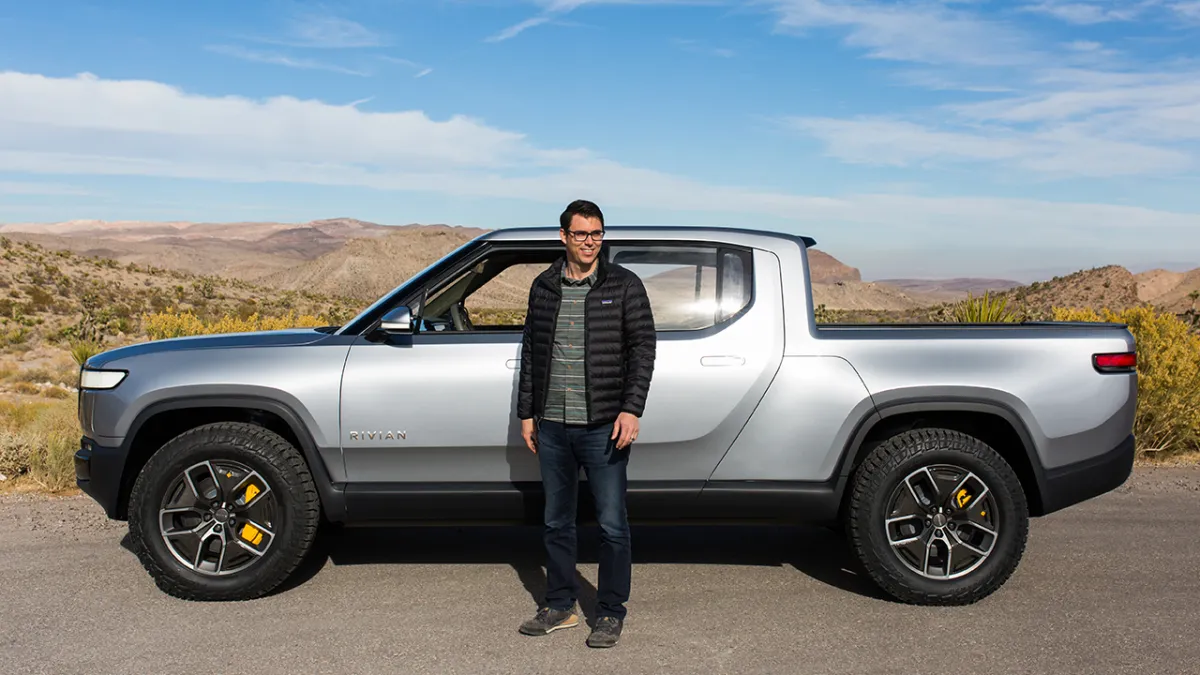
U.S. electric vehicle (EV) manufacturers should prioritize product and technology development over pricing in response to advances in China’s EV industry, Rivian founder and CEO RJ Scaringe said, highlighting the increasing sophistication of Chinese vehicles.
Speaking on the Plugged-In Podcast, Scaringe noted that while ultra-low-cost Chinese EVs are unlikely to reach U.S. consumers due to tariffs, safety regulations, and production costs, Western automakers should still pay attention to technological developments abroad.
“I think everyone should be planning for that and designing [their] technology stack around that,” Scaringe said. “What’s alarming, if you’re looking at the whole industry, is that the technology is much better. If I was an existing manufacturer, I’d get less hung up on the cost and more focused on ‘the cars are actually better.’”
Chinese EVs, according to industry observers, have made significant strides in infotainment, software updates, and vehicle architecture, often resembling consumer electronics more than traditional automotive systems. Many models can be developed rapidly, offer high-rate charging, and are regarded as solidly built, comparable to German luxury vehicles. Scaringe highlighted the Xiaomi SU7, a premium sedan integrated with the company’s device ecosystem, as a leading example of this trend.
Ford Motor CEO Jim Farley has similarly praised Chinese technology, describing China’s EV industry as “the most humbling thing I’ve ever seen,” while the automaker has unveiled plans for a new EV platform and production approach aimed at competing with Chinese firms.
Scaringe emphasized that any potential future U.S. presence of Chinese EVs would not replicate the extreme price advantages seen in China today. “One of two things will happen: Either we’ll put tariffs in place that make the cost equal, or we’ll allow Chinese manufacturers to build in the United States. But in both cases, the cost will be essentially equal,” he said.
He added that Chinese automakers’ cost advantage stems from factors such as lower labor expenses, cheaper capital, and government subsidies—benefits that largely disappear when vehicles are produced outside China. “There’s no magic sauce happening in China that’s allowing the cars to be built easier. You have a whole series of things that just lead to an overall lower cost base,” Scaringe said.
Scaringe concluded that the competitive edge for Chinese EVs in global markets will come from technology, not pricing. “Who knows? In the fullness of time, I do think Chinese manufacturers may start building here. And then they’ll win not on cost, because the cost will be the same, or very nearly the same. They’ll win on tech.”