
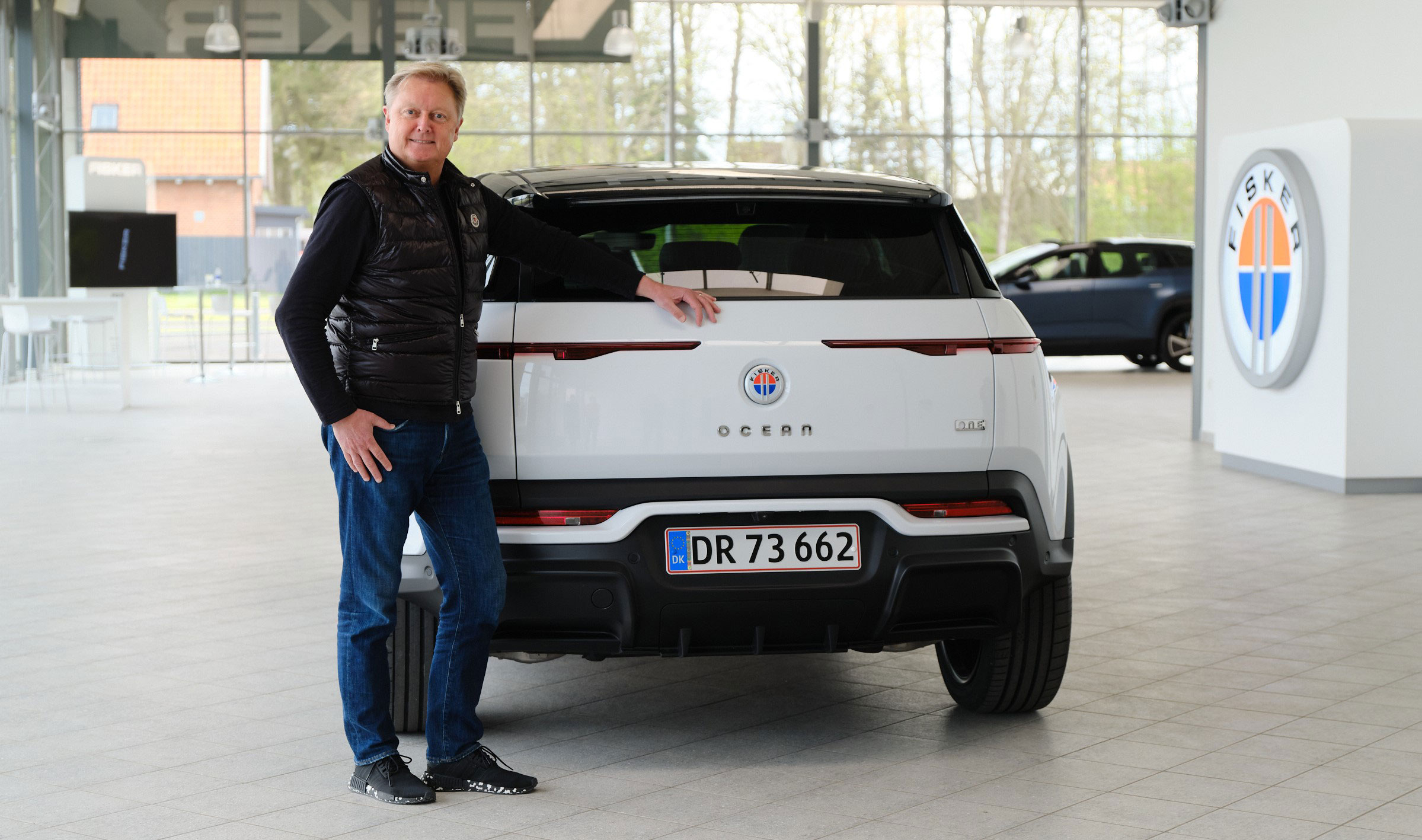
Henrik Fisker, founder of bankrupt electric vehicle startup Fisker Inc., and his wife Geeta quietly closed their private charitable foundation late last year, according to tax filings.
The Geeta & Henrik Fisker Foundation, created in 2021 to “incubate innovation in healthcare, education, sustainability, mobility, and all causes that help support the planet and improve and further the lives of people and animals,” filed its final return with the Internal Revenue Service in December 2024, six months after Fisker Inc. went bankrupt. The filing was made public earlier this year.
Over its three-year existence, the foundation awarded about $100,000 in grants, IRS records show. Fisker did not respond to messages seeking comment.
The closure highlights how the wave of EV startups that went public through special purpose acquisition company (SPAC) mergers in the early 2020s fueled enthusiasm beyond the automotive sector. Rivian, which went public via a traditional IPO in 2021, created its own foundation, initially endowed with 1% of its equity. While the value of that stake has declined from about $643 million to under $100 million, the Rivian Foundation continues to operate and has distributed more than $12 million in grants since last year.
The Fiskers launched their foundation shortly after Fisker Inc. merged with a SPAC. In December 2021, they transferred 229,000 shares of company stock valued at roughly $4 million, alongside about $5,000 in cash. By the time the foundation was publicly announced in February 2022, Fisker’s share price had fallen, reducing the stake’s value to about $2.7 million.
The foundation issued no grants in its first fiscal year. By September 2022, the stock had dropped further, leaving assets worth about $1.7 million. In its second year, the nonprofit awarded a $92,287 grant to a JP Morgan “Charitable Gift Fund” and received $9,500 in additional cash contributions from the Fiskers. By the end of September 2023, the stock’s value had fallen to about $1.4 million.
The final filing shows one more grant of $1,988 to the same JP Morgan fund before the nonprofit was wound down.
The Fiskers’ charitable activities extended beyond the foundation, though details remain limited. A 2022 press release stated they had supported “various causes, including those engaged in education and healthcare projects” since founding the EV company in 2016.
That release also noted the Fiskers donated around $1.9 million in company stock in December 2021 to a donor-advised fund (DAF) through their personal trust. SEC filings confirm the transfer, but the recipient was not disclosed. Unlike private foundations, DAFs are not required to make their grantmaking public, and donations of stock can generate immediate tax deductions even if the value of the stock later declines.
Source; TechCrunch