
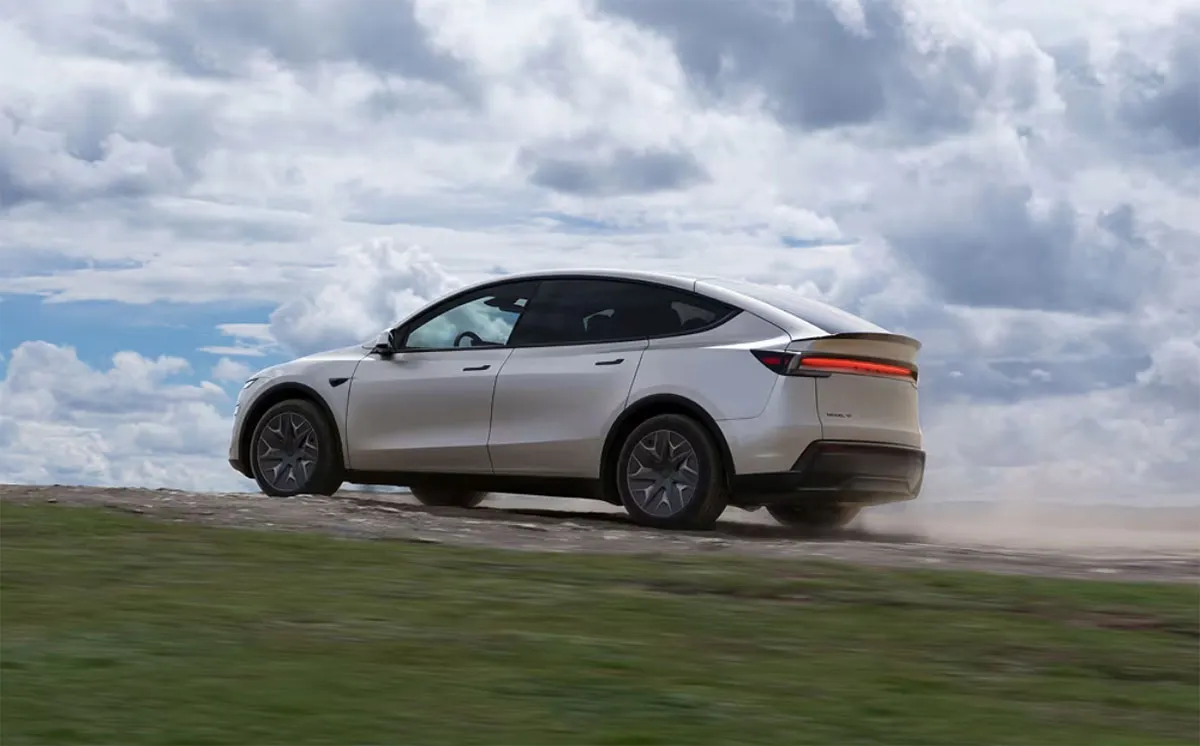
Tesla’s long-wheelbase Model Y L has passed Sweden’s moose test at 72 miles per hour (116 km/h), maintaining stability even with six adults onboard. The result highlights the SUV’s ability to combine extended size and family-friendly features with agile handling, according to test reports.
The moose test, developed in Sweden in the 1970s, simulates an emergency swerve to avoid an obstacle. Many SUVs struggle to complete the maneuver cleanly above 50 mph (80 km/h), with some risking rollover or striking cones. The Model Y L’s performance places it among a small group of large vehicles capable of executing the test at highway speeds.
Observers credited the result to Tesla’s adaptive suspension, responsive steering, and chassis tuning. While testers noted slightly more body roll than the standard Model Y, the system’s electronic dampers adjusted rapidly to keep the vehicle balanced, allowing it to recover quickly after each evasive move.
The Model Y L expands on Tesla’s best-selling crossover by adding a third row of seating, upgraded rear climate controls, an improved audio system, and variable dampers designed for comfort. The model is currently available only in China but is expected to reach Europe and Asia-Pacific markets via Giga Shanghai.
Production for North America is not planned until at least late 2026, with CEO Elon Musk suggesting it may not launch in the region if autonomous driving technology advances further.
Tesla’s other models — including the Model S, Model 3, and standard Model Y — have also cleared the moose test in past evaluations.