
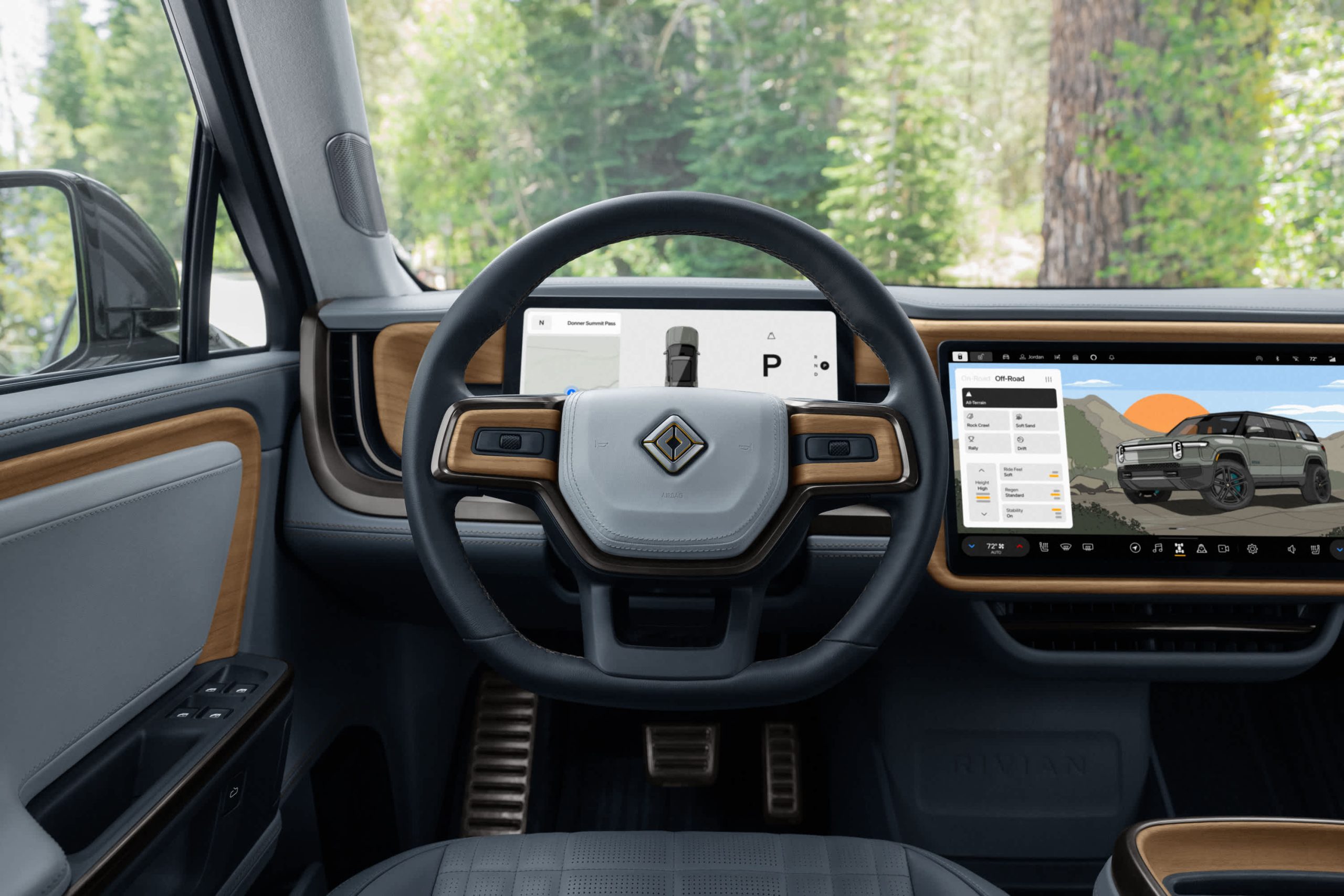
Rivian is advancing work on steer-by-wire technology, according to a recent job posting that specifically mentions responsibility for the development and management of a steer-by-wire (SBW) subsystem. The company is searching for a Senior Staff Technical Program Manager for its Steering Actuator System at its Irvine, California headquarters.
Steer-by-wire replaces the traditional mechanical connection between the steering wheel and wheels with electronic actuators, offering benefits such as customizable steering response, reduced mechanical complexity, and speed-sensitive variable steering ratios. However, the technology remains in its early adoption phase due to regulatory hurdles and longstanding reliance on proven mechanical systems.
See also: Rivian Completes Key Factory Expansion Ahead of $45,000 R2 EV Launch
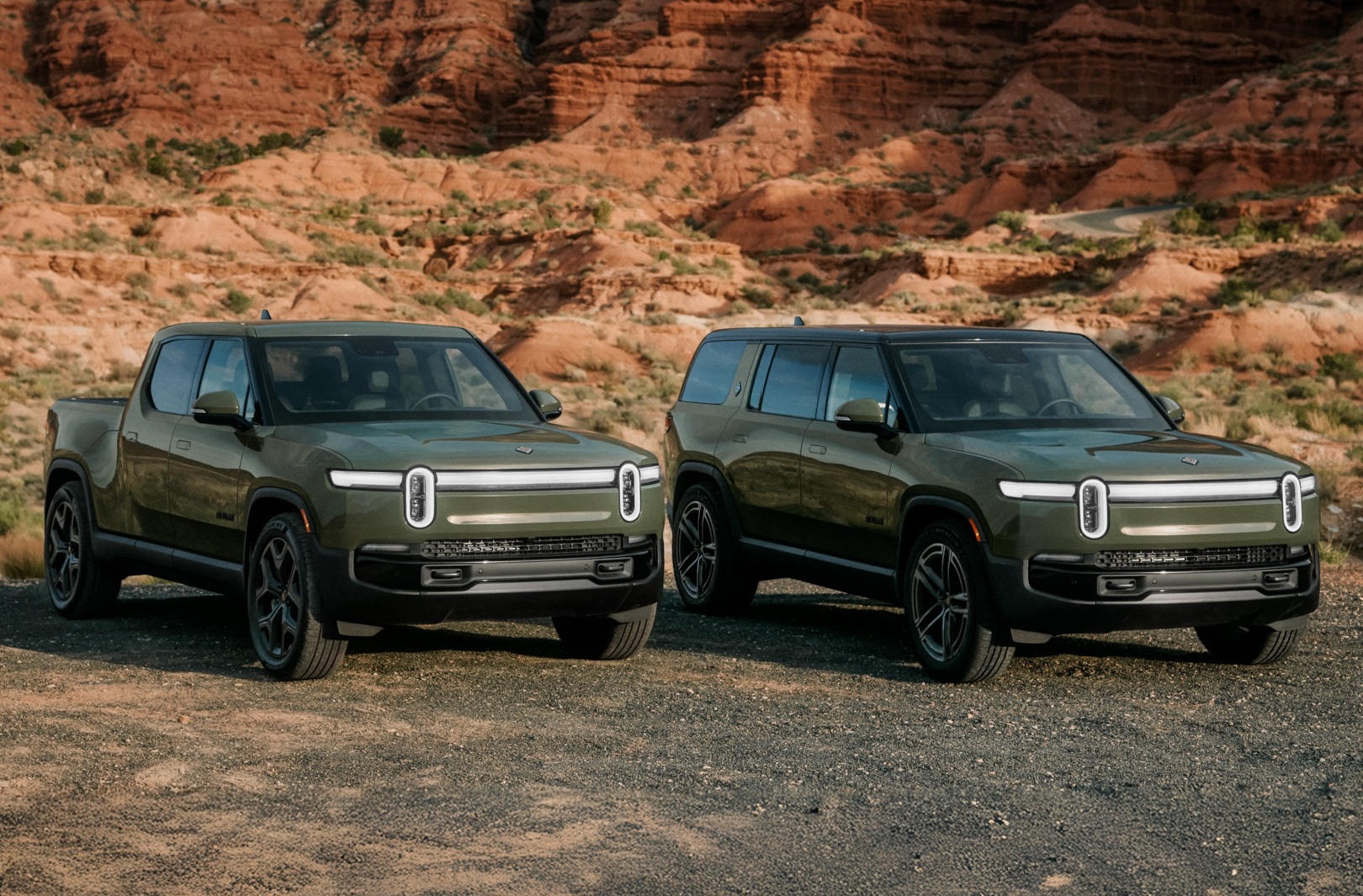
Tesla made headlines by fully implementing a steer-by-wire system in its Cybertruck, marking the first mass-produced vehicle to commit entirely to the technology. Other manufacturers, including Lexus, have since introduced partial steer-by-wire systems, particularly for rear-wheel steering, which enhances maneuverability for large electric vehicles.
Rivian’s job listing emphasizes “full cradle-to-grave ownership of the SBW subsystem,” confirming the company’s active development in this area. It remains unclear whether Rivian’s system will control front, rear, or all wheels, or if it will debut on specific models such as the refreshed R1 platform or upcoming R2 and R3 vehicles.
See also: Rivian Reports Lower Q2 Production but Stronger Deliveries as R2 Prepares for Launch
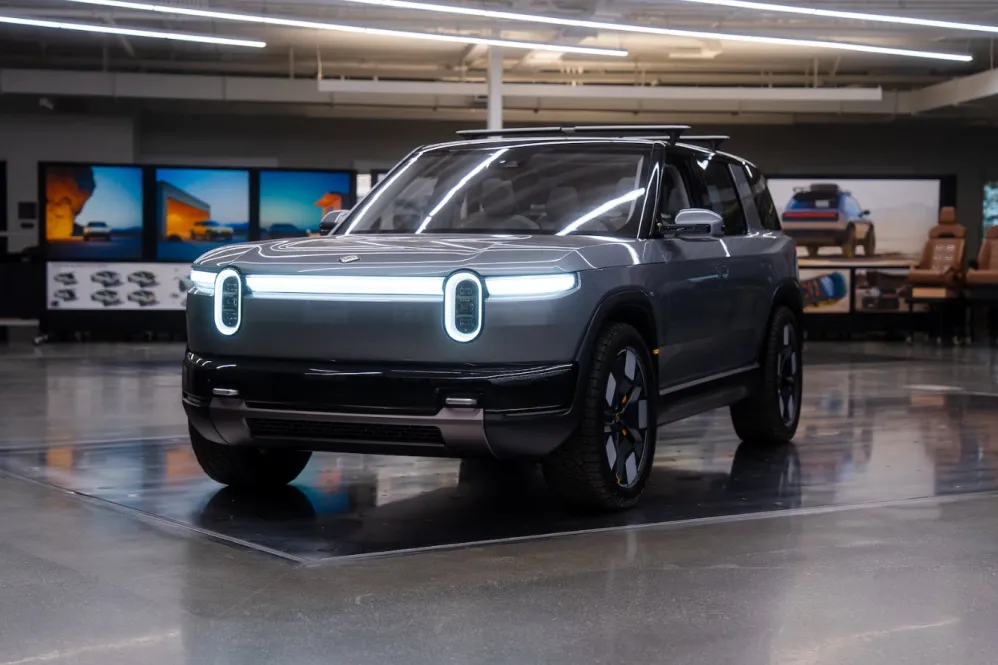
Given Volkswagen Group’s significant investment in Rivian and collaboration potential, steer-by-wire technology developed here could eventually influence other electric vehicle lines within VW’s portfolio, including the Scout brand.
Industry observers see Rivian’s move as part of a broader trend toward electronic steering systems, signaling increased adoption as automakers seek to optimize vehicle handling, safety, and customization in next-generation electric vehicles.