
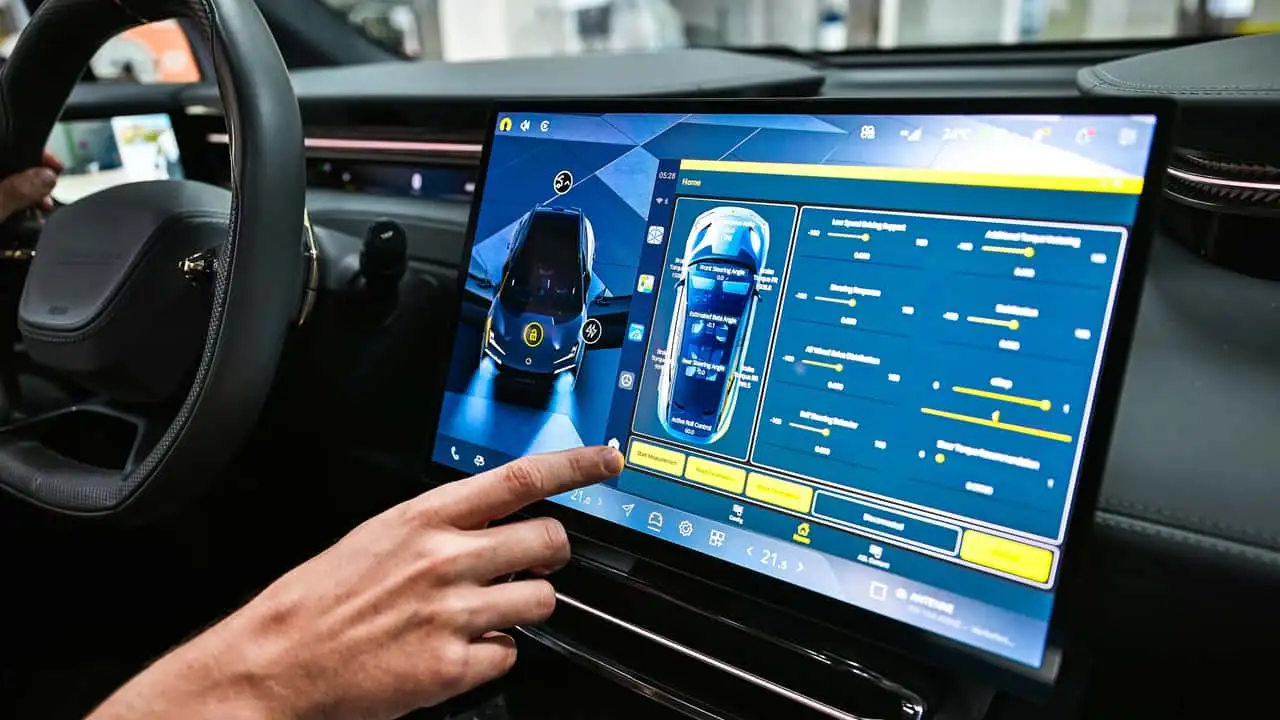
German automotive supplier ZF has introduced a major update to its cubiX Tuner software that allows engineers to fine-tune a car’s driving dynamics with a level of simplicity reminiscent of video game interfaces. The latest iteration enables real-time adjustment of multiple chassis actuators—from steering to braking—through digital sliders, potentially accelerating vehicle development, especially for new electric and software-defined vehicles.
In a move that could redefine the car development process, ZF’s updated software can communicate with various electronic systems within a vehicle, including brake-by-wire, electric power steering, and active damping components. This streamlines calibration by replacing the traditionally labor-intensive process with intuitive, on-screen adjustments.
“For a long time, a car’s character was defined primarily by its engine,” said André Engelke, Head of the Vehicle Motion Control System House at ZF. “That’s changing in the age of electrification. If our customers notice during a test drive that the maximum steering angle during cornering needs adjusting, they can do it with just a few clicks. The cubiX Tuner then automatically calculates which additional parameters it needs to adjust and how.”
ZF said the tool will be particularly valuable to smaller or emerging manufacturers using standardized platforms—such as those offered by CATL or other skateboard chassis providers—allowing them to quickly inject unique driving characteristics into otherwise uniform platforms. The software even supports components from third-party suppliers, not just ZF hardware.
Additionally, the cubiX Tuner includes a virtual simulation environment for pre-testing calibrations, giving engineers the ability to compare performance maps before uploading changes to a physical vehicle’s ECU. For advanced users, an “Expert Mode” unlocks deeper control over individual vehicle dynamics parameters.
ZF expects the software to be widely adopted in the growing segment of software-defined vehicles, providing manufacturers with more flexibility, reduced development times, and better differentiation in a competitive electric vehicle market.