
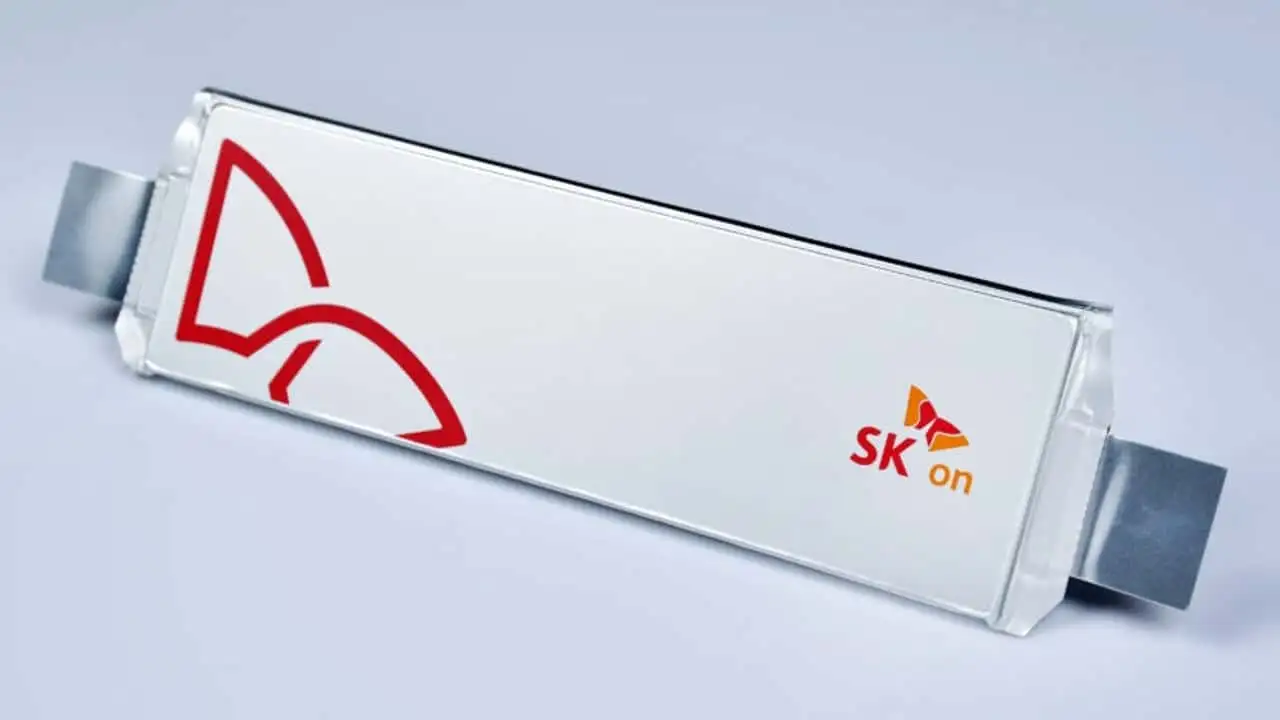
South Korea’s SK On is positioning itself for a future dominated by solid-state battery technology, forecasting its early advantage in pouch-type cells could give it a competitive edge as global automakers and suppliers intensify efforts to commercialize next-generation electric vehicle (EV) batteries.
Solid-state batteries, which replace liquid electrolytes in conventional lithium-ion cells with solid alternatives, are widely seen as a game-changer for the automotive industry due to their potential for greater energy density, faster charging times, longer lifespan, and improved safety. However, their commercial debut remains several years away.
“When the world of solid-state batteries arrives, it will definitely be first applied in pouch-type cells in which we already have a technological edge,” said Park Kisoo, SK On’s chief of research and development, in an interview with Bloomberg. “That could be a weapon that can help us beat China.”
The company faces stiff competition from Chinese manufacturers already supplying semi-solid-state batteries—a transitional technology—on a commercial scale. Nio has deployed such batteries in some of its EVs, while MG Motor recently announced it will integrate semi-solid-state cells into its MG4 compact car.
Western automakers are also stepping up testing. Mercedes-Benz has paired U.S.-based Factorial’s semi-solid-state pack with its EQS sedan, while Stellantis is preparing to test a Dodge Charger Daytona prototype with the same supplier’s battery next year. BMW demonstrated a full solid-state battery prototype in its i7 test vehicle earlier this year.
Despite the long runway to solid-state adoption, SK On is continuing to enhance its current lithium-ion technologies. The company is developing immersion cooling systems for thermal management, targeting applications in EVs, AI data centers, and stationary energy storage.
SK On’s manufacturing footprint is expanding rapidly through BlueOval SK, a joint venture with Ford Motor. In 2024, the U.S. Department of Energy approved a $9.6 billion loan to the venture to build three large-scale battery plants in Tennessee and Kentucky—marking the largest loan ever awarded through the Advanced Technology Vehicles Manufacturing program.