
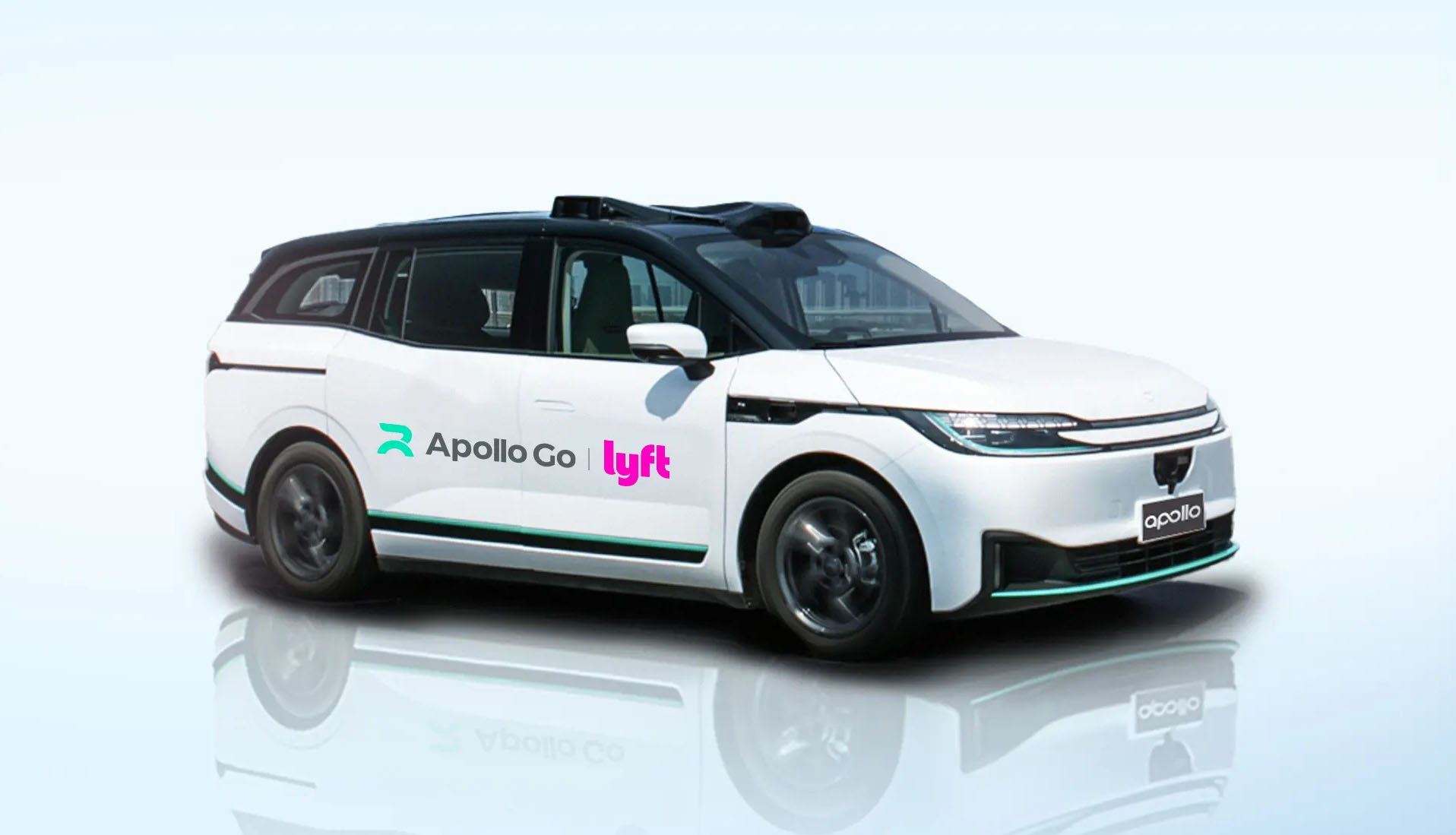
Lyft said on Monday it will partner with Chinese technology giant Baidu (9888.HK) to introduce autonomous robotaxi services in Europe, marking a major step in its international expansion.
The companies plan to launch Baidu’s Apollo Go RT6 self-driving vehicles in Germany and the United Kingdom in 2026, subject to regulatory approval. The electric vehicles, equipped with Baidu’s autonomous driving system, will be integrated into Lyft’s app.
“This is our hybrid network approach, where AVs and human drivers work together to provide customer-obsessed options for riders,” Lyft Chief Executive David Risher said in a statement.
Lyft, which has focused almost exclusively on the U.S. market since its founding in 2012, entered Europe earlier this year through the $197 million acquisition of multi-mobility platform FREENOW from BMW and Mercedes-Benz Mobility. The deal gave Lyft access to key European cities after more than a decade of domestic operations.
The partnership comes as Lyft and rival Uber (UBER.N) compete to secure alliances with autonomous vehicle developers. Both companies wound down their own in-house self-driving programs in recent years, opting instead for partnerships. Uber has announced multiple deals this year with firms including May Mobility, Volkswagen, Momenta, WeRide, and Baidu, and has invested in EV maker Lucid (LCID.O) and AV startup Nuro to develop a premium robotaxi service.
Lyft’s recent AV initiatives include plans to integrate autonomous shuttles from Austria’s Benteler Group into its network in late 2026, and to deploy May Mobility’s AVs in Atlanta later this year.