
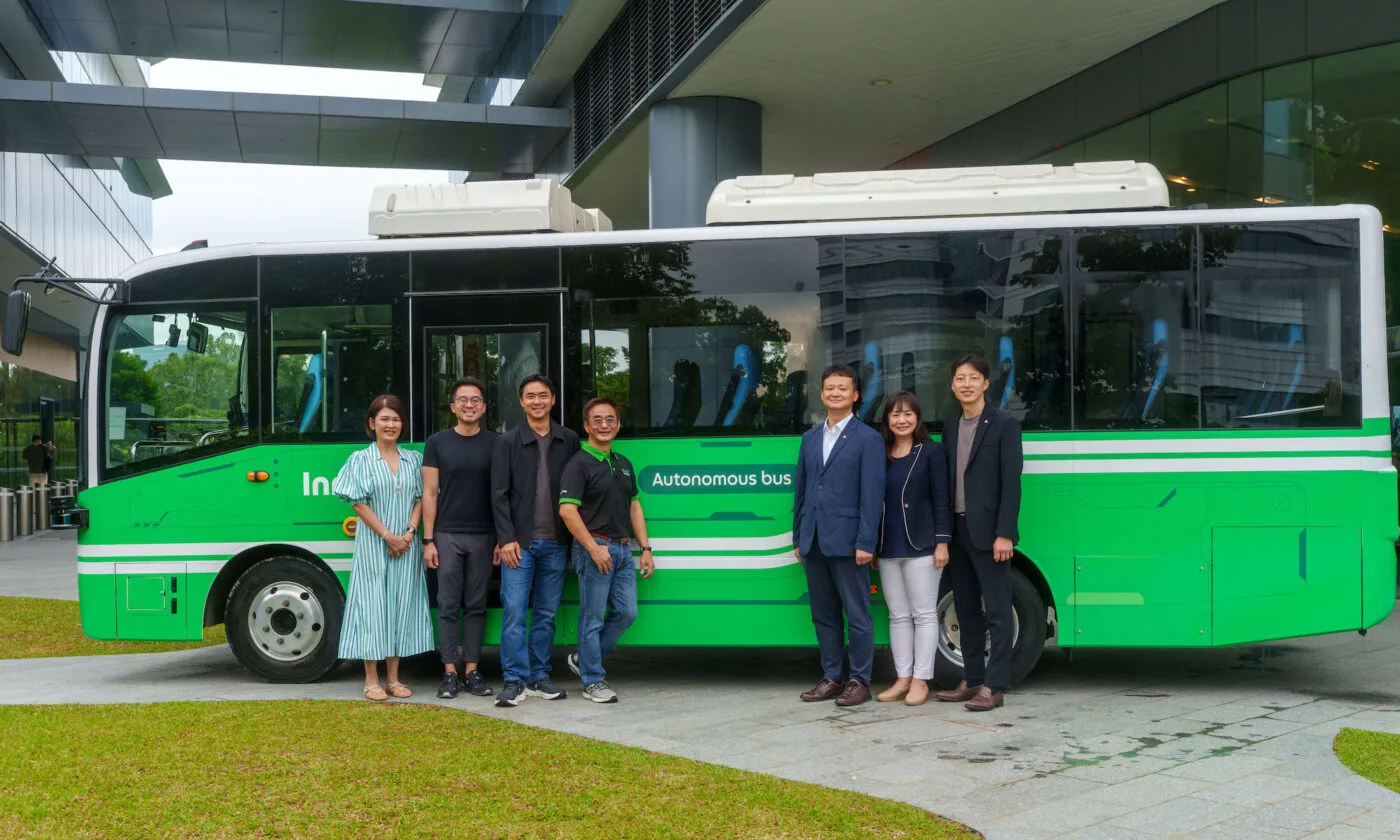
Grab, Southeast Asia’s leading ride-hailing platform, has launched a pilot program in Singapore to trial an autonomous electric shuttle bus developed in partnership with South Korea-based autonomous technology company Autonomous A2Z (A2Z). The initiative marks the first deployment of A2Z’s autonomous driving system in Singapore.
The pilot involves an electric shuttle bus retrofitted with A2Z’s full-stack autonomous software, hardware, and Grab’s in-house Internet of Things (IoT) devices. Equipped with eleven sensors—including multiple long-range LiDAR units, radar, and high-definition cameras—the vehicle is capable of scanning its environment in real-time. A safety algorithm is embedded in the system to bring the bus to a controlled stop in the event of a malfunction in its autonomous capabilities.
Although the vehicle operates autonomously, a trained Grab staff member remains onboard at all times to ensure safety and intervene manually if necessary. The shuttle currently serves Grab employees by connecting its One-North headquarters to a nearby Mass Rapid Transit (MRT) station on a 3.9-kilometre route. The company conducted over 100 hours of road testing on the route before launching the service.
Grab employees can monitor the shuttle’s schedule and location using the Grab app, and the company plans to add features like seat availability tracking. According to Grab, the initiative is designed to assess the reliability of autonomous transport systems and understand their implications for future job creation within the mobility sector.
The collaboration with A2Z forms part of a broader regional strategy by Grab to evaluate autonomous mobility and delivery services. In March 2025, the company entered into partnerships with several global autonomous tech firms—including A2Z, Motional, WeRide, and Zelos—to explore future integration of self-driving solutions across Southeast Asia.