
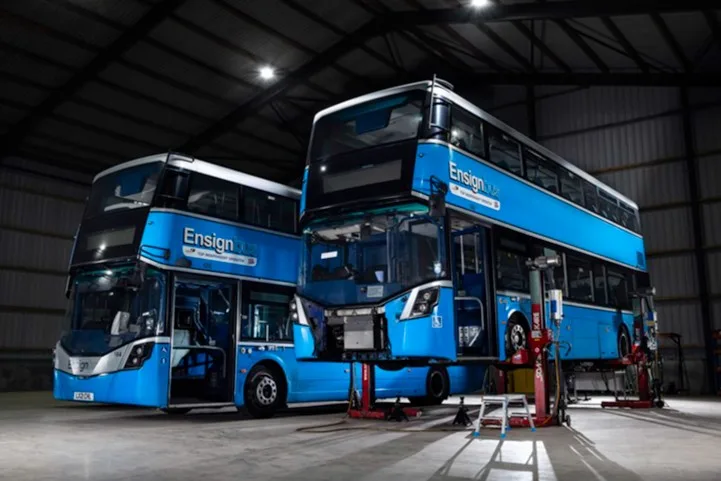
UK operator First Bus will convert 30 Wrightbus Streetdeck diesel buses to battery-electric operation, following a successful pilot vehicle developed in partnership with electric repowering firm KleanDrive. The project is part of First Bus’s wider decarbonisation strategy and will be carried out at its subsidiary Ensignbus’s facility in Purfleet.
The pilot vehicle, currently in assembly, will serve as the benchmark for the full conversion programme. The process involves removing the diesel engine and related components and fitting a modular battery-electric drivetrain within the existing engine bay. Each bus will be equipped with KleanDrive’s electric drive system, 352kWh of lithium iron phosphate (LFP) batteries from CATL (with 324kWh usable capacity), a Voith Electrical Drive System for propulsion, and an updated internal layout designed to streamline maintenance operations.
The repowered buses are expected to achieve a range of approximately 195 miles on a 50% passenger load. Removed diesel components will be recycled and reused within First Bus’s existing diesel Streetdeck fleet. First Bus previously invested £1 million in KleanDrive, a company that specializes in retrofitting diesel buses and trucks with electric powertrains.
“We are impressed with KleanDrive’s engineering quality and their overall solution,” said Andrew Jarvis, Managing Director at First Bus. “They offer a very neat package, making installation and maintenance easier to complete, which is vital for us to get the converted buses out on the roads, serving our customers in the shortest time possible.”
KleanDrive’s founder Joe Tighe emphasized the significance of the collaboration, stating: “This partnership with First Bus is how we see the future of repowering buses—with KleanDrive providing a world-leading, model-specific modular e-drivetrain and the body and chassis work carried out by experienced specialists like Ensign.”
The initiative follows KleanDrive’s 2023 agreement with Lothian Buses to convert 18 Volvo B5TLs in Scotland. At the time, the company noted that conversions could be completed within two weeks and offered a cost-effective alternative to new electric buses.