
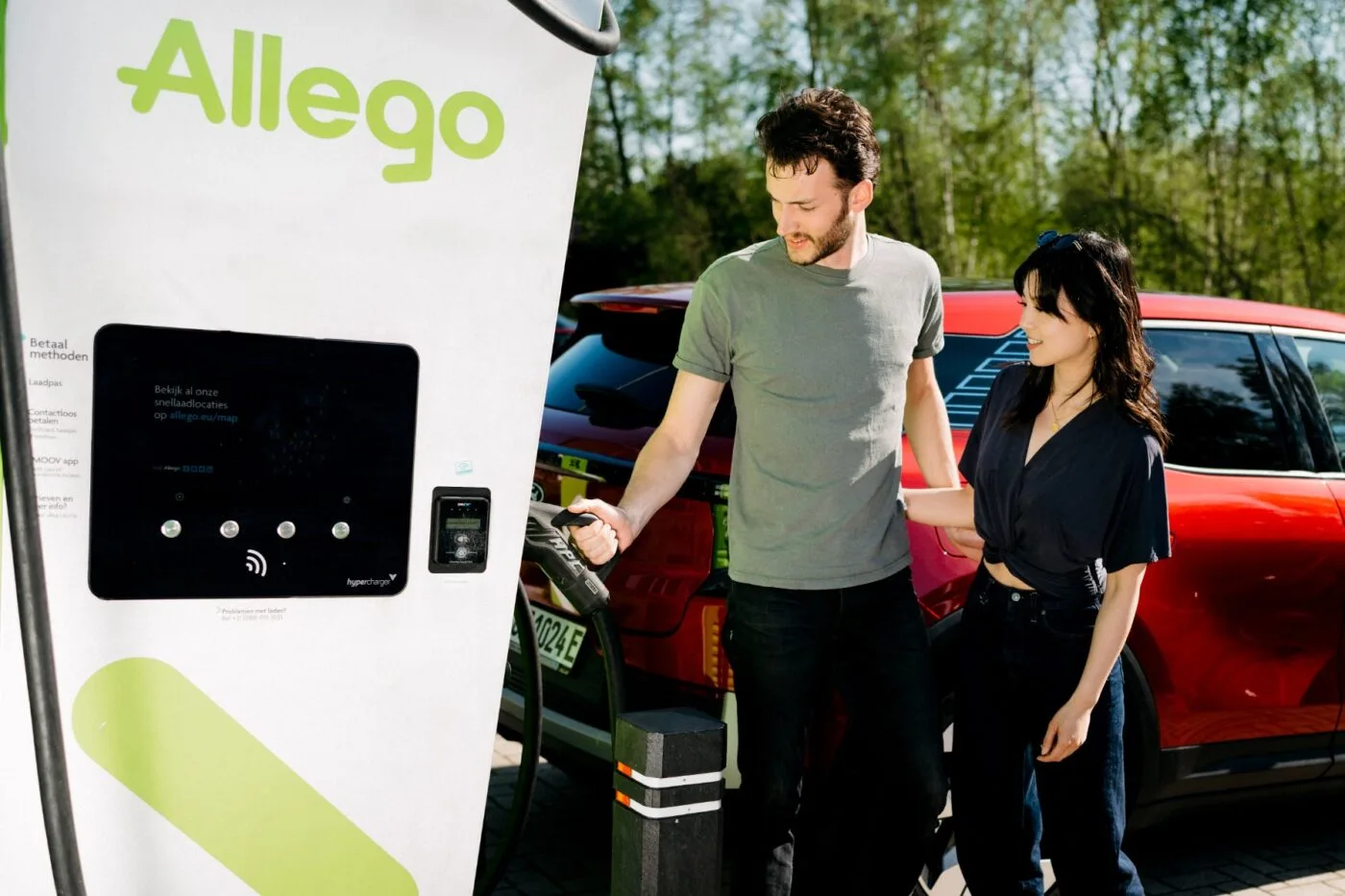
European EV charging network Allego has launched Plug & Charge functionality across 5,000 of its charging stations, becoming the first provider to do so using the latest OCPP 2.0.1 protocol. The update allows compatible vehicles to initiate and pay for charging automatically, without requiring RFID cards, apps, or manual authentication.
The implementation of OCPP 2.0.1 marks a significant technical upgrade, offering native support for ISO 15118-2. This enables certificate-based authentication, improved security via Mutual Transport Layer Security (mTLS), faster session initiation, enhanced real-time data reporting, and remote diagnostics. Allego’s adoption of the standard positions it ahead of other charge point operators (CPOs), although many—including Ionity and Mer—already offer earlier forms of Plug & Charge and are expected to follow suit through firmware and backend software upgrades.
Plug & Charge is only available to drivers with compatible EVs from automakers including BMW, Ford, Audi, Hyundai, Kia, Volkswagen, and Polestar. Users must activate the feature in their vehicle settings and designate it as the default payment method, where applicable.
“Our mission is to make EV charging at Allego more intuitive,” said Jean Gadrat, Chief Marketing Officer at Allego. “By removing digital friction points, apps, and cards, we give drivers the confidence to travel further and charge more conveniently. Whether in the city, on the highway, or abroad, Plug & Charge delivers the same secure, one-step charging experience.”
Allego had originally announced plans to roll out Plug & Charge by the end of 2024, starting with locations in the Netherlands and Germany. With today’s launch, the functionality is now active across its entire European network.