


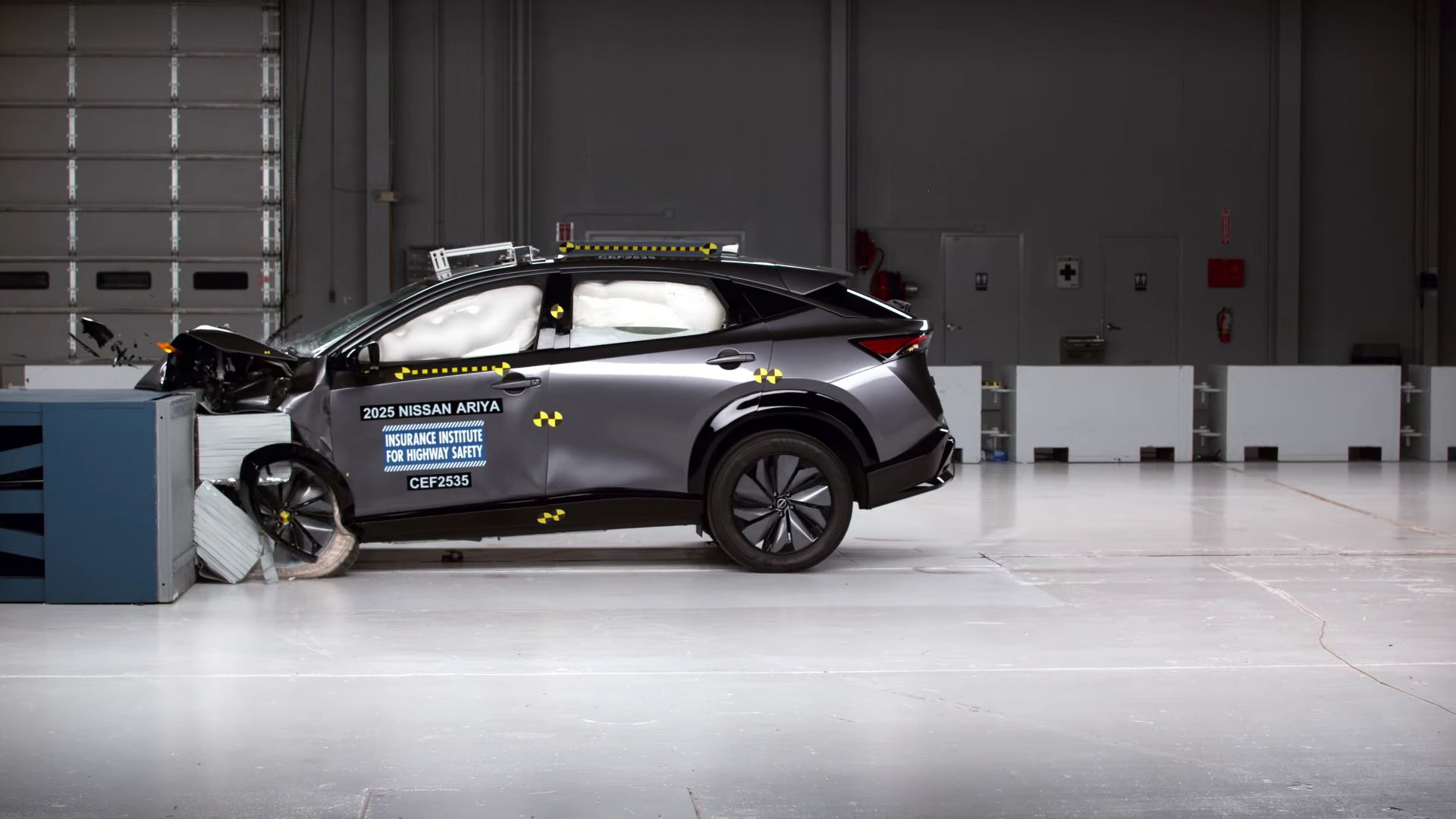
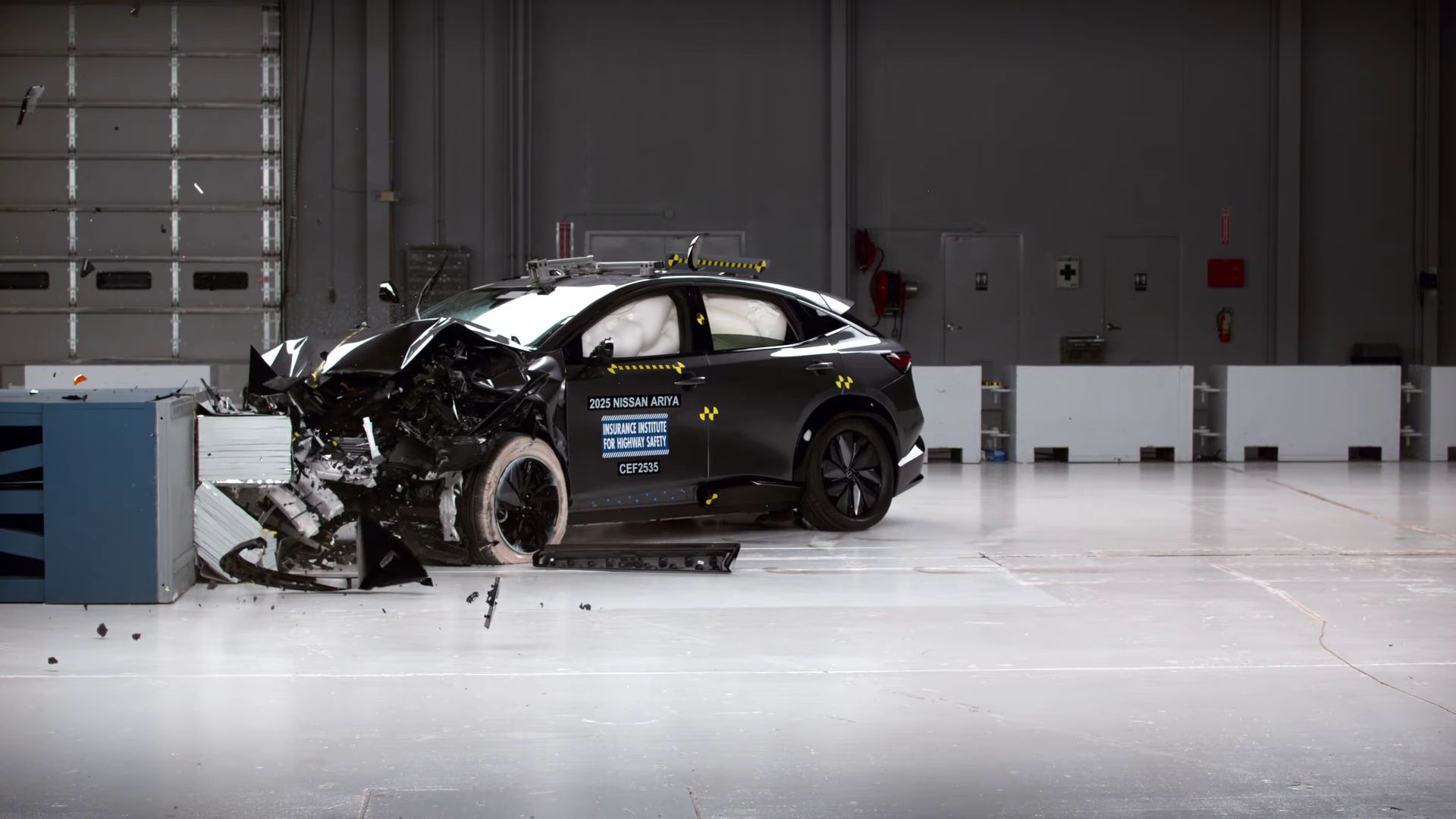
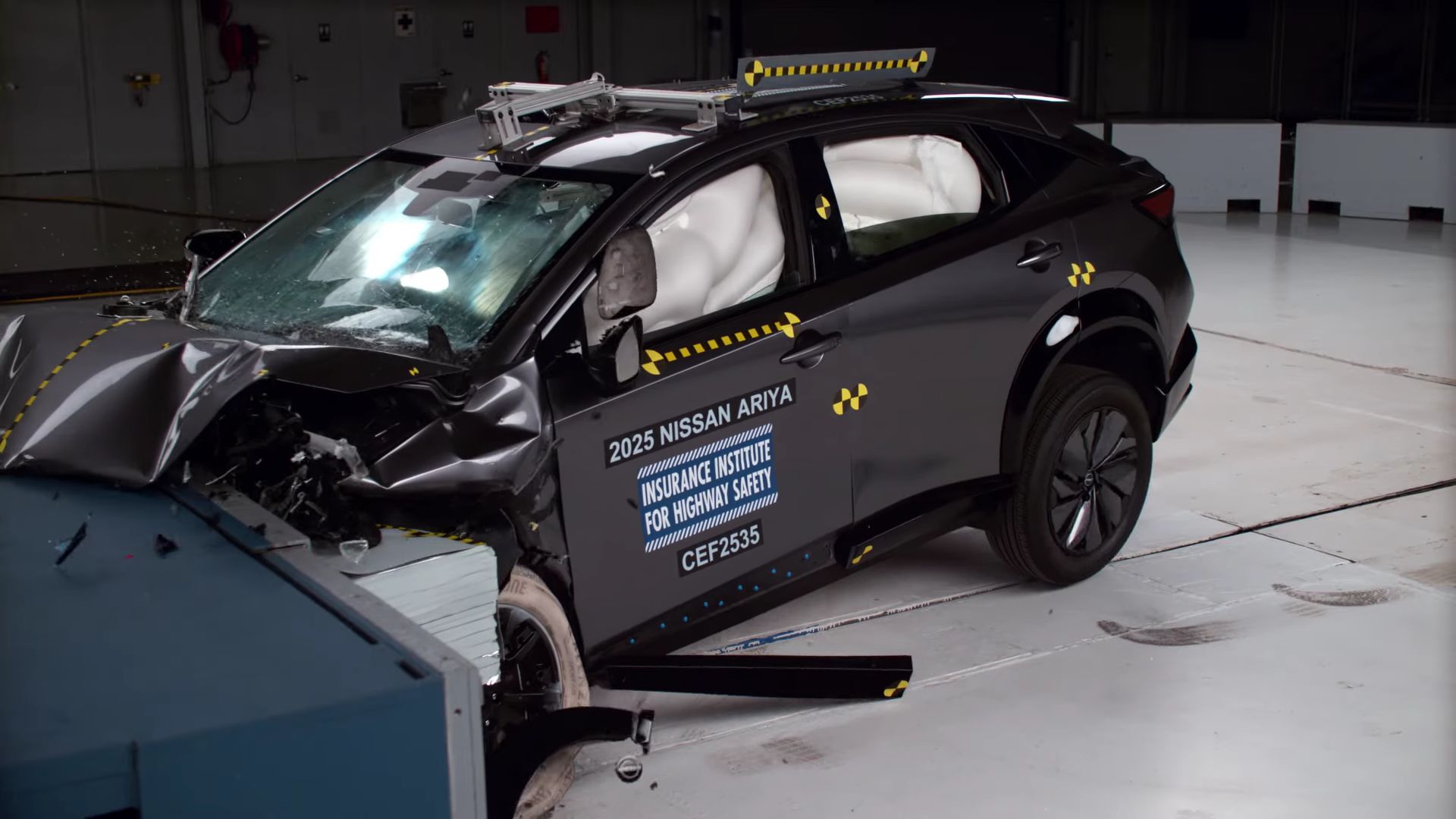
The Nissan Ariya, a compact electric SUV built on the same AmpR Medium platform as the Renault Megane E-Tech Electric, has received a marginal rating for rear passenger safety in the 40-mph moderate overlap crash test, the Insurance Institute for Highway Safety (IIHS) said.
The nonprofit noted that injury values indicated a high risk of chest injuries for rear occupants, though the shoulder belt positioning was rated as optimal.

While the Ariya struggled in this specific scenario, it performed strongly in other evaluations. The IIHS awarded top marks for the vehicle’s small overlap front and side impact crash tests, as well as for its standard and optional automatic emergency braking systems.
The Ariya’s LATCH child seat system was also rated highly, though seatbelt reminders earned only an “acceptable” grade.
Lighting performance varied. The LED projector-type headlights with standard high-beam assistance were rated acceptable, with low beams scoring fair on sharp left curves and inadequate on gradual ones.

High-beam visibility was deemed fair across curves and straight sections, with the assist system partially compensating for low-beam shortcomings.
For 2025, the Ariya continues to rely on an adapter kit for access to the North American Charging Standard (NACS) network, priced at $250 through Nissan USA.
The compact SUV, offered in five trims, carries 63 kWh or 87 kWh battery options, with peak DC fast-charging speeds of 130 kW and charge times ranging from 35 to 40 minutes.
Prices begin at $39,770 for the Engage trim and rise to $54,370 for the Platinum+ version. The longest range is offered by the Evolve+ front-wheel-drive model at 289 miles (465 km) on a full charge.