
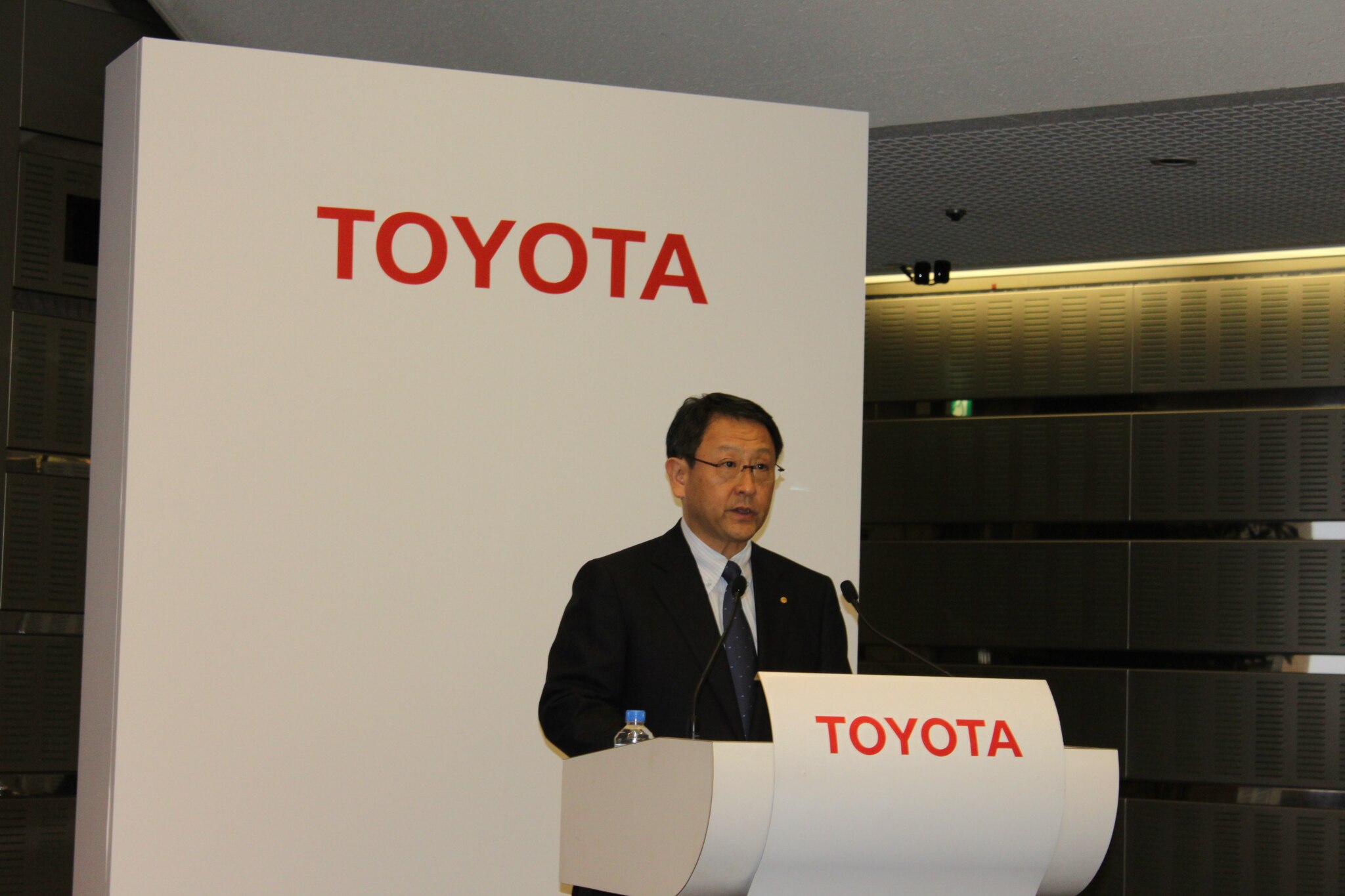
Toyota Chairman Akio Toyoda has warned that the company faces mounting pressure to remain competitive in the global automotive market, citing growing competition from Chinese electric vehicle (EV) manufacturers and the need to avoid complacency, according to Japanese broadcaster NHK.
Speaking during a behind-the-scenes program at Toyota’s development facility for the next-generation Corolla EV, Toyoda said the company recognizes the challenges ahead.
Toyota Updates 2027 Crown With Fifth-Generation Hybrid System
“There seems to be a considerable sense of crisis within the company.”
He added that losing that sense of urgency could threaten Toyota’s future.
“If that happens, it’s over.”
Corolla EV Becomes Strategic Test
Toyota’s next-generation Corolla is viewed internally as an important milestone in the company’s electrification strategy.
The Corolla has sold more than 57 million vehicles over the past six decades, making it the world’s best-selling vehicle. Its battery-electric successor is being treated as a key test of Toyota’s ability to adapt to a rapidly evolving EV market.
Toyota Recalls Nearly 21,000 Electric Vehicles Over Battery ECU Software Fault
One engineer involved in the project said:
“I think we are losing to China.”
Toyota plans to continue its multi-pathway approach to electrification with the new Corolla platform, which is being designed to accommodate battery-electric, plug-in hybrid, hybrid, and gasoline-powered variants. The platform is also expected to support multiple body styles, including sedan, hatchback, crossover and GR performance models.
Hybrid Strategy Faces Long-Term Questions
Hybrid vehicles remain a major contributor to Toyota’s business.
The automaker sold approximately 11.3 million Toyota and Lexus vehicles in 2025. Hybrid models accounted for around 42% of total sales, while battery-electric vehicles represented approximately 1.9%. In the United States, electrified vehicles—primarily hybrids—made up about 47% of Toyota’s sales.
Toyota has argued that increasing battery-electric vehicle production alone does not automatically reduce emissions because electricity generation in many regions continues to depend heavily on fossil fuels.
Toyota Begins RAV4 Hybrid Production in Kentucky, Expands Electrification Investment
However, some analysts have questioned whether Toyota’s strategy of using a common platform for multiple powertrains could become less competitive than dedicated battery-electric architectures as the market evolves. The discussion gained further attention after Toyota canceled development of the Lexus LF-ZC in June, a model intended to showcase the company’s next-generation battery technology and manufacturing methods.
Chinese Automakers Increase Competitive Pressure
Competition from Chinese manufacturers remains a central concern for Toyota.
In June, BYD Chief Executive Wang Chuanfu said the company aims to become the world’s largest automaker by production volume within five years after surpassing Ford in annual sales during 2025.
Chinese automakers have expanded their advantages in software-defined vehicles while offering plug-in hybrid models at increasingly competitive prices. They have also shortened vehicle development cycles to approximately 18 to 24 months, compared with Toyota’s traditional four- to five-year product development timeline.
Toyoda said maintaining Japan’s competitiveness remains essential for the country’s future.
“Unless Japan is a country chosen by every other country, it cannot survive.”
Toyota’s comments highlight the strategic challenge facing established automakers as they seek to balance continued demand for hybrid vehicles with accelerating competition in the battery-electric market, particularly from rapidly growing Chinese manufacturers.