
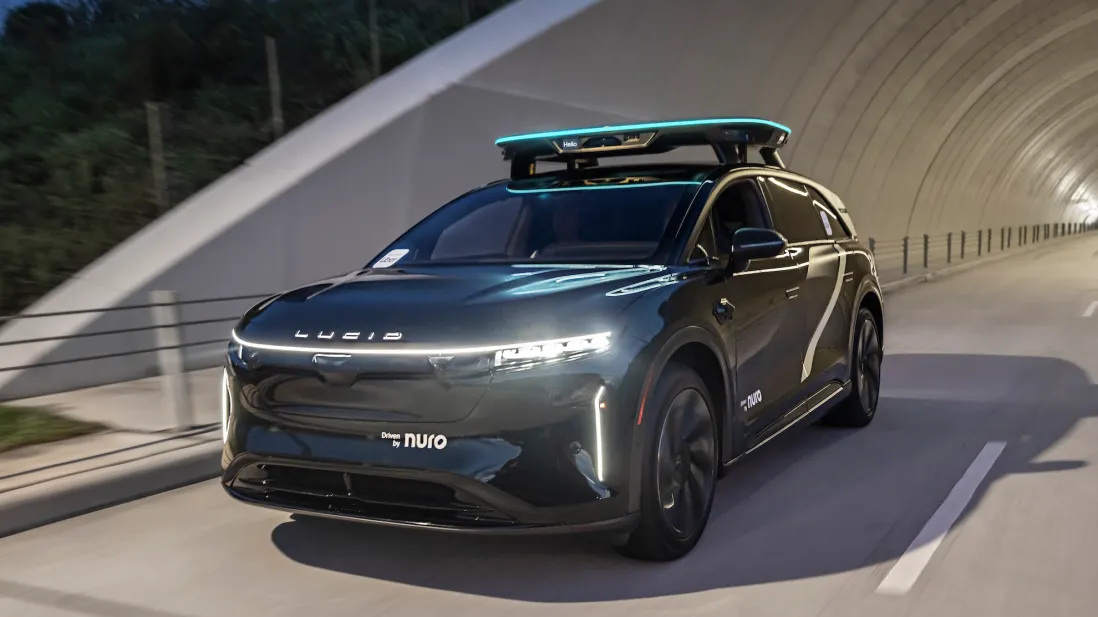
Uber Technologies plans to launch a premium robotaxi service in Houston by mid-2027, expanding its autonomous vehicle partnership with electric vehicle manufacturer Lucid and self-driving technology company Nuro.
The launch will make Houston the second U.S. market for the program after the companies begin operations in the San Francisco Bay Area later this year.
Uber said it ultimately intends to expand the robotaxi service to dozens of cities in the coming years as it increases its presence in the autonomous mobility sector.
Competition With Waymo Intensifies
The move will place Uber in direct competition with Waymo, Alphabet’s autonomous vehicle unit, which already operates commercial robotaxi services in both San Francisco and Houston.
The Houston deployment follows months of testing by Nuro and Lucid, which have been evaluating autonomous versions of the Lucid Gravity SUV equipped with Nuro’s self-driving technology.
Nuro has also begun allowing selected Uber employees to hail and ride in the vehicles as part of ongoing testing efforts.
While the company recently received a permit from California’s Department of Motor Vehicles allowing driverless testing, the vehicles currently continue to operate with safety drivers behind the wheel during public-road testing.
Testing Expands Ahead of Commercial Launch
Uber and Nuro currently operate a combined fleet of approximately 100 autonomous test vehicles in both California and Texas.
The companies are conducting public-road testing in Houston while continuing to validate the technology through simulations and closed-course evaluations.
The test fleet is expected to expand further as Lucid begins producing commercial versions of the robotaxi vehicles at its manufacturing facility in Arizona.
Lucid Gravity Forms Basis of Robotaxi Fleet
The robotaxi service will utilize specially equipped versions of the Lucid Gravity electric SUV.
The vehicles feature an array of sensors including high-resolution cameras, radar systems, and solid-state lidar technology designed to enable autonomous operation.
While Nuro provides the autonomous driving software, Uber is responsible for fleet ownership and operations.
The ride-hailing company has focused heavily on developing the passenger experience, including how riders interact with the autonomous vehicles during trips.
Houston Infrastructure Investment Underway
Uber is also building the operational infrastructure needed to support the Houston launch.
The company has established a 50,000-square-foot operations facility in the city that includes a dedicated charging and service center for the future robotaxi fleet.
The site is expected to serve as the primary operational hub for autonomous vehicle deployment in the Houston market.
Partnership Provides Boost for Nuro and Lucid
The robotaxi initiative represents a significant opportunity for both Nuro and Lucid.
Nuro shifted its business strategy in 2024, moving away from developing autonomous delivery robots and focusing instead on licensing its self-driving technology to automotive manufacturers and mobility operators.
For Lucid, the partnership provides a potential new revenue stream as the luxury EV maker works to increase production volumes in a market dominated by Tesla and established automakers.
Uber Commits Significant Capital
Uber has backed the partnership with substantial financial commitments.
The company has invested approximately $500 million in Nuro and separately committed to invest $500 million in Lucid.
Uber has also agreed to purchase at least 35,000 robotaxi-ready Lucid vehicles, underscoring its long-term ambitions in autonomous ride-hailing.
The investments reflect Uber’s strategy of partnering with autonomous technology developers and vehicle manufacturers rather than building self-driving systems internally, as competition intensifies in the race to commercialize robotaxi services across the United States.