
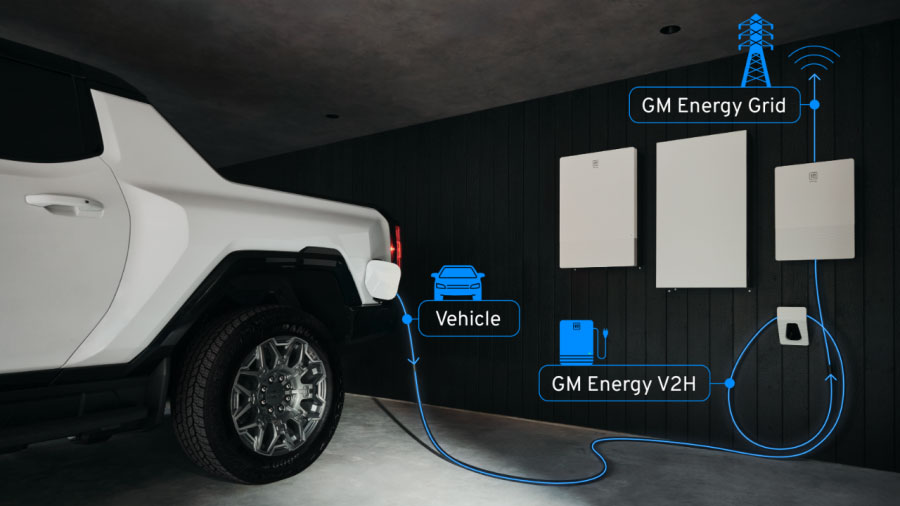
General Motors has released a detailed overview of bidirectional charging technology available across several of its electric vehicle models, highlighting how EV batteries can provide backup power for homes and support electricity grids during periods of high demand.
The automaker said bidirectional charging capabilities are available on select models, including the Chevrolet Equinox EV, GMC Sierra EV and Cadillac LYRIQ, through vehicle-to-home (V2H) and vehicle-to-grid (V2G) applications.
The technology enables electric vehicles to function not only as transportation assets but also as energy storage resources capable of supplying electricity when needed.
Vehicle-to-Home Backup Power
General Motors explained that vehicle-to-home functionality allows compatible EVs to provide electricity to a residence during power outages.
To enable the feature, owners require a compatible GM electric vehicle along with the GM Energy V2H system, which includes a bidirectional charger and related equipment.
The system is designed to disconnect a home from the utility grid during an outage, allowing electricity stored in the vehicle’s battery to power selected household appliances and systems while preventing electricity from flowing back into utility lines.
According to GM, the isolation process is intended to protect utility personnel working to restore power while maintaining energy supply to essential household loads.
Vehicle-to-Grid Applications
The company also outlined the potential of vehicle-to-grid technology, which allows electric vehicles to export electricity back to the power network through approved utility programs.
Under V2G arrangements, stored battery energy can be supplied to the grid during periods of peak electricity demand.
For consumers enrolled in time-of-use electricity programs, the technology may help reduce energy costs by allowing electricity stored during lower-cost periods to be used or exported during peak-rate hours.
Some utility providers also offer compensation programs for customers who make battery capacity available to support grid operations, although such initiatives remain limited in availability.
Supporting Grid Resilience
The growing interest in bidirectional charging comes as electricity systems face increasing pressure from electrification, expanding data center infrastructure and extreme weather events.
Industry participants view V2G technology as a potential distributed energy resource that could help improve grid stability by leveraging large numbers of parked electric vehicles.
Rather than relying solely on centralized power plants or backup generation facilities, utilities could potentially draw small amounts of energy from thousands of connected vehicles during periods of elevated demand.
Expanding Role of EV Batteries
The technology reflects a broader trend toward integrating electric vehicles into energy systems beyond transportation.
As EV adoption increases, vehicle batteries are increasingly being viewed as flexible energy assets that can support homes, businesses and utility networks when not being used for driving.
General Motors said bidirectional charging capabilities form part of its broader strategy to expand the role of electric vehicles within the energy ecosystem while providing additional value to EV owners.