
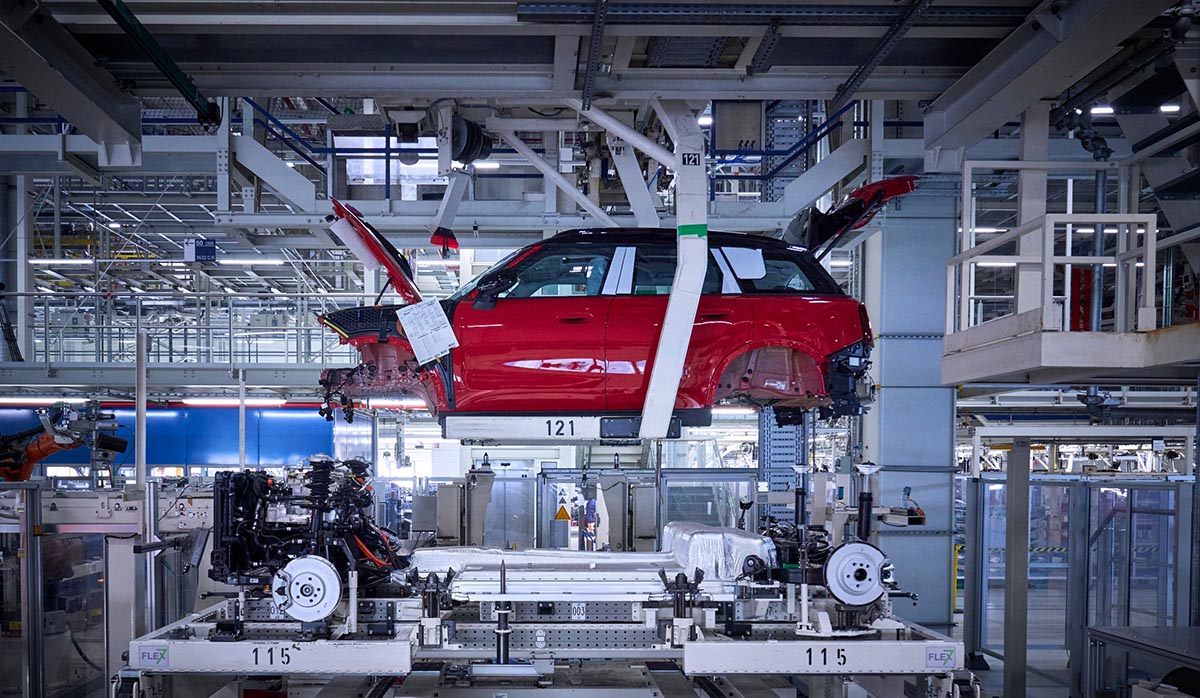
BMW is reportedly reviewing plans to introduce electric Mini production at its Oxford plant in the United Kingdom, as concerns over post-Brexit trade rules and increasing manufacturing costs raise questions about the project’s long-term viability.
The automaker announced in 2023 that the Oxford facility would begin producing two battery-electric Mini models from 2026, including the electric Mini Cooper three-door hatchback and the Mini Aceman compact crossover. BMW had also outlined plans for the plant to transition fully to electric vehicle production by 2030.
However, German business publication WirtschaftsWoche reported that the company is reconsidering those plans due to regulatory and economic challenges that could affect the competitiveness of UK-built electric vehicles in European markets.
Rules of Origin Could Trigger Tariffs
According to the report, concerns center on the Rules of Origin provisions agreed between the United Kingdom and the European Union following Brexit.
The rules, which are scheduled to take effect on Jan. 1, 2027, require electric vehicles to meet minimum local content thresholds in order to qualify for tariff-free trade between the UK and EU.
Under the agreement, at least 45% of a vehicle’s components must originate from either the UK or EU, while battery content must reach a 60% threshold.
Vehicles that fail to meet these requirements would be subject to a 10% tariff when traded between the two markets.
WirtschaftsWoche cited an unnamed source described as being close to incoming BMW Chief Executive Milan Nedeljković, who said Mini’s electric vehicle production in Oxford could become economically challenging if the rules are implemented as planned.
Rising Costs Add Pressure
In addition to potential trade barriers, BMW is reportedly facing increasing production costs and pressure on profit margins, particularly for smaller and more affordable vehicle platforms.
The report said these factors have made the company more cautious about committing to large-scale investments required to modernize and electrify the Oxford facility.
Earlier this year, British media reports indicated that BMW had postponed the timeline for introducing battery-electric Mini production at the plant.
At the time, the company said it was reassessing its plans in light of industry uncertainty.
“Given the multiple uncertainties facing the automotive industry, the BMW Group is currently reviewing the timing for reintroducing battery-electric Mini production in Oxford,” the company said.
BMW also paused preparations directly related to electric vehicle production at the site, although other modernization projects, including logistics upgrades, have continued.
The company additionally declined a £60 million government grant while maintaining discussions with UK authorities regarding future investment plans.
Electric Mini Production Remains Concentrated Elsewhere
For now, production of electric Mini models remains centered outside Oxford.
The battery-electric Mini Cooper, available in Cooper E, Cooper SE and John Cooper Works Electric variants, is currently manufactured exclusively in China and exported to European markets.
The Mini Aceman, the brand’s dedicated electric crossover, is also produced in China following its launch in 2024.
Meanwhile, the Mini Countryman is built at BMW’s Leipzig plant in Germany, where both internal combustion and battery-electric versions are produced.
Oxford currently remains focused on manufacturing internal combustion engine versions of the latest Mini Cooper generation, which entered production in 2024.
The uncertainty surrounding Oxford’s electrification plans highlights broader challenges facing European automakers as they navigate evolving trade rules, supply chain requirements and the transition toward electric vehicle production.