
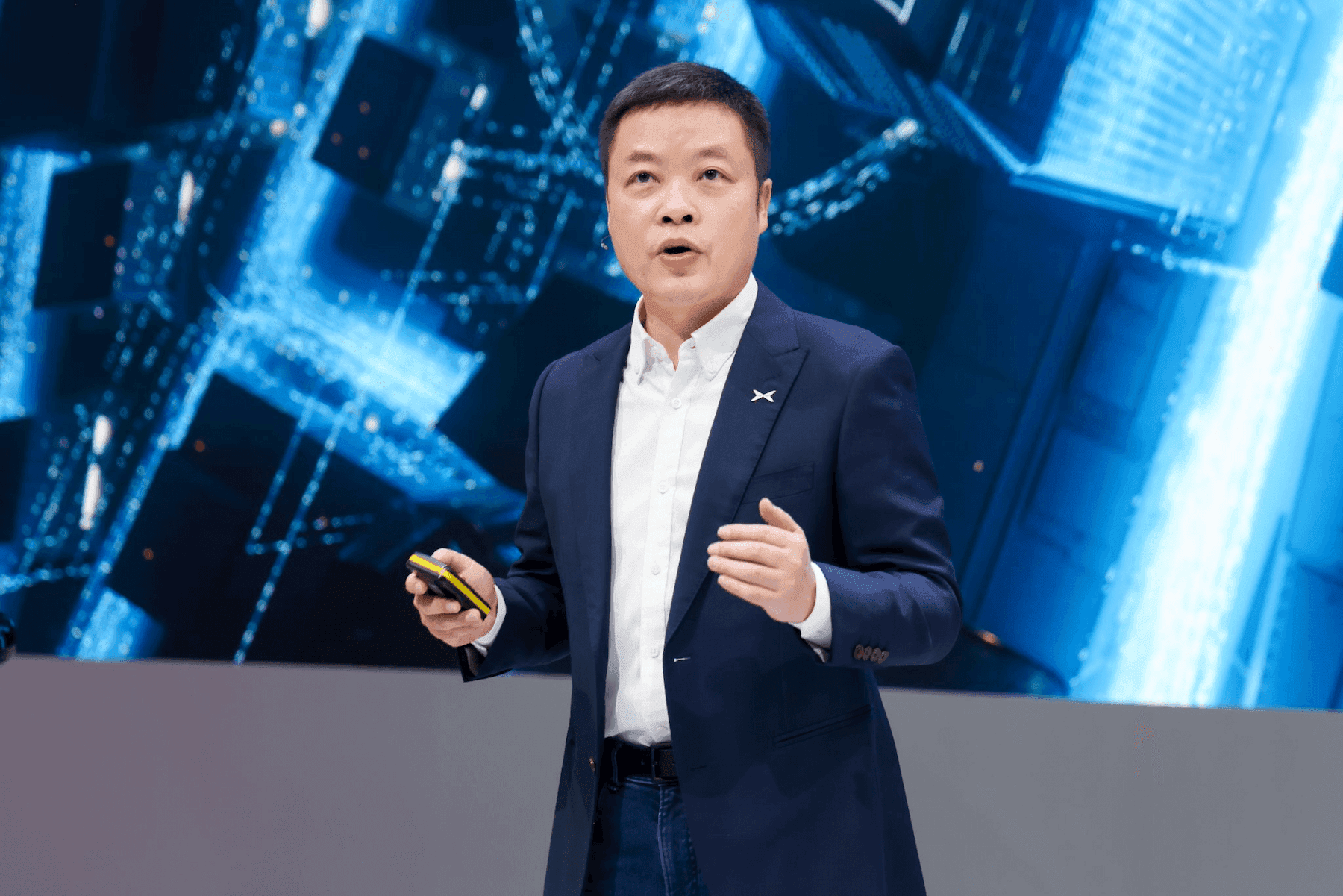
Xpeng said it believes LiDAR sensors are no longer essential for autonomous driving systems in passenger vehicles, as the company continues transitioning toward a pure vision-based approach similar to that used by Tesla.
Xpeng Chairman and CEO He Xiaopeng said during a media briefing on Thursday that the company does not feel pressured by the increasing adoption of LiDAR technology in China’s higher-priced vehicle segment.
According to He, the share of models priced above 150,000 yuan ($22,050) equipped with LiDAR continues to rise in China, but Xpeng remains committed to its camera-based autonomous driving strategy.
The comments came one day after Xpeng unveiled the new Xpeng GX, which uses the company’s pure vision intelligent driving system without LiDAR sensors.
He said LiDAR continues to play an important role in several other industries but argued that the automotive sector no longer requires the technology.
Liu Xianming said the decision to use or remove LiDAR depends on each company’s broader technology architecture and development strategy.
Liu said consumers ultimately evaluate autonomous driving systems based on real-world performance rather than the number of hardware sensors installed in a vehicle.
According to Liu, Xpeng’s LiDAR-free strategy is built around the company’s second-generation Vision-Language-Action (VLA) system, which relies heavily on camera-based visual data and end-to-end artificial intelligence models.
Liu also argued that LiDAR faces technical limitations in certain driving conditions.
He said long-distance detection and penetration through semi-transparent objects would require transmission power levels that may not comply with existing automotive safety standards.
In adverse weather conditions such as rain or fog, LiDAR systems can also generate significant noise interference, while high-resolution camera systems can deliver more detailed environmental data, Liu said.
He added that previous autonomous driving systems lacked sufficient computing power and software capabilities to process large amounts of visual data efficiently, but advances in end-to-end AI models have improved the viability of vision-only systems.
Xpeng was among the first automakers to introduce LiDAR technology into mass-produced passenger vehicles.
In September 2021, the company launched the Xpeng P5, whose higher-end versions featured dual LiDAR sensors.
Several later Xpeng models also adopted dual-LiDAR configurations before the company shifted toward its current pure vision strategy.