
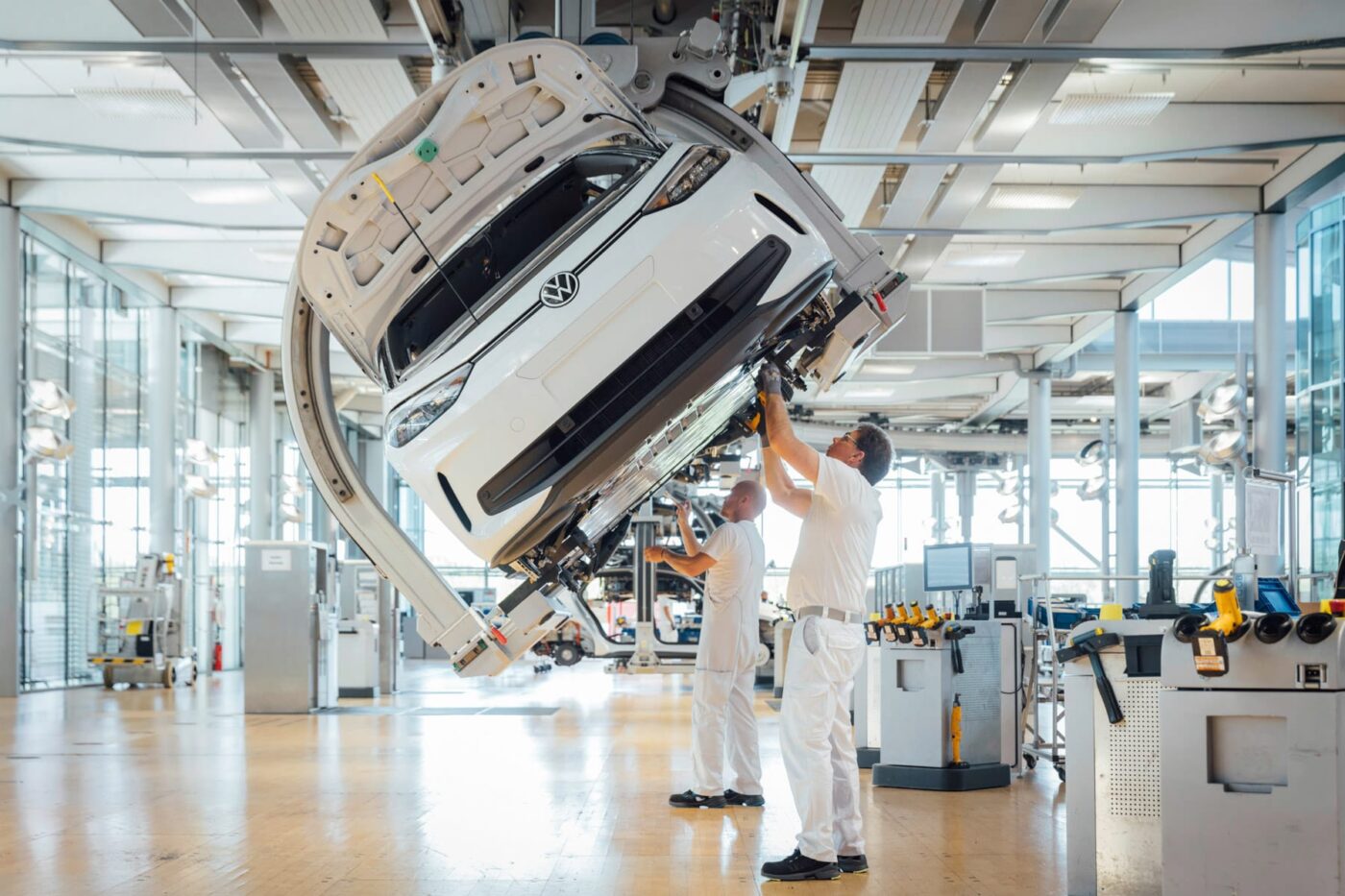
Volkswagen has largely completed its planned reduction of more than 700,000 units of annual vehicle production capacity in Germany, while Chinese electric vehicle maker Xpeng confirmed discussions with Volkswagen regarding possible manufacturing capacity in Europe.
The capacity reductions stem from an agreement reached between Volkswagen and Germany’s IG Metall union at the end of 2024 following months of labour tensions over proposed plant closures and restructuring plans.
Under the agreement, Volkswagen committed to cutting around 35,000 jobs by 2030 while reducing domestic production overcapacity without shutting down major factories.
According to Volkswagen brand chief executive Thomas Schäfer, most of the planned reductions have now been completed.
“We have completed everything except for the final part — the Osnabrück plant, where we are still seeking a solution,” Schäfer told Automobilwoche.
Volkswagen implemented the reductions mainly by scaling back production lines at existing plants.
According to Automobilwoche, the company reduced operations at its Zwickau and Emden factories from two production lines to one each, while Wolfsburg now operates two lines instead of four.
The Gläserne Manufaktur Dresden facility ended vehicle production entirely and is being transformed into an innovation campus.
Volkswagen said the freed-up production space in Wolfsburg could support its upcoming “Gamechanger” manufacturing project linked to the future SSP electric vehicle platform.
The company plans to introduce new large-scale casting production techniques, often referred to as megacasting, which reduce the number of individual body components required during manufacturing.
Tesla pioneered the use of megacasting in automotive production, while manufacturers including Volvo Cars have also adopted similar technologies.
Volkswagen plans to introduce the new production methods alongside future SSP-based electric vehicles, including an electric successor to the Golf and a related SUV.
Schäfer told Autocar that Volkswagen does not expect to launch the electric Golf before the end of the decade.
“We have a fantastic line-up now that we do not need an electric Golf in 2028,” Schäfer said. “We are well set with what we have in our portfolio with our vehicles.”
He also confirmed that the SSP platform would first be introduced by Volkswagen Group premium brands including Audi and Porsche before later expanding to the Volkswagen brand itself.
Meanwhile, uncertainty remains around Volkswagen’s Osnabrück plant as vehicle production there is expected to end.
The site has emerged as a potential option for external manufacturing partnerships.
Elvis Cheng confirmed that Xpeng is discussing potential European production arrangements with Volkswagen.
“We are . . . discussing with Volkswagen to see if there is any possibility we can find a location here in Europe,” Cheng told the Financial Times.
Xpeng currently manufactures European-market vehicles through contract manufacturer Magna Steyr in Austria, but Cheng said the facility is approaching capacity limits.
“We think not all the factories can satisfy the requirements of our latest or future product requirements,” Cheng said, adding that some Volkswagen facilities were “a little bit old.”
Volkswagen Group chief executive Oliver Blume previously said the company intends to avoid plant closures in Germany despite ongoing overcapacity challenges in Europe and China.
Blume said Volkswagen was exploring “intelligent” alternatives for sites such as Osnabrück, including possible cooperation with companies outside the automotive sector.
The discussions reflect wider pressure on European automakers to improve factory utilisation rates as electric vehicle demand growth slows and manufacturers adapt production networks to changing market conditions.