
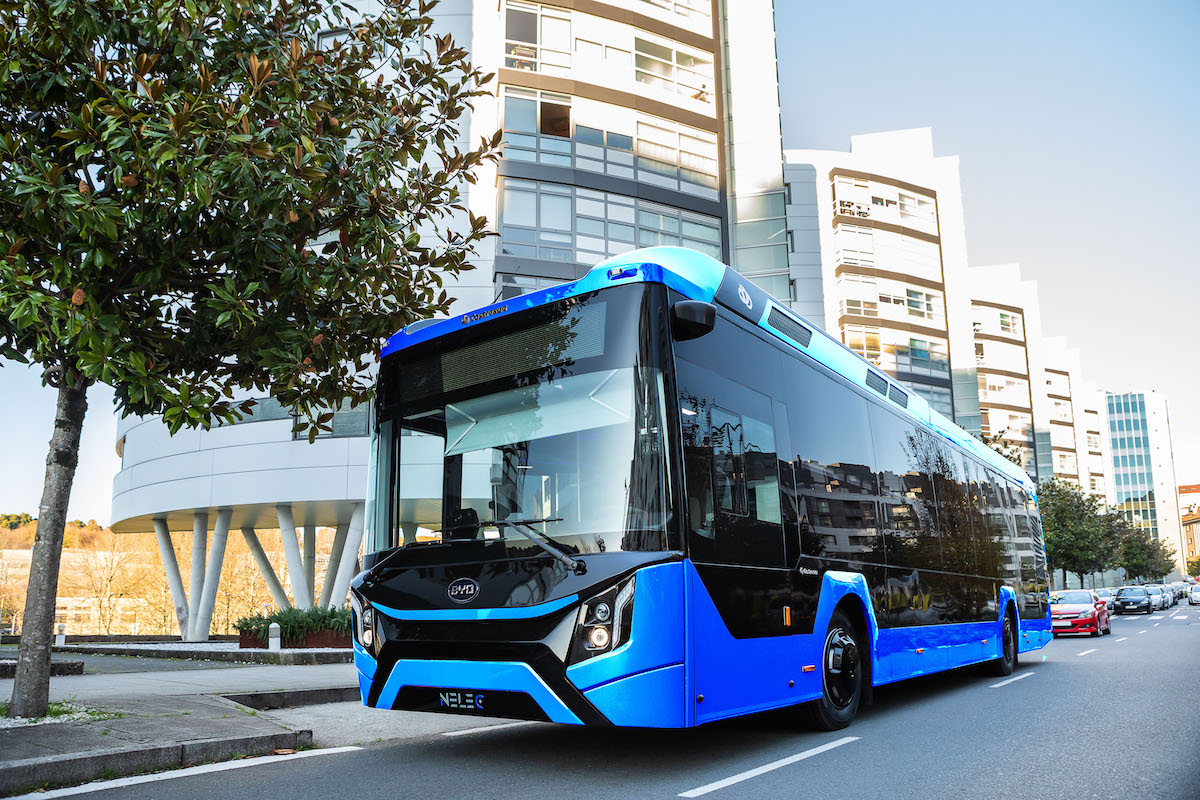
Ministry of Land, Infrastructure and Transport has revised subsidy rules for electric buses, introducing stricter battery performance criteria that could make it harder for Chinese manufacturers such as BYD, Higer, and Zhongtong to qualify for public funding.
Under the updated framework, subsidies for low-floor electric buses will increase to as much as 90 million won (around €52,000), up from a previous flat rate of 87 million won. However, eligibility is now tied more closely to battery energy density, with higher thresholds required to secure full incentives.
Authorities said batteries must exceed 500 Wh/L in energy density to qualify for maximum subsidies, a benchmark typically achieved by nickel-cobalt-manganese (NCM) batteries produced by domestic suppliers such as LG Energy Solution, SK On, and Samsung SDI.
By contrast, vehicles equipped with batteries at or below 365 Wh/L will see their subsidy eligibility significantly reduced, with only a fraction of the incentive applied. This change is expected to disproportionately affect lithium iron phosphate (LFP) batteries, widely used by Chinese manufacturers due to their cost and durability advantages but generally lower energy density.
The revised policy could shift market dynamics in favor of domestic manufacturers such as Hyundai Motor and KGM Commercial, as Chinese electric buses had already captured around 34% of the local market.
The move also comes amid heightened public sensitivity around battery safety. Following a 2024 fire involving a Mercedes-Benz EQE equipped with batteries from Farasis Energy in Incheon, authorities called on automakers to disclose battery sourcing.
Since the incident, consumer sentiment has shifted in parts of the market, with some buyers favoring vehicles equipped with domestically produced battery cells. Reflecting this trend, Porsche recently said it would offer electric vehicles in South Korea using locally sourced batteries, citing safety perceptions among customers.
Source: Chosun