
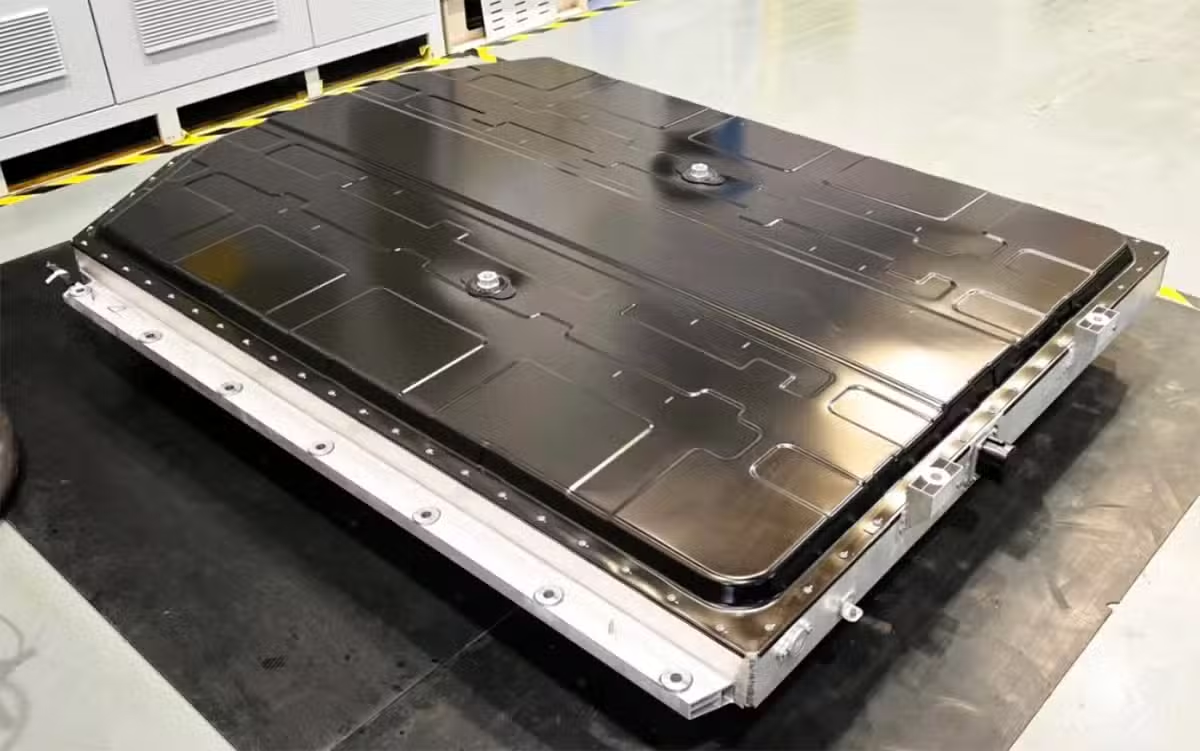
Beijing Automotive Group Co (BAIC Group) has unveiled progress in sodium-ion battery technology, as Chinese automakers intensify efforts to develop alternatives to conventional lithium-ion systems.
The company said on Thursday that its sodium-ion battery prototype has completed development and reached what it described as industry-leading levels, marking a step forward in next-generation battery research.
BAIC added that the development expands its Aurora Battery platform, which now includes lithium-ion, solid-state, and sodium-ion technologies, enabling a broader range of applications across different vehicle and energy use cases.
The sodium-ion battery uses a prismatic cell design with a single-cell energy density exceeding 170 Wh/kg, placing it among the higher-performing systems currently under development, according to the company.
It also supports 4C fast charging, allowing the battery to be replenished in around 11 minutes. BAIC said the battery maintains stable performance in temperatures ranging from -40°C to 60°C and can retain more than 92% of its energy output at -20°C.
The company highlighted safety performance as a key feature, stating that the battery did not catch fire or explode during stress tests including overcharging, heating, and mechanical impact, exceeding current national standards in China.
BAIC said its research team has finalised the prototype design and established a mass production process for the prismatic cells, while applying for around 20 patents covering materials, electrolytes, and system integration.
The development comes amid a broader push in China’s automotive industry to commercialise sodium-ion batteries, which are seen as a potential lower-cost and more sustainable alternative to lithium-based chemistries.
Battery maker CATL, in partnership with Changan Automobile, recently introduced a passenger vehicle equipped with a sodium-ion battery expected to reach the market in 2026. Meanwhile, BYD has said its sodium-ion technology has entered a third-generation development phase, with a reported cycle life of up to 10,000 cycles.