
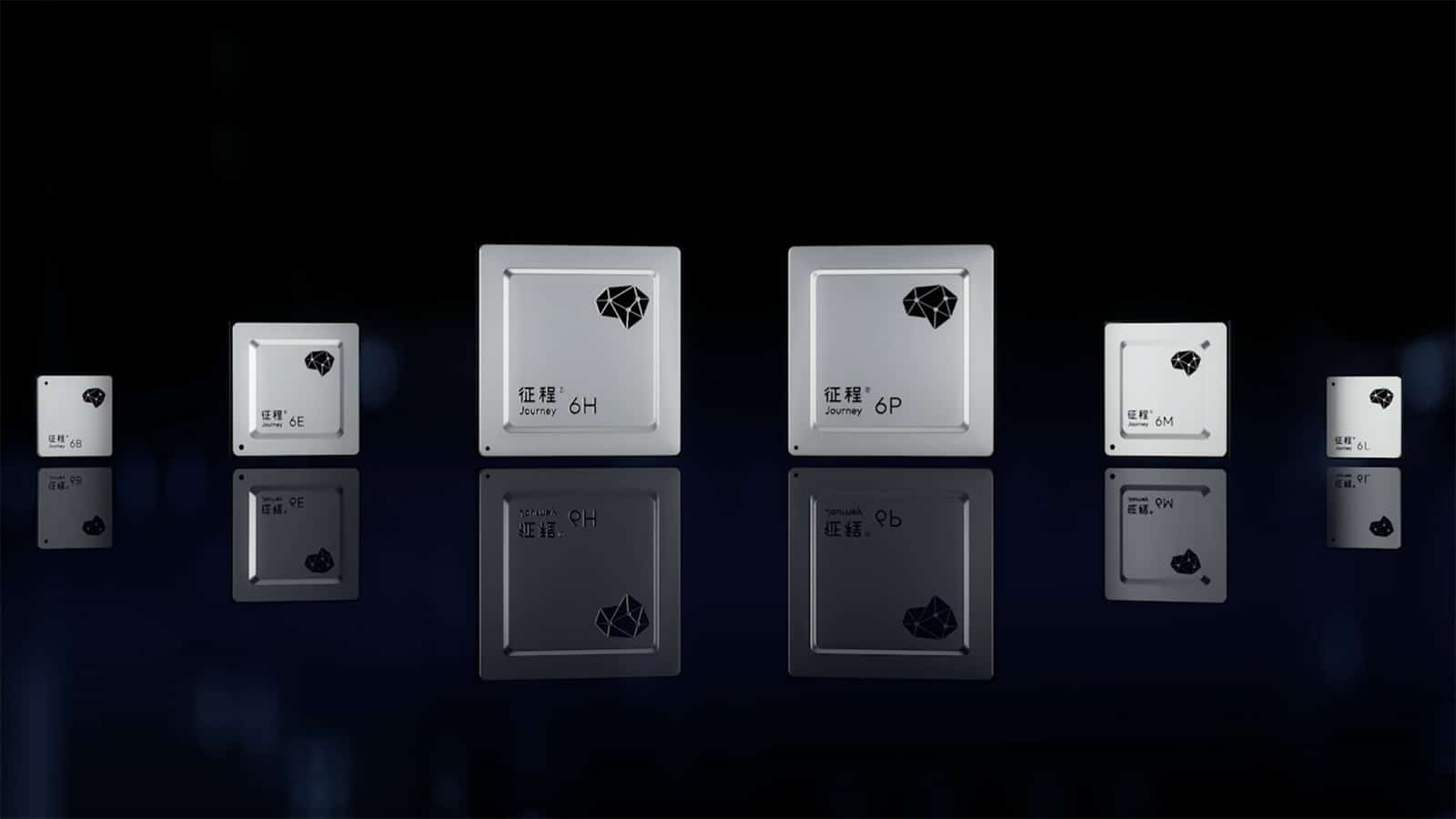
Chinese smart driving solutions provider Horizon Robotics is preparing a new generation of autonomous driving chips, with its upcoming Journey 7 (J7) series expected to significantly boost computing performance, local media reported on Thursday.
According to a report by LatePost, the highest-performance version of the J7 chip is set to surpass Nvidia’s Thor-X in computing power, with mass production planned for 2027. The new series will retain a family-based lineup designed to meet increasing demand for artificial intelligence processing in vehicles.
The development marks a shift in Horizon Robotics’ strategy, with product planning now led primarily by its algorithm team rather than its chip engineering division, the report said. The move reflects the company’s transition from a chip supplier to a broader provider of integrated hardware and software solutions.
In parallel, Horizon Robotics is preparing to launch a new integrated chip, named “Xingkong,” which combines cockpit and smart driving functions. The chip is expected to support localized deployment of large AI models in vehicles and is scheduled to enter mass production within 2026, according to the report.
Demand for high-performance automotive chips is rising rapidly as AI models used in vehicles become more complex, with parameter sizes expanding from millions to billions. Industry players are increasingly designing chips with additional computing headroom to accommodate future software advancements.
Horizon Robotics is facing intensifying competition in China, where automakers are developing in-house alternatives. Nio, for example, has introduced its own smart driving chips and is actively promoting its latest M97 processor to manufacturers such as Leapmotor and Geely, according to a separate report by 36Kr.
The M97 chip, developed in partnership with Axera Semiconductor, delivers computing power exceeding 700 tera operations per second (TOPS), compared with Horizon Robotics’ J6P chip at 560 TOPS.
Automakers are seeking cost-effective domestic alternatives to Nvidia’s solutions while aiming to maintain greater control over their driver-assistance systems. Horizon Robotics’ previous approach of bundling chips with proprietary algorithms has also led to hesitation among some customers, creating opportunities for competing offerings.