
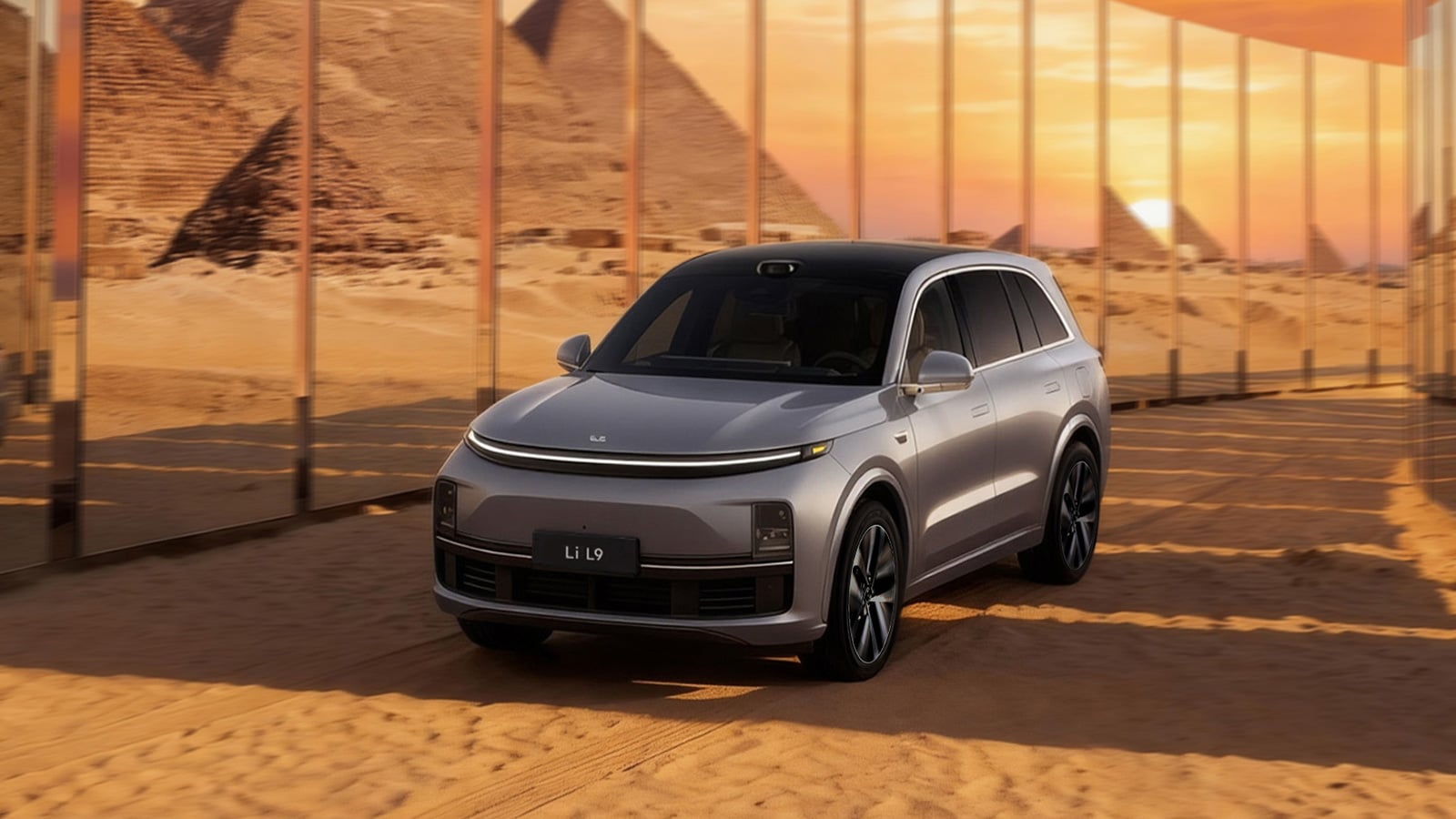
Li Auto has reportedly suspended orders for several versions of its L-series extended-range electric vehicles (EREVs), as the Chinese automaker prepares to launch updated models in the coming months.
The flagship Li L9 is no longer accepting new orders, while only limited configurations remain available for the Li L7 and Li L8, according to a report by local outlet Lanjinger citing sources familiar with the matter.
The move comes ahead of a broader product refresh, with the next-generation Li L9 expected to launch in the second quarter. Updated versions of other L-series models are also planned as part of the company’s strategy to revitalise demand.
Li Auto’s current lineup includes the L-series EREVs—L6, L7, L8, and L9—as well as battery electric vehicle (BEV) models such as the Li i6, Li i8, and Li Mega.
The company unveiled an updated version of the Li L9 last month, including a higher-spec Livis trim. The model features two in-house developed 5-nanometer M100 chips, delivering computing power of 2,560 TOPS.
Founder, Chairman, and Chief Executive Li Xiang said the next-generation L9 would strengthen the company’s technological competitiveness. “The next-generation Li L9 will build core competitive barriers at the technological level,” he said during a recent earnings call.
The product overhaul follows a challenging year for the company. Li Auto reported a 22.3% decline in revenue to 112.3 billion yuan ($16.3 billion) in 2025, while net income fell 85.8% to 1.1 billion yuan. Vehicle deliveries also dropped 18.8% to 406,343 units.
Despite these setbacks, Li Auto has set a target of achieving 20% sales growth in 2026, aiming to deliver around 490,000 vehicles.
In February, the company delivered 26,421 vehicles, marking a modest 0.6% year-on-year increase and ending an eight-month streak of declining deliveries.
To support its recovery, Li Auto has introduced a “3+2” growth strategy focused on improving sales management and ensuring a smooth transition to the next generation of L-series models.
The company is also expanding its battery electric lineup, with plans to launch the Li i9, a new flagship electric SUV, in the second half of 2026.
The suspension of orders highlights the company’s shift toward a new product cycle as it seeks to regain momentum in China’s increasingly competitive electric vehicle market.