
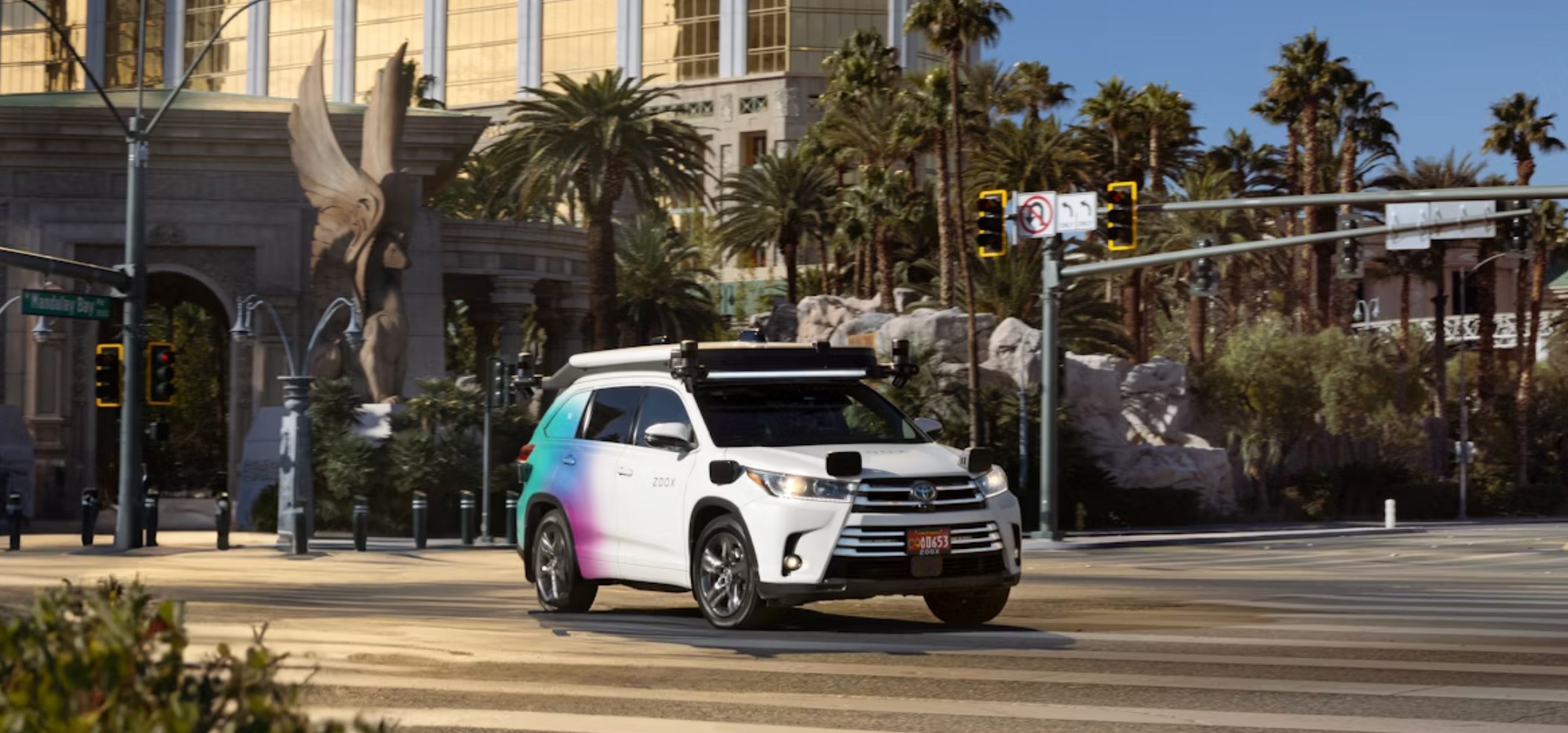
Autonomous driving company Zoox said it will begin testing operations in Dallas and Phoenix, deploying retrofitted SUVs with safety drivers as it prepares for a future commercial robotaxi service.
The company plans to use modified Toyota Highlander vehicles to map roads and collect operational data before eventually launching its purpose-built robotaxis. With the addition of the two cities, Zoox’s testing footprint in the United States will expand to 10 locations.
Supporting the expansion is a new operations hub in Scottsdale, described by the company as a “Fusion Center.” The facility will coordinate fleet operations, remote guidance and rider support services.
The selection of the two cities follows a strategy similar to other autonomous vehicle developers. Phoenix offers a grid-based road network along with extreme heat and dust conditions that can challenge sensors and battery systems, while Dallas provides complex highway interchanges and diverse traffic patterns.
Both locations are already key testing grounds for competitors. Waymo has operated a commercial robotaxi service in Phoenix since 2018 and expanded to Austin last year. Meanwhile, Tesla has also begun testing a small autonomous vehicle fleet in Austin.
Zoox differs from many competitors by developing a purpose-built robotaxi vehicle rather than modifying existing cars. The design features a bidirectional cabin without a steering wheel, with passengers seated facing each other. The vehicle also uses four independently steerable wheels and sensor pods at each corner to provide overlapping 270-degree coverage.
However, that design creates regulatory challenges. Because the vehicle lacks conventional driver controls, it does not fully comply with federal safety standards written for human-driven vehicles. Zoox is currently operating under a demonstration exemption granted in August 2025 by the National Highway Traffic Safety Administration, which limits production of such non-compliant vehicles to 2,500 units per year.
The regulatory framework may soon change. Zoox, along with Aurora Innovation and Waymo, is expected to participate in a forum organized by the National Highway Traffic Safety Administration on 10 March, where policymakers and industry representatives will discuss updates to autonomous vehicle regulations.
Current U.S. guidelines governing self-driving vehicles date back to 2017, and potential revisions could shape how companies scale robotaxi fleets. The production cap imposed by existing rules is seen as a significant constraint for Zoox’s commercial rollout.
By contrast, companies like Waymo can expand their services using road-legal vehicles already compliant with federal safety standards, such as SUVs purchased from traditional manufacturers. Zoox’s custom-built robotaxi design requires either regulatory changes or new exemption pathways before large-scale deployment.
Tesla’s planned Cybercab, which is also expected to lack traditional driver controls, could be affected by any regulatory updates as well, although no Tesla executives are scheduled to appear as panelists at the upcoming forum.
Zoox has already conducted limited public demonstrations in Las Vegas and San Francisco, where the company said it has provided rides to more than 300,000 passengers across over one million autonomous miles. The rides were offered to the public but were not commercially priced.
The mapping phase in Dallas and Phoenix is expected to take several months before autonomous testing with safety drivers begins. Deployment of Zoox’s purpose-built robotaxis in those cities would require additional regulatory approvals.