
A European research consortium has launched a new initiative aimed at advancing hydrogen propulsion for ships by developing megawatt-scale fuel cell systems capable of operating for extended periods in demanding maritime environments.
The project, known as MiNaMi—short for Million Nautical Mile Fuel Cell System—is supported by approximately €7 million in European funding and involves nine industry and research partners working across the hydrogen technology value chain.
The programme aims to develop Europe’s first proton exchange membrane (PEM) fuel cell system in the megawatt power range designed to operate for at least 80,000 hours, equivalent to more than one million nautical miles at a vessel speed of 12.5 knots.
The initiative officially began in mid-February with a project launch meeting in Espoo, Finland, and is coordinated by Technical Research Centre of Finland VTT.
Researchers say the project will focus on improving the durability and performance of fuel cell systems used in maritime applications.
“Durability in fuel cell systems is influenced not only by stack technology but also by system integration, control strategies, operating profiles and maintenance concepts,” said PowerCell Sweden, one of the project participants.
“Projects such as MiNaMi are therefore essential for advancing the technology frontier towards ultra-long lifetime operation in demanding maritime environments,” the company added.
The consortium is developing a modular PEM fuel cell platform along with the power electronics needed for systems exceeding 10 megawatts. The technology could support the electrification of large vessels and other high-power applications, including potential aviation uses.
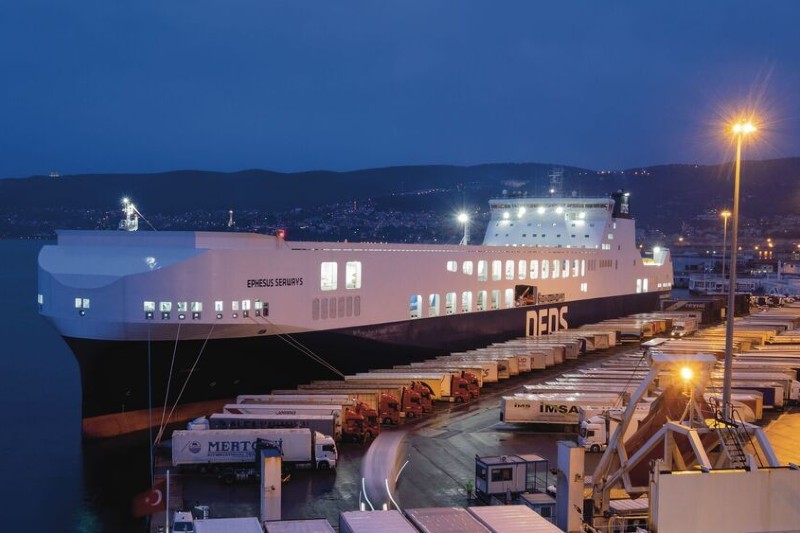
In addition to VTT and PowerCell, the project brings together several industrial and research partners including DFDS, Vaisala Oyj, ABB Marine & Ports and Allengra.
Research organisations participating in the initiative include SINTEF, Centre for Research and Technology Hellas and Fondazione Bruno Kessler.
PowerCell Sweden said the project builds on its previous work in maritime fuel cell technology. In 2025 the company introduced the MS-500 system, which produces 500 kilowatts per unit and can deliver up to one megawatt of net output when two systems are combined.
The company expects the system to reach market readiness around 2028.
According to project partners, MiNaMi aims to deepen understanding of how fuel cell systems behave over long operational lifetimes in maritime conditions.
“Validating operation towards 80,000 hours is not only about endurance,” said Andreas Bodén. “It is about understanding system behaviour, optimisation strategies and lifecycle performance at a deeper level.”
He added that the knowledge generated by the project could support both future fuel cell platforms and existing product lines while contributing to the development of zero-emission shipping technologies.
Source: vttresearch.com, powercellgroup.com