
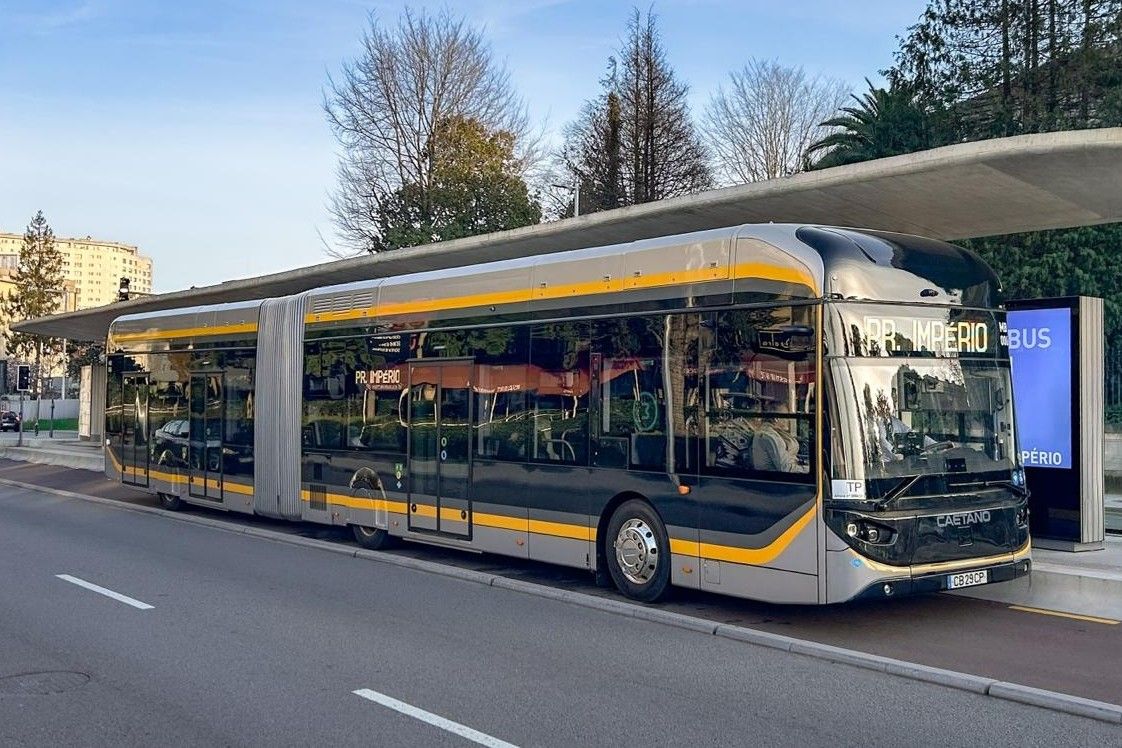
Porto has placed its first hydrogen-powered Bus Rapid Transit (BRT) system into operation, deploying a fleet of fuel cell buses supplied by CaetanoBus. The project includes twelve 18-metre articulated H2.CityGold buses and forms part of a broader hydrogen mobility ecosystem developed for the city.
The Portuguese manufacturer is acting as consortium leader and coordinating the implementation of the entire system. In addition to delivering the buses, the project covers hydrogen production, refuelling infrastructure and energy management systems.
Under the agreement, CaetanoBus has assumed responsibility for coordinating the various project partners and integrating the key components of the hydrogen mobility system. The scope includes the supply of the articulated fuel cell buses, the installation of a local green hydrogen production unit, and the commissioning of hydrogen refuelling infrastructure.
The project also involves the deployment of photovoltaic systems to provide renewable electricity, the implementation of depot energy management and fleet optimisation systems, and the development of a maintenance facility adapted for hydrogen-powered buses.
The initiative has been implemented in collaboration with Metro do Porto, STCP, PRF Gas Solutions and dstsolar.
CaetanoBus describes the project as an example of its “One Face to the Customer” strategy, which aims to deliver hydrogen mobility through a single integrated contract covering vehicles, infrastructure and operational services. According to the company, this structure is intended to simplify project implementation and reduce risks related to the total cost of ownership.
“For the Portuguese manufacturer, this project represents a pivotal strategic step,” said Nuno Lago de Carvalho. “By leading the consortium to deliver a fully integrated mobility solution, we demonstrate our capability to structure and manage complex, multi-stakeholder zero-emission mobility ecosystems from design through implementation and real-world operation.”
As part of its longer-term strategy, CaetanoBus plans to introduce a pay-per-use model for hydrogen mobility. Under this approach, transport operators would access vehicles, energy infrastructure and maintenance services through an operating expenditure model rather than making large upfront investments.
Instead of purchasing buses and infrastructure outright, customers would pay based on kilometres driven. The company says this structure could lower financial barriers and support faster adoption of zero-emission public transport solutions.