
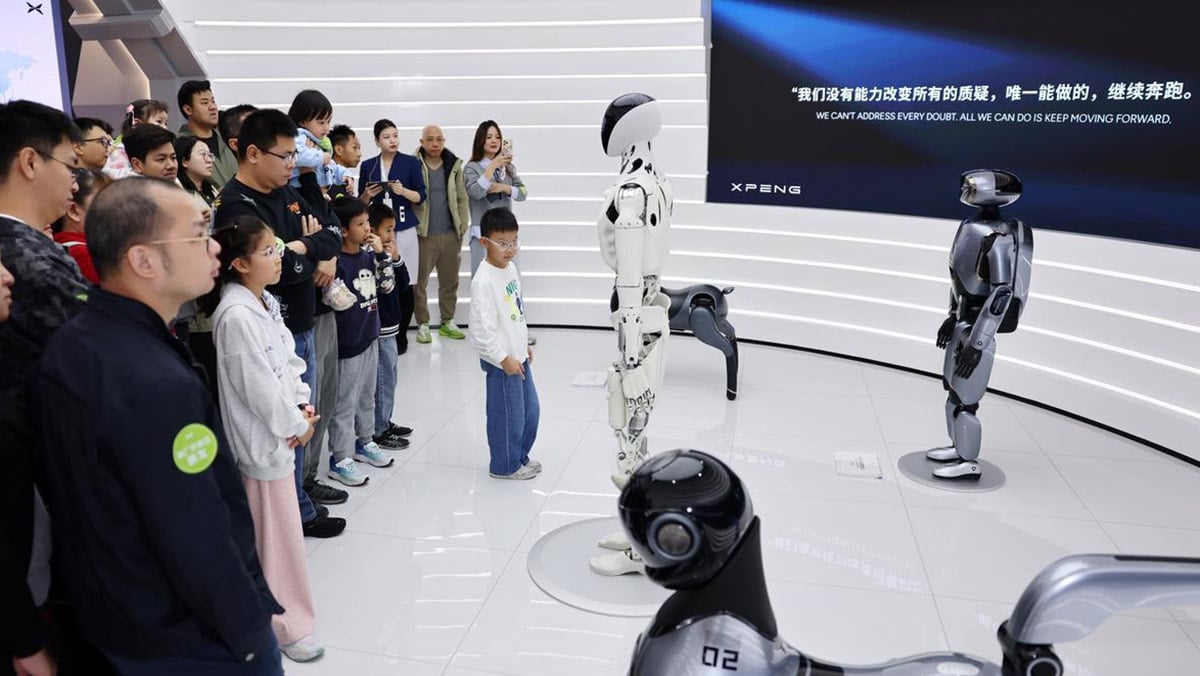
Xpeng said it will begin construction of a large-scale humanoid robot production base in Guangzhou this quarter, as the Chinese electric vehicle maker expands its artificial intelligence strategy into robotics.
The planned facility, located in the Tianhe district’s Guangtang Sci-Tech Innovation City, will cover about 110,000 square metres and is intended to support the mass production of advanced humanoid robots by the end of 2026. Xpeng described the project as the industry’s first “full-chain” manufacturing base for such machines.
See also: Volkswagen to Use Xpeng VLA 2.0 as Smart Driving Solution
Phase one of the development will include factory buildings, power infrastructure and related facilities designed to support industrial-scale production. The company signed a cooperation agreement with the Tianhe district government to establish the base, which will integrate research and development, testing, pilot production and large-scale manufacturing.
Xpeng said the initiative aims to address key challenges facing the humanoid robotics sector, including limited high-quality training data and the complexity of scaling hardware and software supply chains.
Chief Executive He Xiaopeng said last month that the company had completed its first prototype humanoid robot, known as ET1, developed using engineering standards derived from the automotive industry. Xpeng has been leveraging its experience in smart vehicles to support its robotics programme.
See also: Xpeng February Deliveries Fall 49.90% to 15,256 Units Year on Year
At an AI-focused event late last year, the company unveiled a next-generation humanoid robot called Iron. The machine stands about 178 centimetres tall and weighs around 70 kilograms, with a human-like structure and flexible outer materials. It uses solid-state batteries and is powered by three in-house Turing AI chips providing combined computing performance of about 2,250 trillion operations per second.
The robot also incorporates Xpeng’s Vision-Language-Action model, designed to enable conversational interaction and coordinated physical tasks.
The move comes as competition intensifies in China’s electric vehicle market, prompting manufacturers to diversify into adjacent technologies. Xpeng said it aims to leverage its software, artificial intelligence and manufacturing capabilities to gain an early position in the emerging field of embodied AI.