
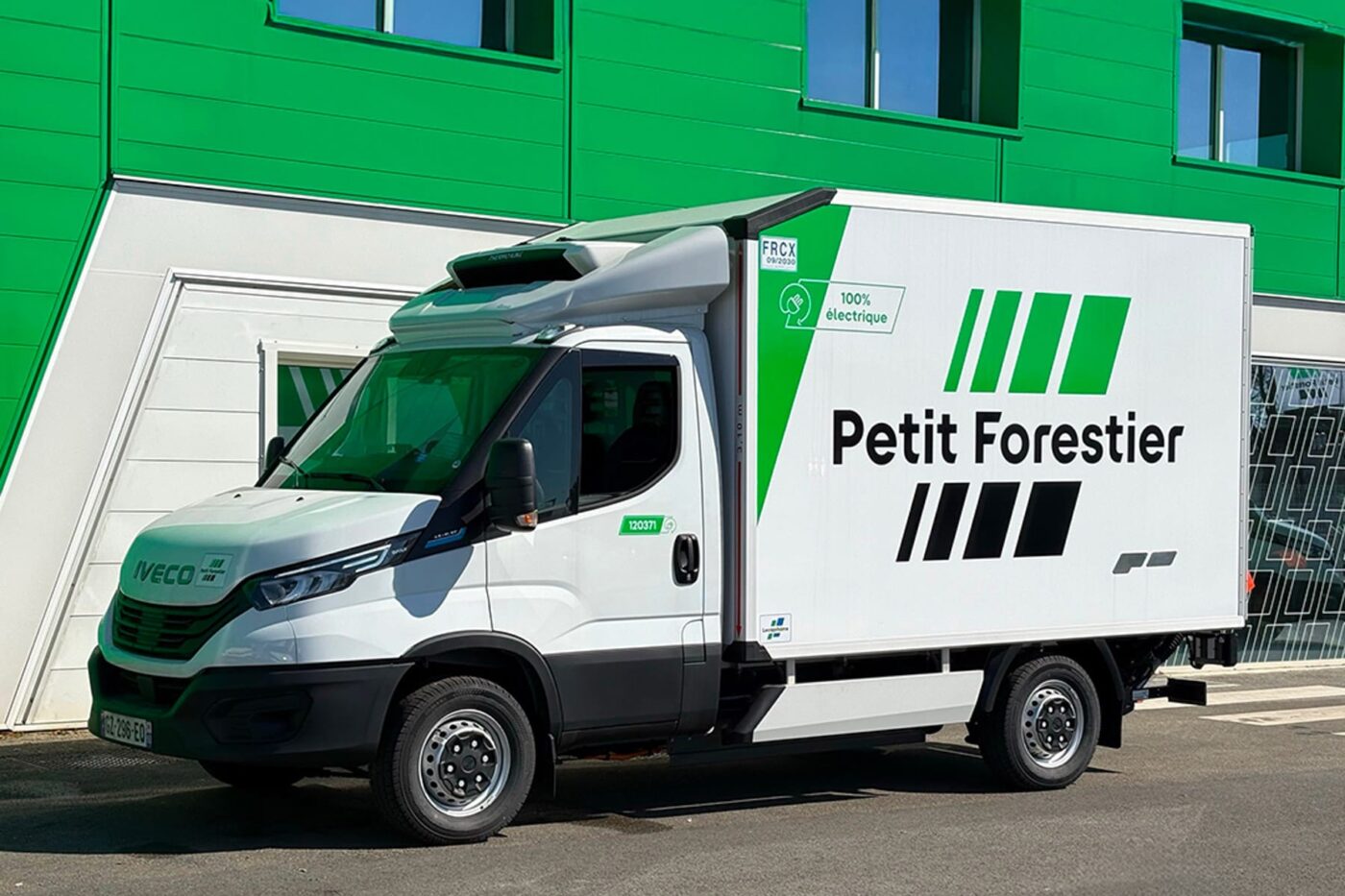
The Petit Forestier Group has secured a €150 million loan from the European Investment Bank (EIB) to accelerate the electrification of its refrigerated transport fleet across Europe.
The France-based rental specialist plans to use the funding to acquire approximately 4,000 battery-electric refrigerated vehicles by 2029, primarily for deployment in France, Italy and Spain. The company said the additions would bring electric vehicles to about 5% of its fleet, which currently totals around 80,000 units.
The financing aligns with the EIB’s strategy to support low-carbon transport and energy transition projects within the European Union. “This maiden EIB loan to Petit Forestier Group is in line with our low-carbon transport strategy,” said EIB Vice-President Ambroise Fayolle, noting that refrigerated transport is essential for food and pharmaceutical supply chains.
Chief Executive Léonard Forestier said the loan would enable the company to scale its transition to zero-emission vehicles over the coming years. “This financial partnership demonstrates our approach, which is based on continuity, stability and long-term sustainability,” he said. Procurement of the new vehicles is expected to begin this year and continue through the end of the decade.
Founded nearly 120 years ago, the family-owned company operates in 24 countries and employs about 5,900 people. Its business spans the rental of refrigerated vehicles, containers and systems, as well as the manufacture and servicing of refrigeration equipment.
Petit Forestier has previously partnered with Iveco on electric vehicle deployment. In December, the company added nearly 300 Iveco eDaily electric vans to its fleet as part of a broader agreement for up to 2,000 units with refrigerated bodies supplied by Lecapitaine. Neither party has confirmed whether the new EIB funding will be used to expand this order, though the timeline suggests additional procurement will be required.
Electric refrigerated transport presents particular challenges due to the energy demands of both propulsion and cooling systems. Industry observers say large-scale adoption will depend on advances in battery performance, charging infrastructure and total cost of ownership compared with diesel alternatives.