
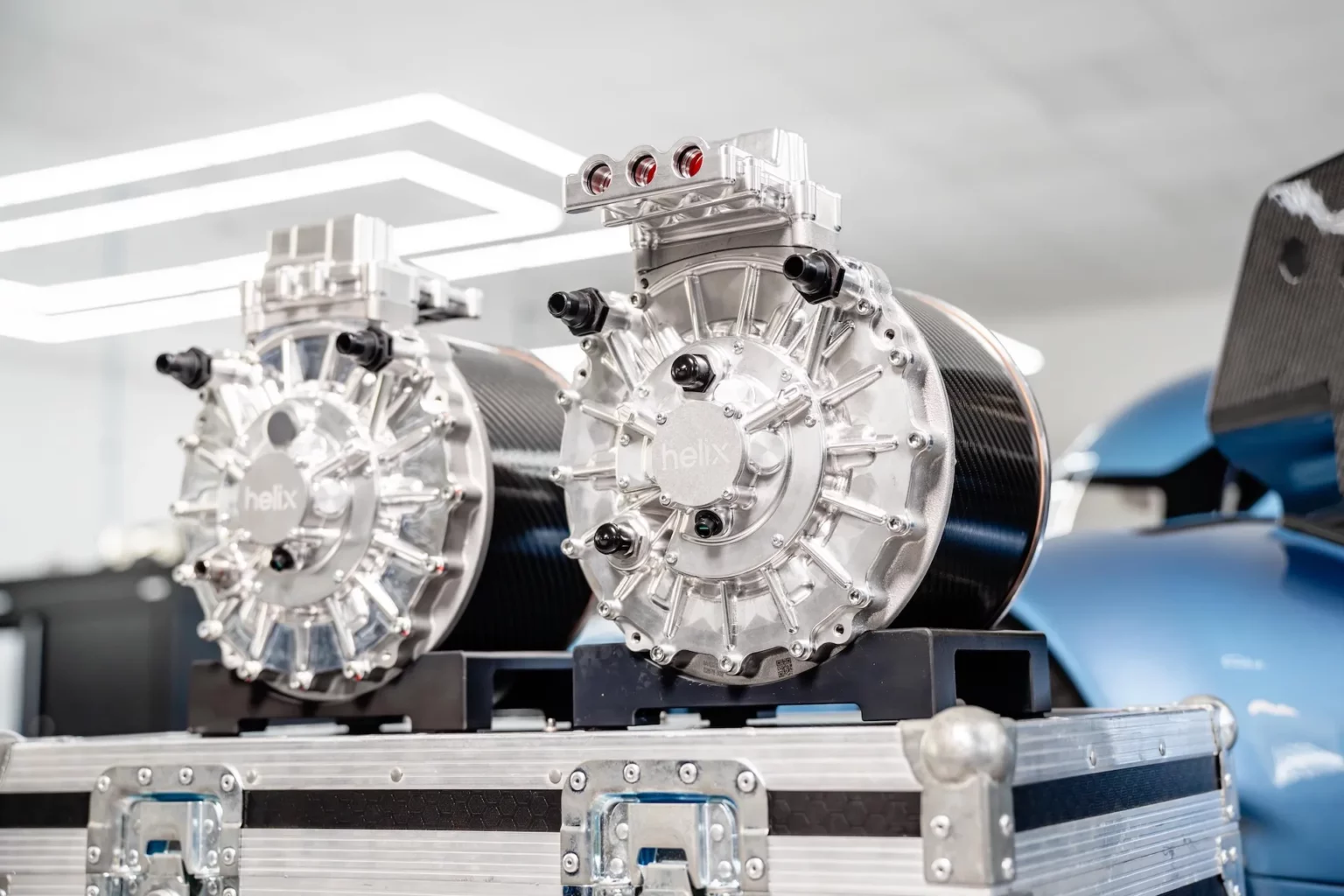
UK-based electric motor specialist Helix has partnered with McMurtry Automotive to provide a bespoke twin-motor propulsion system for the McMurtry Spéirling electric fan hypercar, with production deliveries scheduled to begin in 2026. The rear-wheel-drive setup uses two Helix SPX242-94 electric motors delivering a combined output of up to 1,000 horsepower.
Each motor produces around 500 Nm of torque while weighing just 33 kilograms, enabling a compact packaging layout suited to the Spéirling’s single-seat design. The propulsion system integrates with McMurtry’s gearbox and operates alongside the vehicle’s proprietary Downforce-on-Demand fan system, which generates aerodynamic grip independent of speed.
Performance targets for the Spéirling include acceleration from 0 to 60 mph in about 1.5 seconds and a quarter-mile time of roughly eight seconds. The car has already demonstrated its capabilities in competition settings, setting benchmark times at events such as the Goodwood Festival of Speed and the Laguna Seca Hill Climb, as well as recording the fastest lap at the Top Gear test track.
Building on the program, McMurtry has established a new division, McMurtry Technology, to offer elements of the Spéirling’s engineering—such as fan-based downforce systems, high-performance battery modules, and e-axles—to other manufacturers. The company said these technologies could be applied to both performance and safety improvements in future vehicle platforms.
Helix, whose components are also used in motorsport series including Formula E, said the collaboration reflects its broader strategy of adapting racing-derived electric propulsion technologies for production applications across automotive and other sectors, including aerospace, marine, and defense.
“Helix propulsion systems have featured throughout the hypercar’s evolution, from prototype to production,” said Simon Mead, Automotive Chief Engineer at Helix, describing the Spéirling as an example of advanced British engineering and a demonstration of next-generation electric propulsion capabilities.