
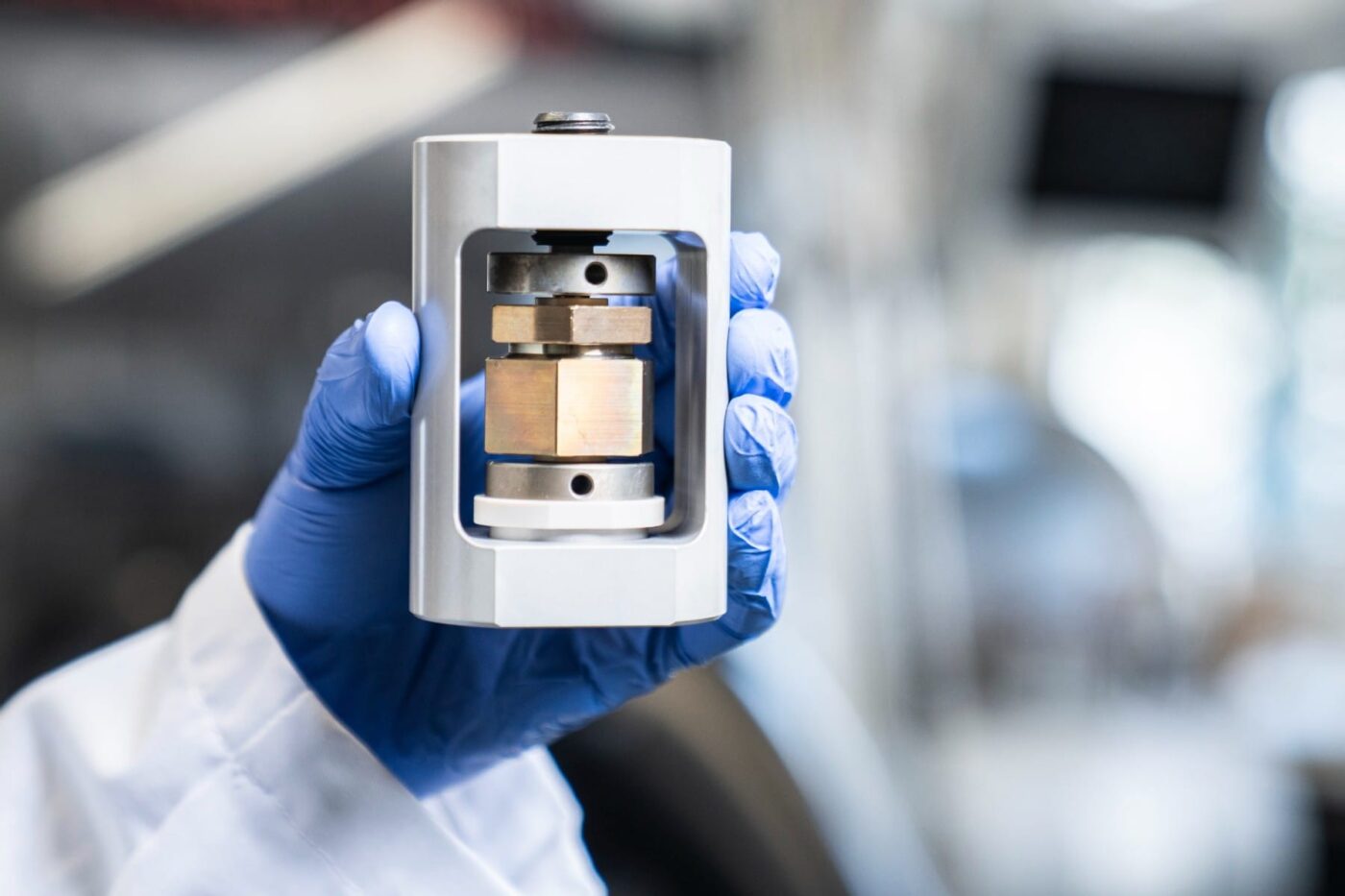
Solid-state batteries could move closer to commercial use after researchers at Switzerland’s Paul Scherrer Institute (PSI) presented a new production method designed to address key technical barriers that have so far limited large-scale adoption.
Solid-state batteries replace the liquid electrolyte used in conventional lithium-ion batteries with a solid, ion-conducting material. The technology is widely viewed as a potential breakthrough for electric vehicles because it promises improved safety by eliminating flammable liquids, while enabling higher energy density through the use of thin lithium-metal anodes. Higher energy density could translate into longer driving ranges or lighter battery packs.
See also: Finland’s Donut Lab Unveils Solid-State Battery for OEM Use, Targeting 2026 Motorcycle Deployment
Despite strong industry interest, several challenges have slowed progress. One major issue is the formation of lithium dendrites—needle-like metal structures that can grow through the solid electrolyte, eventually causing short circuits. Another challenge lies at the interface between the lithium-metal anode and the solid electrolyte, where electrochemical instability can degrade performance over time. Automakers and battery developers including Volkswagen, Mercedes-Benz and Stellantis have invested heavily in solid-state battery specialists, but the technology has yet to reach mass production.
PSI researchers say they have now addressed both issues through a revised manufacturing process. “We combined two approaches that, together, both densify the electrolyte and stabilise the interface with the lithium,” said Mario El Kazzi, head of the Battery Materials and Diagnostics Group at PSI.
See also: QuantumScape Signs Development Deal With Top-10 Automaker, Expanding Solid-State Battery Push
The work focuses on an argyrodite-type sulphide electrolyte known as Li₆PS₅Cl, which is valued for its high lithium-ion conductivity. Instead of compressing the material at room temperature—resulting in porous structures—or heating it above 400 degrees Celsius, which risks decomposition, the team applied moderate heat and pressure to achieve a denser structure. To further stabilise the battery, the researchers added an ultra-thin lithium fluoride coating, around 65 nanometres thick, to the lithium-metal anode to protect the interface.
In laboratory testing, cells produced using the method retained about 75% of their capacity after 1,500 charge and discharge cycles. PSI said the results indicate that solid-state batteries could eventually outperform conventional lithium-ion batteries with liquid electrolytes in both energy density and durability, supporting their potential role in future electric vehicles and energy storage systems.