
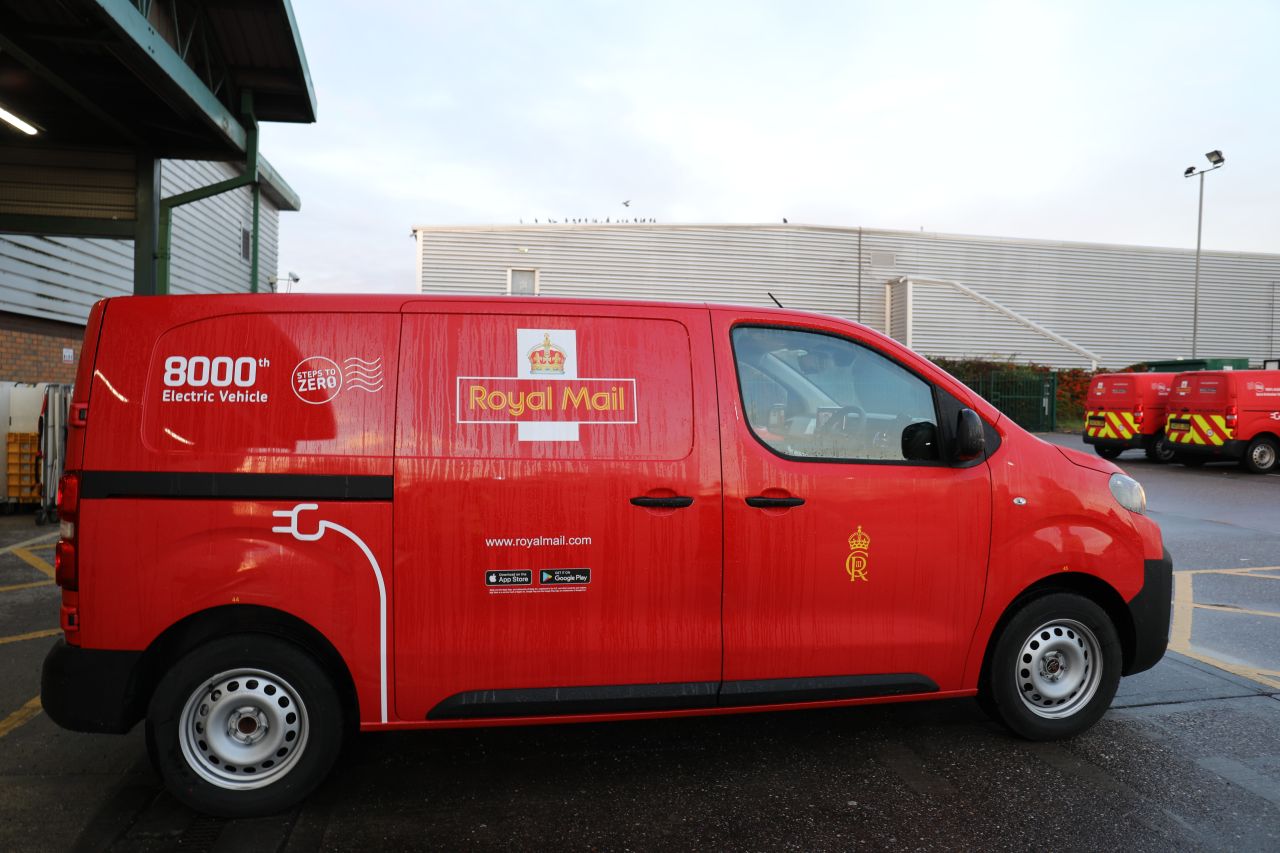
Royal Mail said it has introduced its 8,000th electric vehicle into service in the UK, marking a milestone in the company’s effort to decarbonise its delivery operations as it works toward a net-zero target by 2040.
The latest electric van has entered service at the Nottingham North Delivery Office, joining 48 electric vehicles already operating there for daily deliveries and collections. The milestone comes during Royal Mail’s busiest period of the year, from Black Week through the end of January, when parcel volumes typically rise due to post-holiday returns.
See also: Royal Mail Begins Electric HGV Operations With DAF Trucks at Two UK Hubs
Royal Mail said the expansion reinforces its position as the UK’s largest operator of electric delivery vehicles. The company began electrifying its fleet in December 2017 with an initial purchase of 100 electric vans and said that nearly a quarter of its delivery offices now use electric vehicles as part of core operations. Almost all of its electric vans are charged on-site using electricity sourced from a fully renewable supply.
Alongside electric vans, Royal Mail has started deploying micro electric vehicles (MEVs) for dense urban routes and specialist deliveries. More than 100 MEVs are being rolled out across locations including London, Bristol, Brighton, Solihull, Newcastle-under-Lyme and the Scilly Isles, following the unveiling of the first units at the Lady Mayor’s Show in London last month.
See also: Royal Mail Deploys Over 100 Micro EVs to Replace Larger Vans in UK Cities
“Reaching 8,000 electric vehicles is a proud moment for Royal Mail,” said Stuart Murphy, head of fleet transformation at Royal Mail. “This achievement reflects our commitment to reducing emissions and delivering an even more sustainable postal service in every community across the UK.”
The company has also begun operating its first electric heavy goods vehicles, deploying eight DAF Trucks XD 350E electric trucks at its parcel hubs in Daventry and Warrington, as part of its broader ‘Steps to Zero’ environmental strategy, which includes interim emissions targets for 2030.