
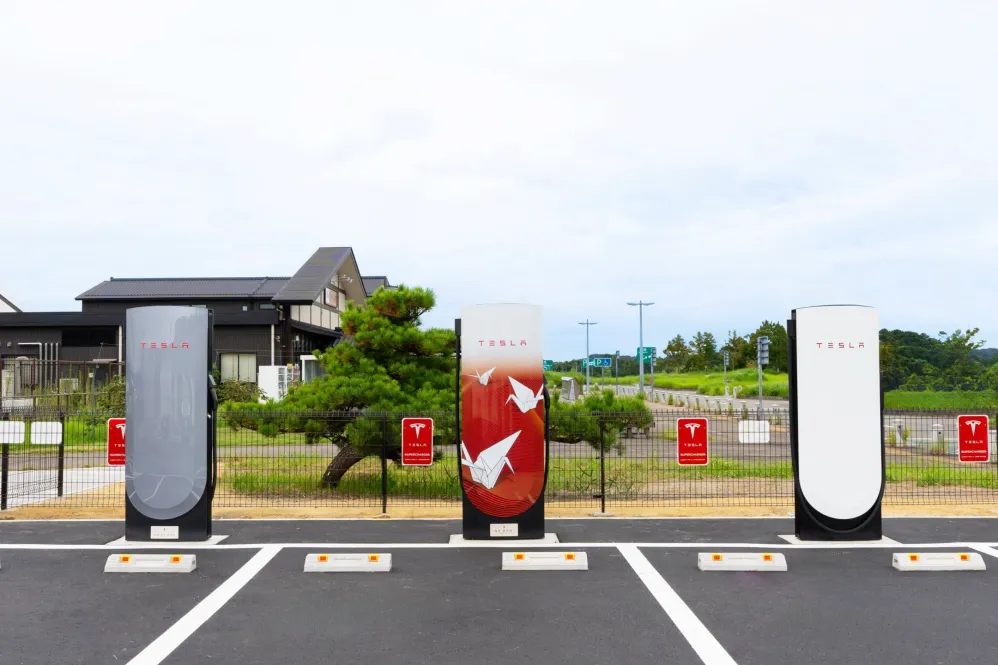
Tesla is preparing for a significant expansion of its charging infrastructure in Japan, with plans to install more than 1,000 Supercharger stalls across the country by 2027. This infrastructure push aims to capitalize on rapidly accelerating demand for the brand in the Japanese electric vehicle (EV) market.
According to a report by Nikkei Asia, Tesla, which currently operates 695 Supercharger stalls at 138 stations, is expected to increase its footprint to between 180 and 200 locations over the next two years. The expansion will extend the Supercharger network’s coverage beyond major metropolitan areas and popular travel corridors.
See also: Tesla Expands FSD Testing to Japan and Eyes Thailand Launch
The move comes as Japanese consumers increasingly embrace the brand. Tesla’s sales in Japan reached nearly 10,100 units from January to November 2025, a figure that doubled the previous year’s results and marked the first time the company has surpassed 10,000 annual sales in the country. This puts Tesla at approximately 30% market share in the standard-size EV segment, though smaller ‘Kei’ EVs still account for about $40\%$ of overall EV sales.
The Supercharger deployment signals a growing challenge to Japan’s legacy fast-charging standard, CHAdeMO, which currently accounts for over 12,600 units operational nationwide. Tesla’s North American Charging Standard (NACS) offers faster speeds and seamless integration compared to using CHAdeMO chargers with an adapter.
See also: Japan Weighs Charging Station Subsidies for Tesla Amid Trade Talks with U.S.
The transition toward the NACS standard is also gaining momentum from other industry players. Charging providers, including ABB and local supplier PowerX, are preparing to deploy NACS-compatible equipment, adding to the estimated 350 Tesla-standard chargers already operated by third parties.
Furthermore, major automakers, including Mazda, Sony Honda Mobility, and Stellantis, have announced plans to support Tesla’s charging standard, with the first NACS-equipped models slated for arrival in the Japanese market as early as 2027.