
U.S. solid-state battery developer Factorial Energy has signed a partnership agreement with South Korean battery materials maker Posco Future M to jointly develop advanced materials for next-generation all-solid-state batteries, the two companies said.
Under the memorandum of understanding, Posco Future M will work with Factorial to supply cathode and anode materials designed specifically for solid-state battery applications. Factorial said it decided to formalize the partnership after testing Posco’s materials and confirming their performance in early-stage solid-state battery cells.
See also: Factorial Energy Scales Solstice Solid-State Battery to 40 Ah Capacity
Solid-state batteries replace conventional liquid electrolytes with solid materials, a change widely expected to improve driving range, charging speed and battery safety. The technology remains in the pre-commercial phase, but it is drawing growing interest from major automakers seeking performance gains and longer-term cost reductions.
Hong Young-Jun, head of the Technology Research Laboratory at Posco Future M, said the partnership combines complementary strengths. “We expect synergy in the next-generation all-solid-state battery business based on Factorial’s battery technology and market presence with global automakers, and POSCO Future M’s competitiveness in cathode and anode materials,” he said.
See also: Factorial Energy and LG Chem to Collaborate on Solid-State Battery Development
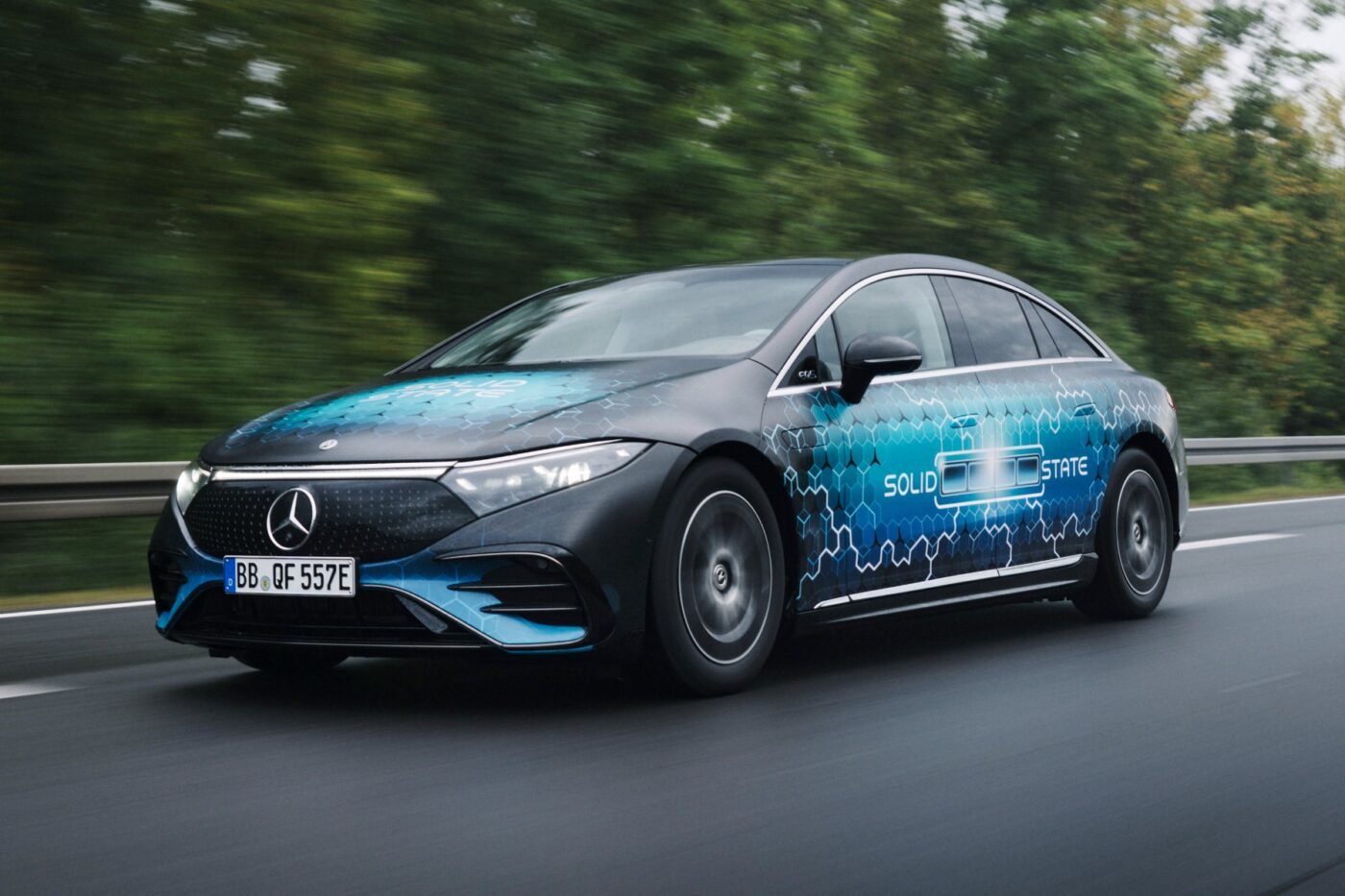
Factorial has already secured strategic partnerships with Mercedes-Benz and Stellantis. In August, a Mercedes-Benz EQS test vehicle equipped with a solid-state battery completed a 1,205-kilometre journey from Stuttgart to Malmö without recharging, highlighting the potential of the technology. Stellantis and Factorial also plan to deploy a demonstration fleet of solid-state battery-powered Dodge Charger Daytona vehicles in 2026.
Factorial Chief Executive Siyu Huang said the agreement with Posco is aimed at accelerating commercial readiness. “Solid-state batteries are entering a new era of commercial readiness,” Huang said. “We expect work with POSCO Future M to not only accelerate innovation in critical cathode and anode materials, but also strengthen a resilient global supply chain and drive meaningful cost reductions at scale.”
The partnership reflects growing efforts across the global battery industry to secure upstream materials for solid-state technologies as manufacturers prepare for potential commercial deployment later this decade.