
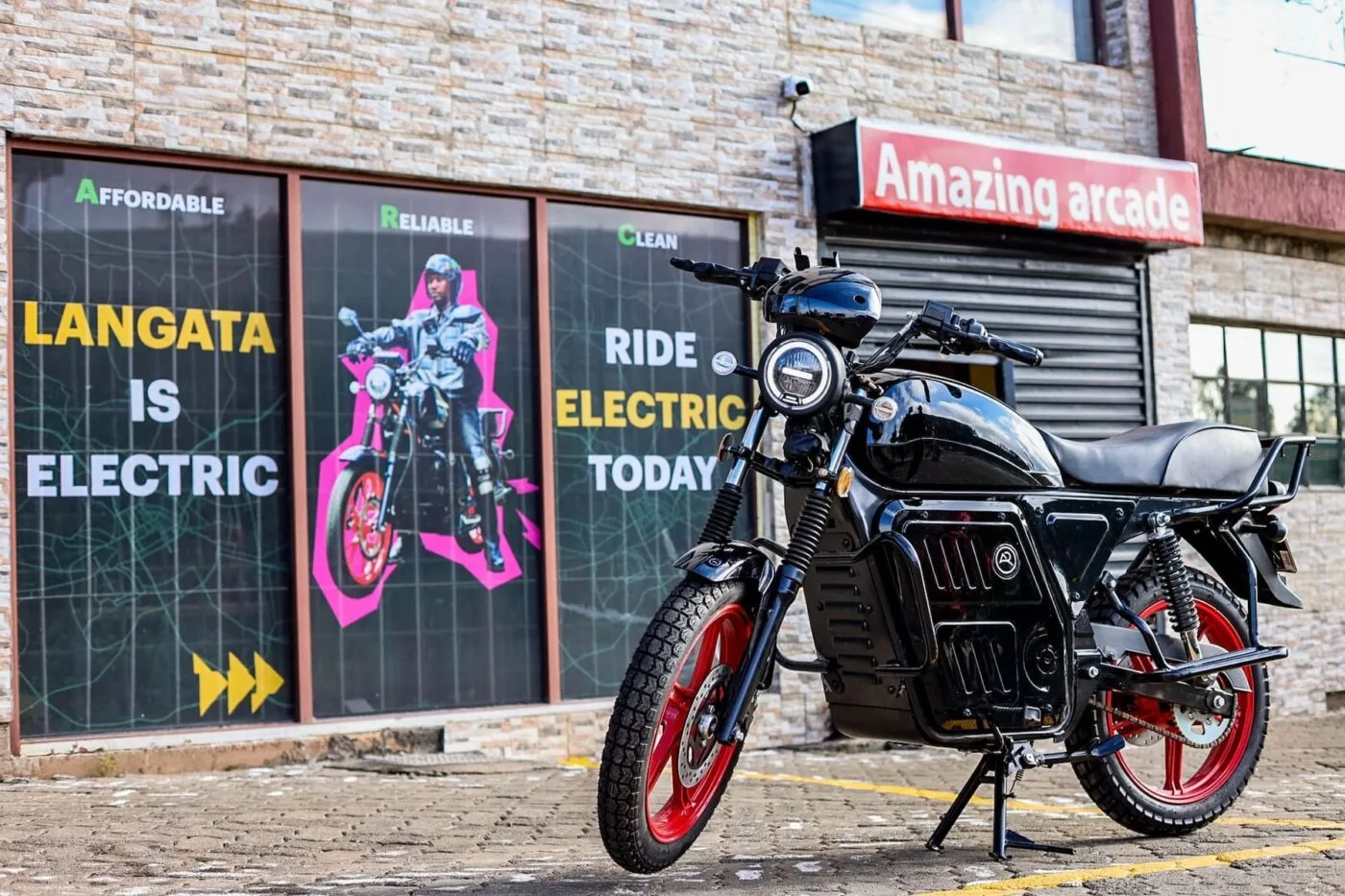
French sustainability investor Mirova will provide up to $10 million in loan financing to ARC Ride, a Kenya-based electric mobility company, to support the rollout of 600 battery-swapping stations for electric motorcycles in Nairobi, the companies said.
The investment will accelerate ARC Ride’s plan to establish a large-scale Battery-as-a-Service (BaaS) network for two- and three-wheeled electric vehicles in Africa’s rapidly growing urban centers. Founded in 2019, the company’s business model focuses on renting batteries to riders and enabling quick exchanges at its own charging and swapping facilities.
See also: GreenWay Secures Over €50 Million Investment from Mirova to Expand Charging Network
ARC Ride currently offers two electric motorcycle models — the Bidii Boda, which has a 5.1 kW motor, a top speed of 90 kph and a range of 85 km, and the smaller Corbett model, with a 1.2 kW motor and a range of 60 km. Both use LFP batteries with a 1.44 kWh capacity that can be swapped at the company’s exchange stations. A mobile app supports users in locating stations and managing battery rentals.
“With Mirova’s support, we’re not only scaling our operations in Kenya, we are laying the groundwork for a cleaner transport future across wider regions in Africa,” said ARC Ride founder and CEO Joseph Hurst-Croft.
Mirova investment manager Rim Azirar said the funding aligns with the firm’s goal of backing high-impact climate solutions in emerging markets. “ARC Ride is redefining urban mobility in Africa through a scalable model that reduces emissions and improves livelihoods,” Azirar said.
See also: Kenya Launches €39.5 Million National EV Charging Plan Targeting 10,000 Stations By 2030
ARC Ride already collaborates with major partners such as Domino’s Pizza, which uses its electric motorcycles for deliveries in Nairobi, and Uber Boda, a local motorcycle taxi service. The expansion of battery-swapping infrastructure is expected to further reduce fuel dependency and maintenance costs for riders, many of whom work in the gig economy.
Kenya has set ambitious goals for electric mobility, targeting 100,000 electric motorcycles and tuk-tuks by 2029 under a program with KCB Bank and the United Nations Institute for Training and Research (UNITAR). The government has also partnered with electric motorcycle manufacturer Spiro to deploy more than one million e-motorcycles and 3,000 battery-swapping stations nationwide.