
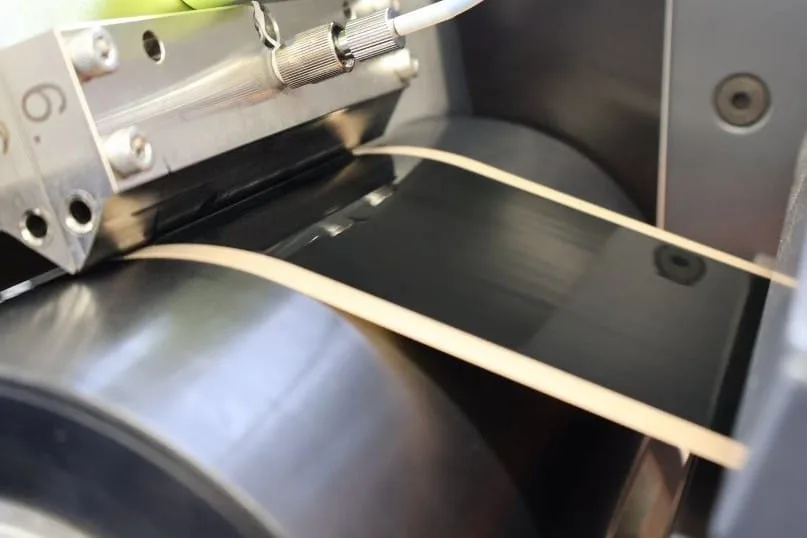
Germany’s Fraunhofer Institute for Solar Energy Systems (ISE) has unveiled a new flexible platform to accelerate production of membrane electrode assemblies (MEAs), a core component in polymer electrolyte membrane (PEM) fuel cells. The facility is open to manufacturers and plant builders to test and optimize processes.
The platform focuses on continuous, scalable manufacturing methods to reduce costs and support growing demand for emission-free transport. Fraunhofer ISE estimates the annual need at 1.2 million square metres of active MEA area to equip 20,000 fuel cell trucks, with each requiring about 30 square metres of membrane and 60 square metres of catalyst layer. For electrolysis, 25,000 to 35,000 square metres of catalyst-coated membrane are required per gigawatt of new capacity.
“However, these quantities cannot be achieved with current manufacturing processes. For the expected market ramp-up, existing plant concepts must be adapted and scalable production methods have to be developed,” the researchers said.
Fraunhofer ISE is testing the entire chain, from catalyst powder treatment to the seven-layer MEA structure. The institute highlighted catalyst layer production as a key step, with interchangeable printing units now enabling slot die, rotary, or indirect gravure processes. Inline quality control is integrated to monitor changes during production.
“We are the only research institute in the world that will have industrial-scale production facilities, including microstructure analysis and characterization of MEAs in the test bench, which allows for rapid transfer from the laboratory to production,” said Ulf Groos, Head of the Fuel Cell Department at Fraunhofer ISE. Project manager Linda Ney added that a new track-and-trace system is being developed to identify products during processing.