
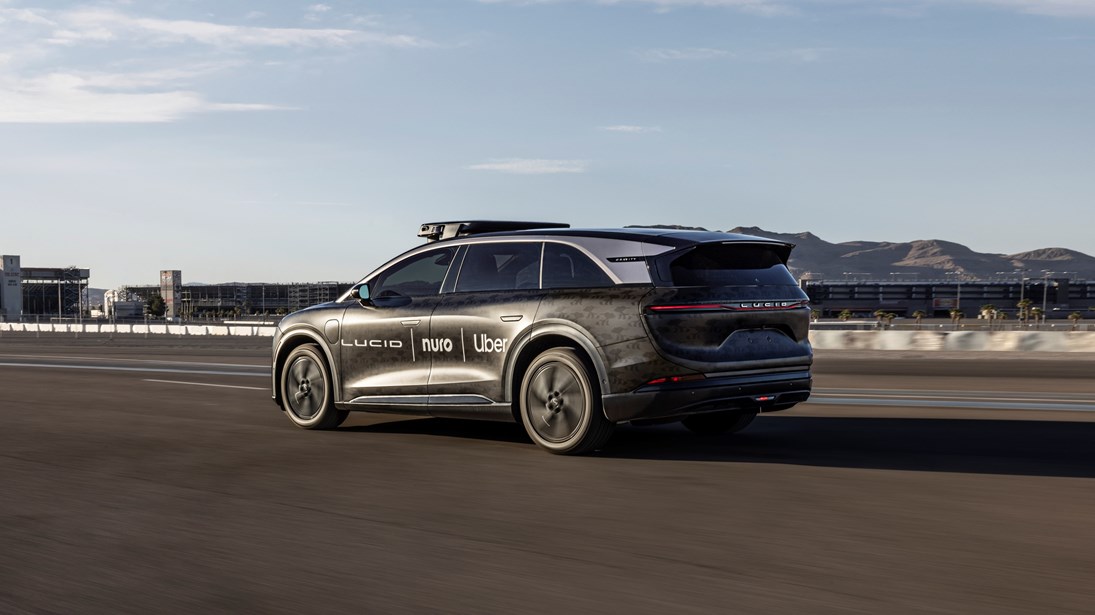
Lucid said it has handed over the first Gravity SUV to autonomous vehicle developer Nuro, marking the initial milestone in a multi-year deal with Uber to deploy at least 20,000 self-driving cars in the United States.
The prototype was assembled at Lucid’s Casa Grande, Arizona, factory before being transported to its Newark, California, headquarters, where Nuro engineers installed sensors and hardware for autonomous operation. Unlike this engineering prototype, future vehicles are expected to be retrofitted on Lucid’s production line prior to delivery.
The SUV has since been moved to Nuro’s Santa Clara facility, where engineers are integrating the Nuro Driver software and beginning validation tests. The companies plan to introduce their first operational robotaxi on Uber’s ride-hailing platform as early as next year.
The July agreement between Lucid, Uber, and Nuro called for the deployment of “a minimum” of 20,000 autonomous vehicles over six years, with Nuro executives suggesting the figure could grow significantly. However, scaling up remains a challenge in the sector, where early expectations of tens of thousands of vehicles have largely fallen short.
Waymo currently operates fewer than 2,000 vehicles across limited markets, while Tesla runs a small number of supervised “robotaxis” in Austin, Texas. Broader rollouts of autonomous fleets have been slowed by technical hurdles and regulatory uncertainty.