
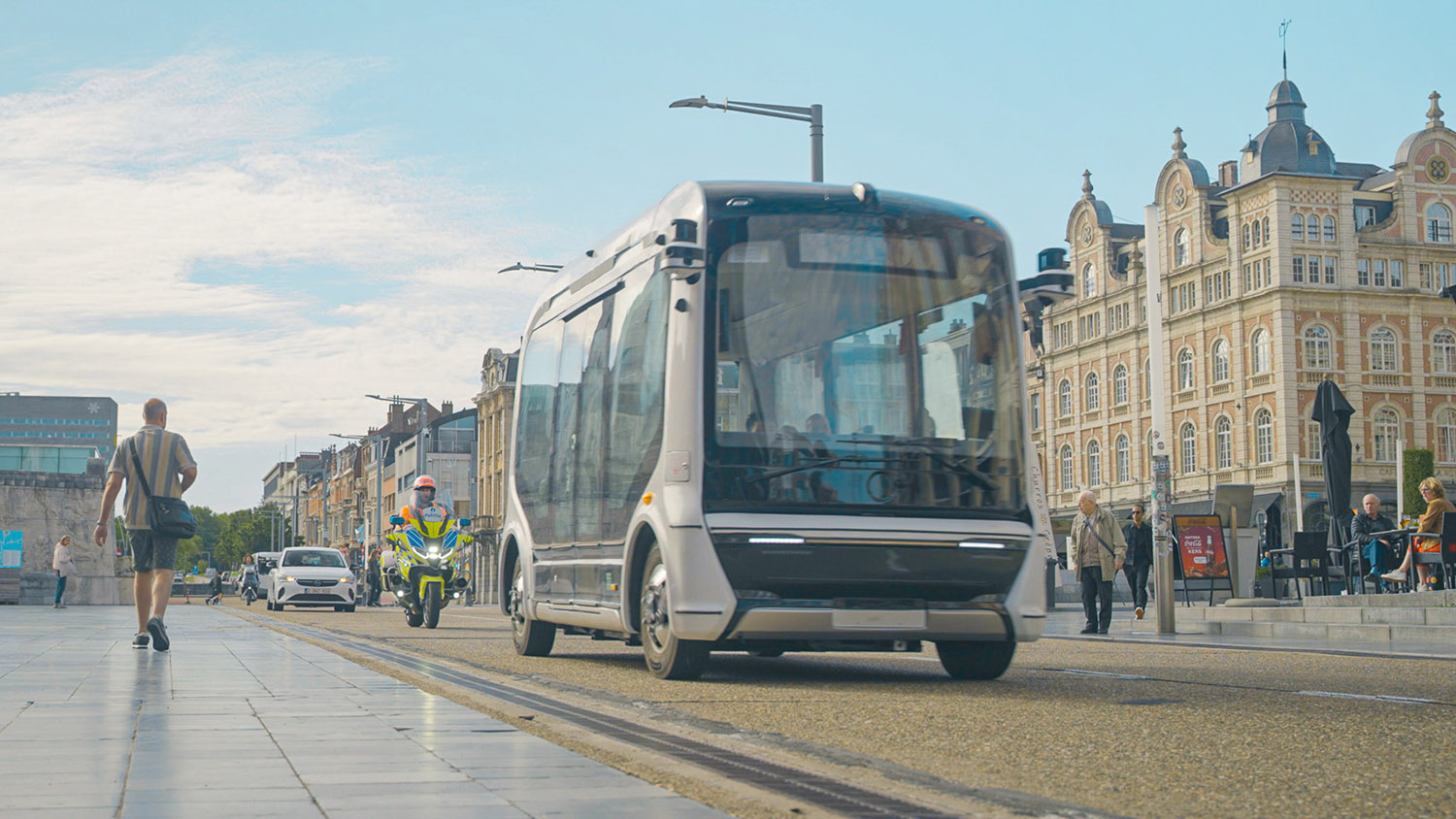
WeRide has launched operations in Belgium with the debut of its Robobus in Leuven, expanding its footprint to 11 global markets. The project is being carried out in partnership with Flemish public transport operator De Lijn, the City of Leuven, and mobility consultancy Espaces-Mobilités.
Mapping of the Robobus route began this week in downtown Leuven, running between Leuven Station and Heverlee. The corridor, one of the city’s busiest with high traffic density and links to a major transport hub, was selected to reflect typical Belgian urban conditions. Public road testing with a safety officer onboard is scheduled to start in mid-September. Pending regulatory approval, De Lijn will operate a pilot service from mid-November through January 2026, marking Belgium’s first commercial deployment of autonomous shuttles in mixed traffic.
“Entering Belgium is a strategic step in WeRide’s growth. Europe is a key AV market with strong public investment and clear commercialization paths, with Belgium standing out as a mobility-focused innovation hub,” said Jennifer Li, CFO and Head of International at WeRide.
The pilot service will allow passengers to board using digital tickets via app, SMS, or their subscription. Following the trial period, the shuttles are expected to enter regular service in Leuven, where they will focus on strengthening first- and last-mile connections within the city’s transport network. Longer term, the aim is to move toward fully driverless operations.
“With this pilot project, we are taking an important step toward the future of public transport in Flanders,” said Ann Schoubs, CEO of De Lijn. “Autonomous shuttles are no longer science fiction, but a concrete solution we are testing with our partners in Leuven.”
The initiative is supported by EIT Urban Mobility, an EU body promoting sustainable transport, and follows more than a year of preparation, including technical workshops and a study tour of WeRide’s Robobus operations in Guangzhou. Leuven was chosen as the pilot site for its strong university base, proximity to Brussels, and supportive local projects such as FlexCURB, which optimizes curb space for shared mobility.