
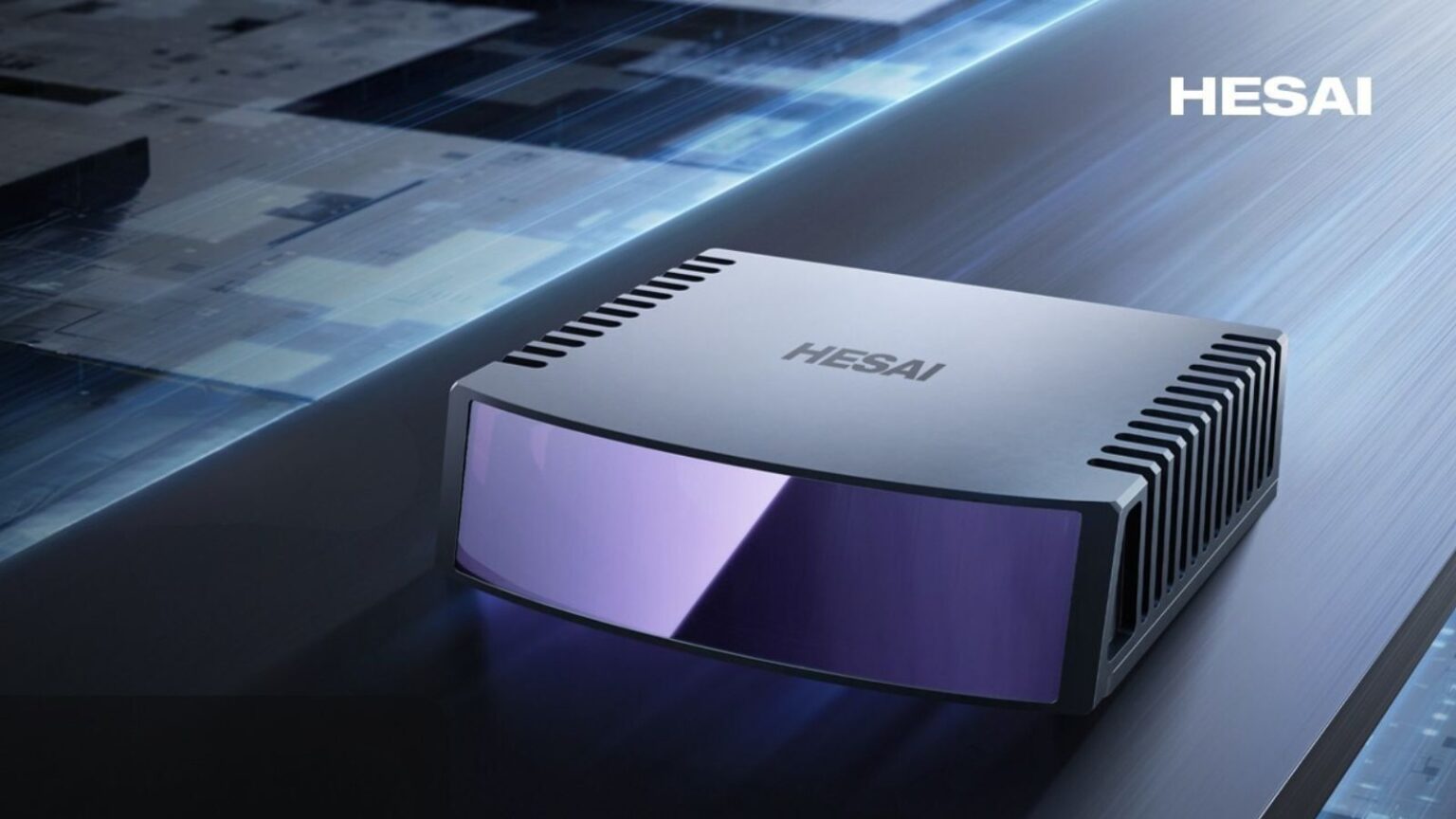
Hesai Technology, a leading supplier of lidar sensors, showcased its next-generation ETX and FTX systems at the IAA Mobility 2025 show in Munich on Tuesday, setting new benchmarks for long-range detection and blind-spot coverage in autonomous vehicles. Mass production of both products is scheduled for 2026.
The ETX is positioned as Hesai’s flagship automotive-grade lidar, designed for Level 3 and Level 4 self-driving systems. It features an 800-channel count, a 400-metre detection range at 10% reflectivity, and a fine resolution of 0.05° × 0.025°. The sensor is built on the company’s fourth-generation platform, which incorporates Photon Vector Technology to improve efficiency, Addressable Photon Isolation to reduce false positives, and an Intelligent Point Cloud Engine to filter environmental noise such as rain, fog and dust.
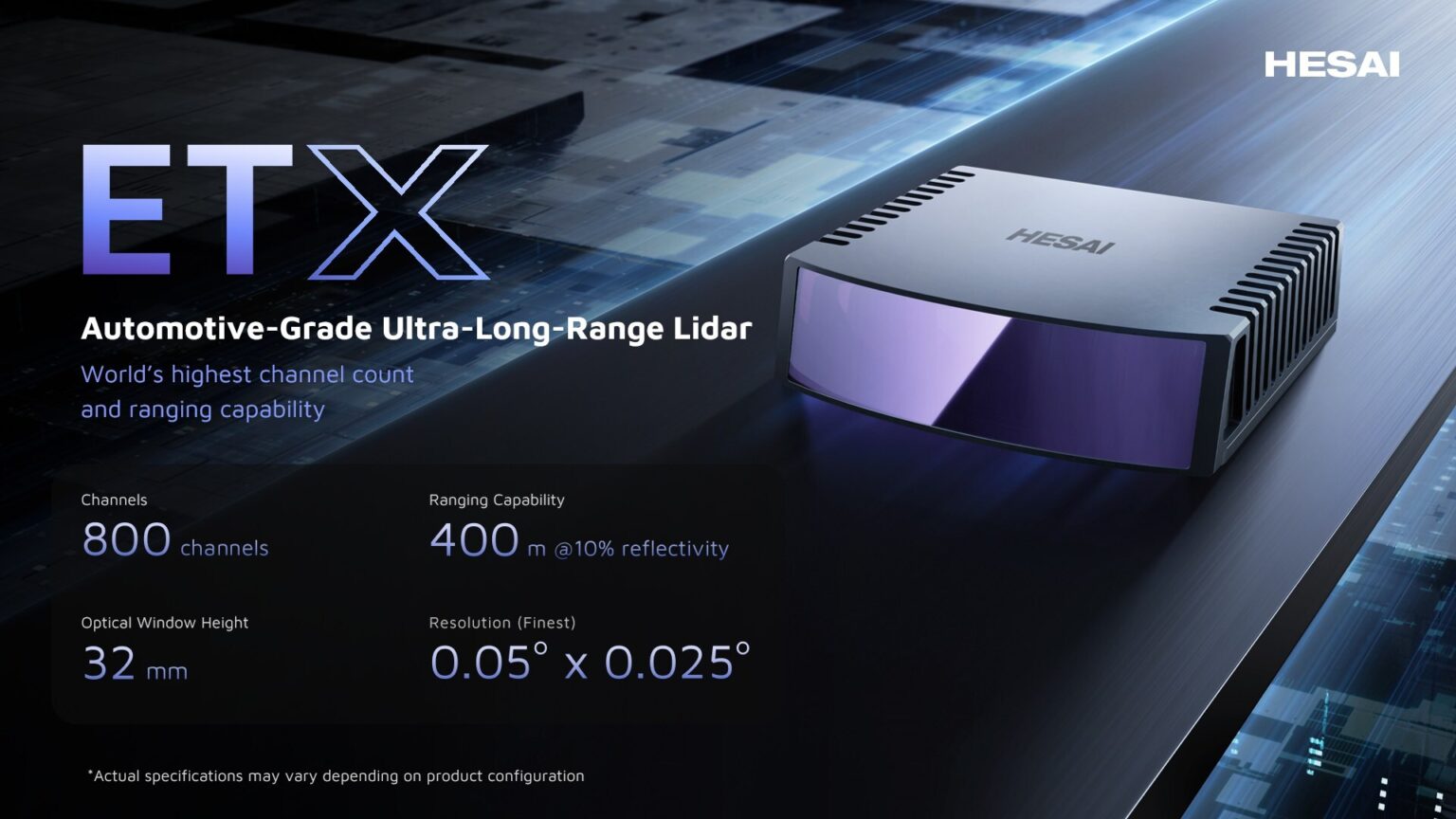
Despite its performance, the ETX is 35% smaller than comparable systems, with a height of just 32 mm, enabling integration behind vehicle windshields. Hesai said a global carmaker has already selected the ETX for multiple models, with series production to begin in 2026. Partnerships with glass manufacturers AGC Wideye and Saint-Gobain Sekurit are intended to optimise behind-the-windshield integration, with live demonstrations being held at the Munich event.
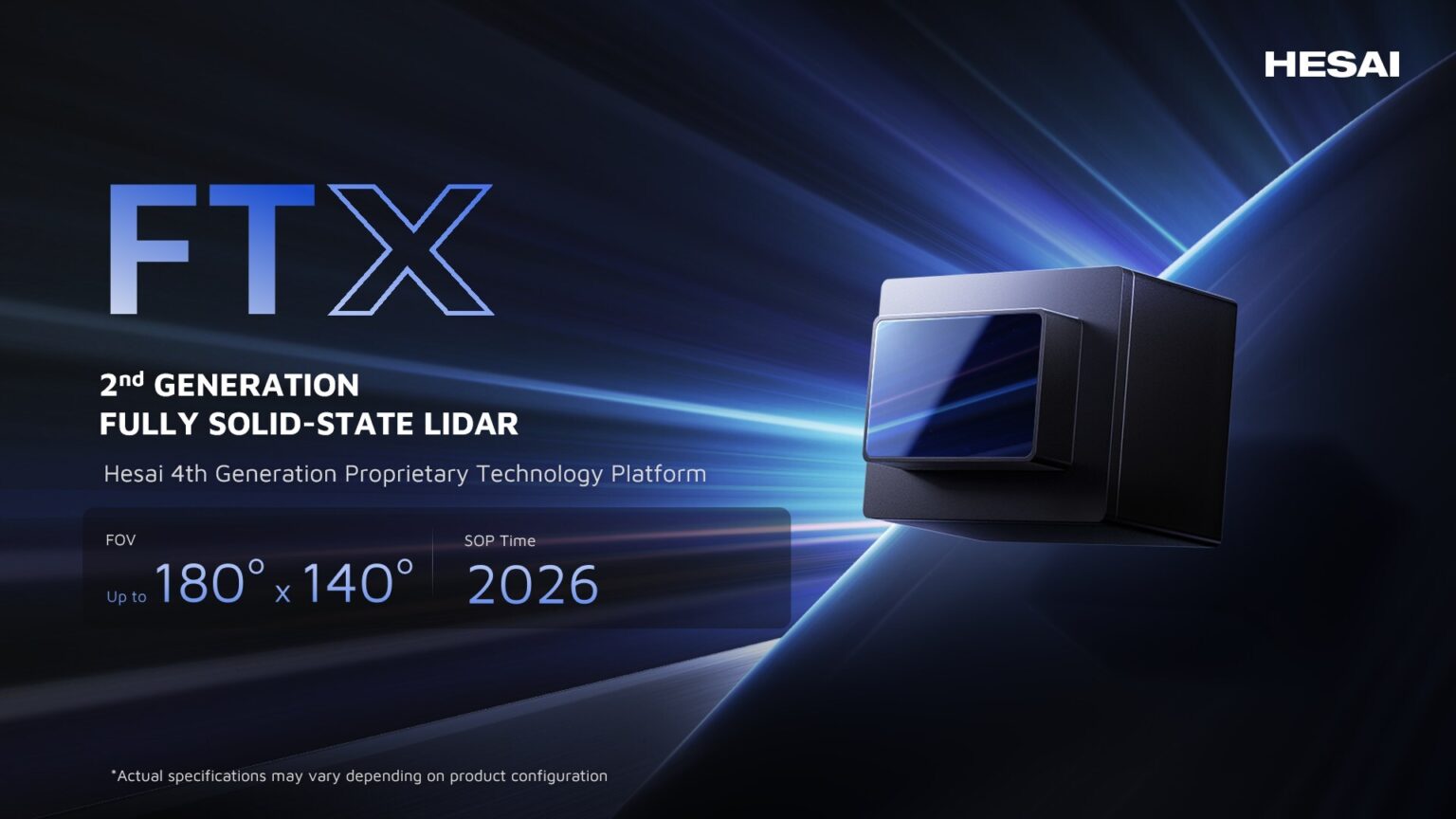
Alongside the ETX, Hesai presented the FTX, a fully solid-state blind-spot lidar offering a 180° x 140° field of view. The unit, 66% lighter than its predecessor, is designed to detect low-lying obstacles and support autonomous features such as parking and lane changes. When combined with the ETX, the system — branded Infinity Eye B — delivers panoramic perception capabilities for advanced driver-assistance systems.
“Saint-Gobain partnered with Hesai to push the boundaries of lidar integration behind the windshield, combining optical performance with seamless in-cabin design,” said A. Jaafar, Innovation Manager at Saint-Gobain Sekurit.
Both lidar systems are expected to enter mass production in 2026, positioning Hesai to expand its role in the rollout of higher-level autonomous driving technologies.