
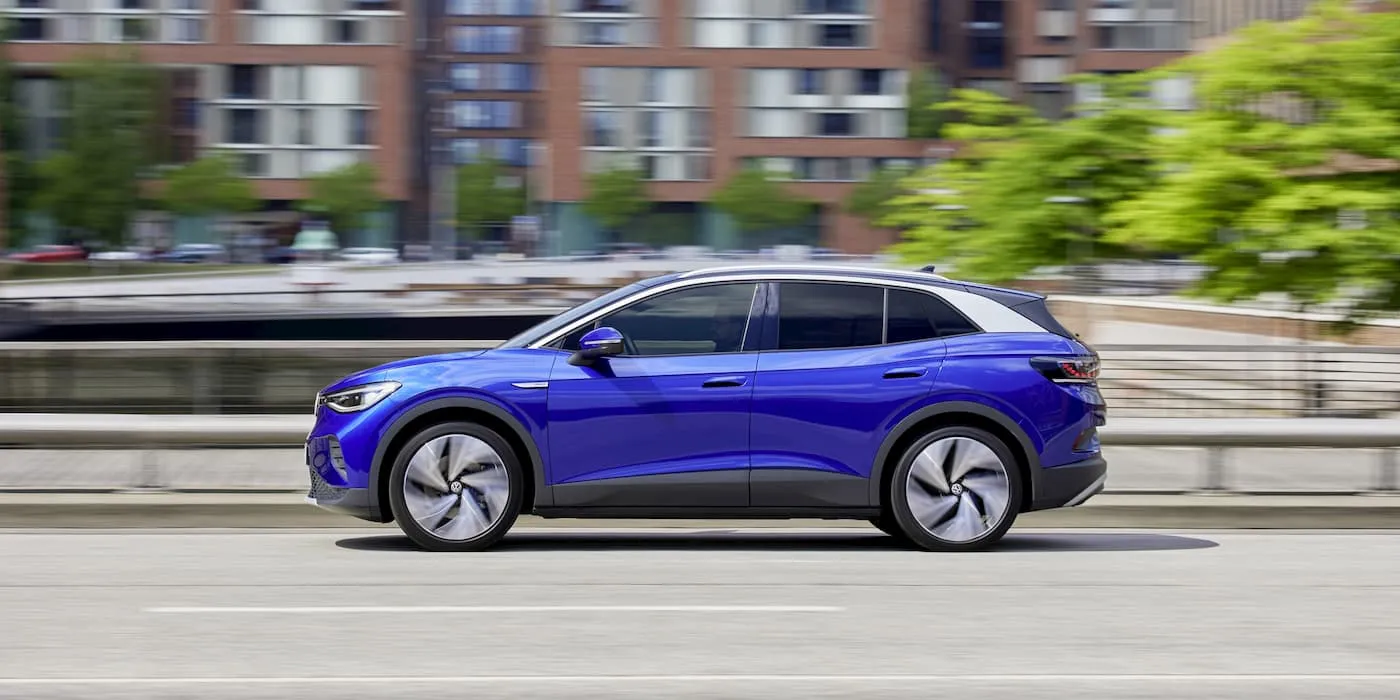
Electric vehicle sales in Germany surged 35% in the first half of 2025 to nearly 249,155 units, setting a new record despite the absence of government subsidies. According to Automotive News, citing data from market research firm Dataforce, Volkswagen Group dominated the market, claiming eight of the ten best-selling EV models.
The Volkswagen ID.7 led EV sales in Germany with 18,017 units registered, followed by other models from the VW Group lineup, including the ID.4 and ID.3. The Tesla Model Y and BMW iX1 were the only non-Volkswagen Group vehicles to enter the top ten. The growth marks a sharp contrast to the first half of 2024, when EV sales dropped 16% after Germany ended its electric vehicle incentive program.
Plug-in hybrid vehicle (PHEV) sales also recorded significant gains, rising 56% year-over-year to 138,633 units. The Volkswagen Tiguan was the most popular PHEV, followed by the Cupra Formentor and Volvo XC60.
Despite the gains in electrified vehicle sales, Germany’s overall passenger vehicle market declined 5% to around 1.4 million units in the first six months of the year. However, EVs and PHEVs continued to gain market share, and new government incentives are expected to be introduced later this year, which could further stimulate demand.
In the broader European market, Volkswagen recorded over 135,000 EV registrations in the first half of 2025, ahead of Tesla with 109,262 and BMW with 94,658, according to Automotive News. The Tesla Model Y remained the most registered EV in Europe during the period, followed by the VW ID.4, Tesla Model 3, VW ID.7, and VW ID.3.
Volkswagen’s domestic success comes as the company faces challenges abroad. The German automaker said U.S. tariffs introduced by the Trump Administration cost it an additional €1.3 billion ($1.5 billion) in the first half of the year, contributing to a 33% decline in operating profit to €6.7 billion ($7.9 billion).