
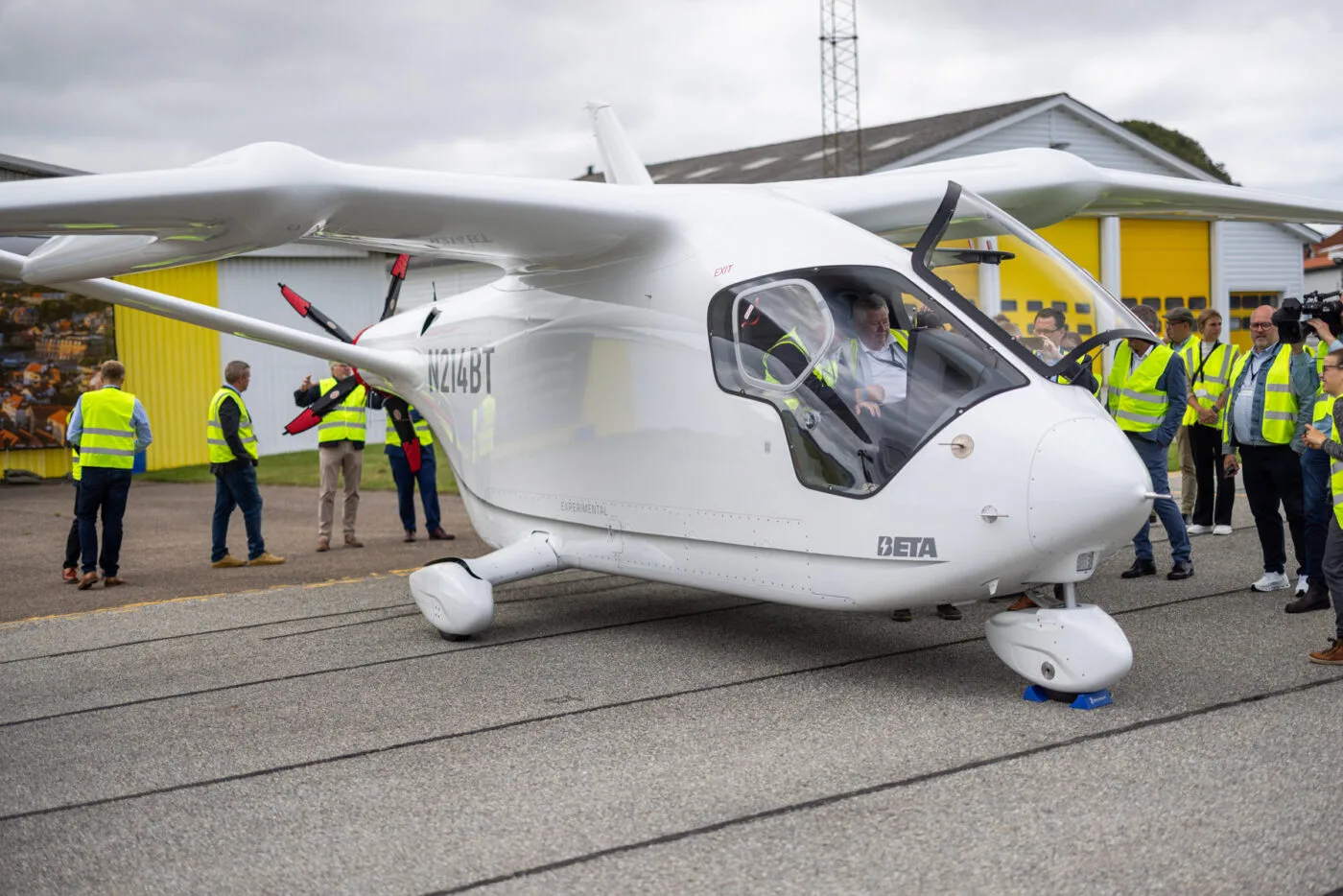
Sønderborg Airport has become the first airport in Denmark to host a domestic flight operated by an all-electric aircraft, marking a milestone in the country’s efforts to decarbonise its transport sector. The flight, which took place on July 11, used a fully electric ALIA CTOL aircraft from U.S.-based manufacturer Beta Technologies to complete the 200-kilometre route from Sønderborg to Copenhagen.
The electric aircraft, capable of flying up to 622 kilometres on a full charge, was deployed to demonstrate the viability of sustainable regional air travel. The initiative is closely tied to Sønderborg’s broader climate strategy, known as ProjectZero, which aims to make the municipality carbon-neutral by 2029. Since its launch in 2007, the project has helped Sønderborg reduce its CO₂ emissions by 69 percent, earning it recognition from the International Energy Agency as a global leader in energy efficiency.
“This is not a one-off breakthrough, but the beginning of a new era,” said Jürgen Mads Clausen, Chairman Emeritus of Danfoss and co-initiator of ProjectZero. “The transition to electric flight depends on further breakthroughs, especially in batteries and lightweight materials. But just as with electric cars, it’s important to be ready once the development gets going. Once the technology has matured, it will happen very quickly.”
The demonstration flight reflects growing interest in electric aviation as a practical solution for short- and medium-range routes. Beta Technologies’ ALIA aircraft comes in both conventional (CTOL) and vertical take-off (VTOL) variants and is designed for use in urban and regional settings. The company continues to explore new applications for its electric platforms as demand for lower-emission air transport grows.
Danfoss, a technology company based in southern Denmark, has been a long-standing partner in ProjectZero and supports electric aviation as a key component of the region’s energy transition. The recent flight is seen as a potential catalyst for broader adoption of sustainable aviation technologies within Denmark and beyond.
The development underscores the potential role of regional airports and local governments in accelerating climate action through innovation in clean transportation.