
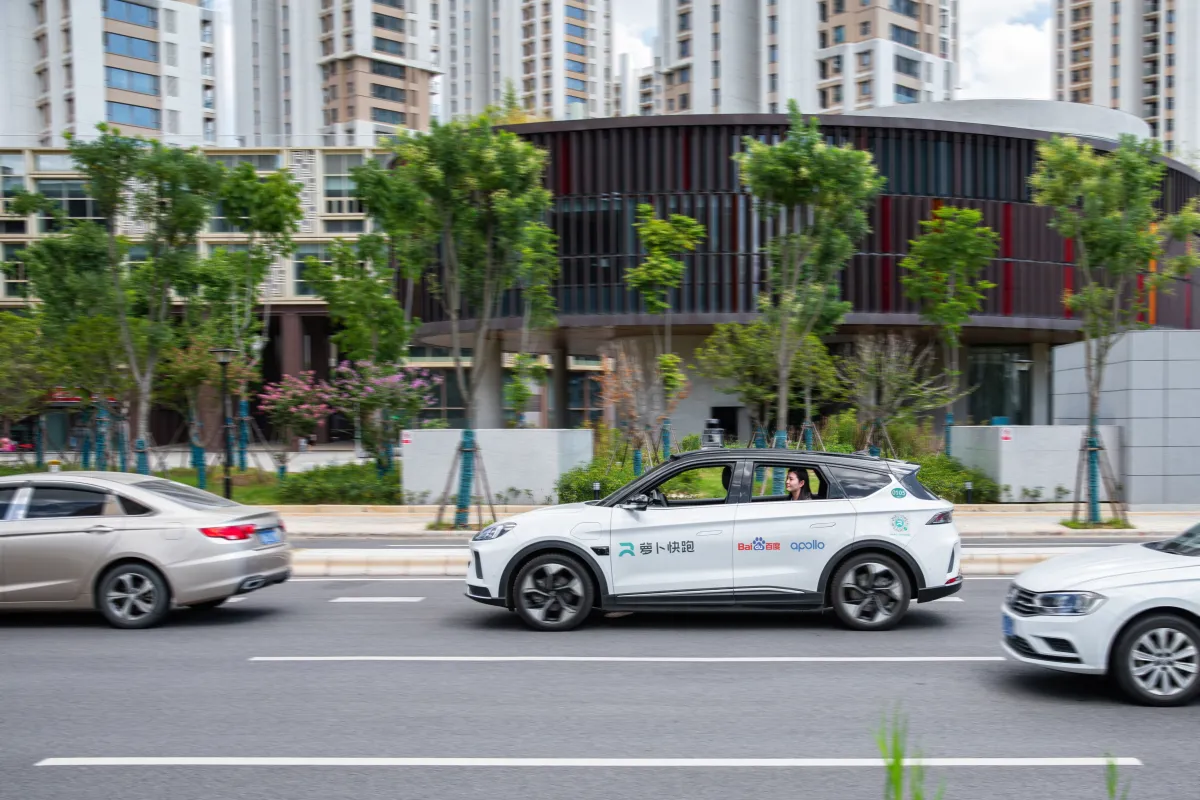
Uber has signed a multi-year strategic partnership with Chinese technology giant Baidu to integrate Apollo Go autonomous vehicles into its ride-hailing platform. The companies announced that thousands of Baidu’s robotaxis will be deployed through Uber in markets across Asia and the Middle East starting later this year, marking another step in Uber’s broader push into autonomous mobility.
The agreement does not apply to the United States or mainland China, and initially, users won’t be able to directly request a Baidu vehicle. Instead, eligible riders may be offered the option to have their trip completed by one of Baidu’s fully autonomous Apollo Go vehicles — a model already used in Uber’s other AV partnerships.
The deal adds to a growing number of AV collaborations Uber has launched in recent months. These include partnerships with Waymo in the U.S., Volkswagen in Europe, and WeRide, Pony AI, and May Mobility in Asia. Uber’s approach includes both strategic integrations and direct financial investments, such as a $100 million funding agreement with WeRide announced in May.
While the autonomous rides are limited in scope during early deployment, the partnerships signal Uber’s ongoing efforts to future-proof its core ride-hailing business amid rapid developments in driverless technology. The collaboration with Baidu positions Uber to extend its AV reach in emerging markets where regulatory and infrastructure environments are evolving to accommodate autonomous mobility.