
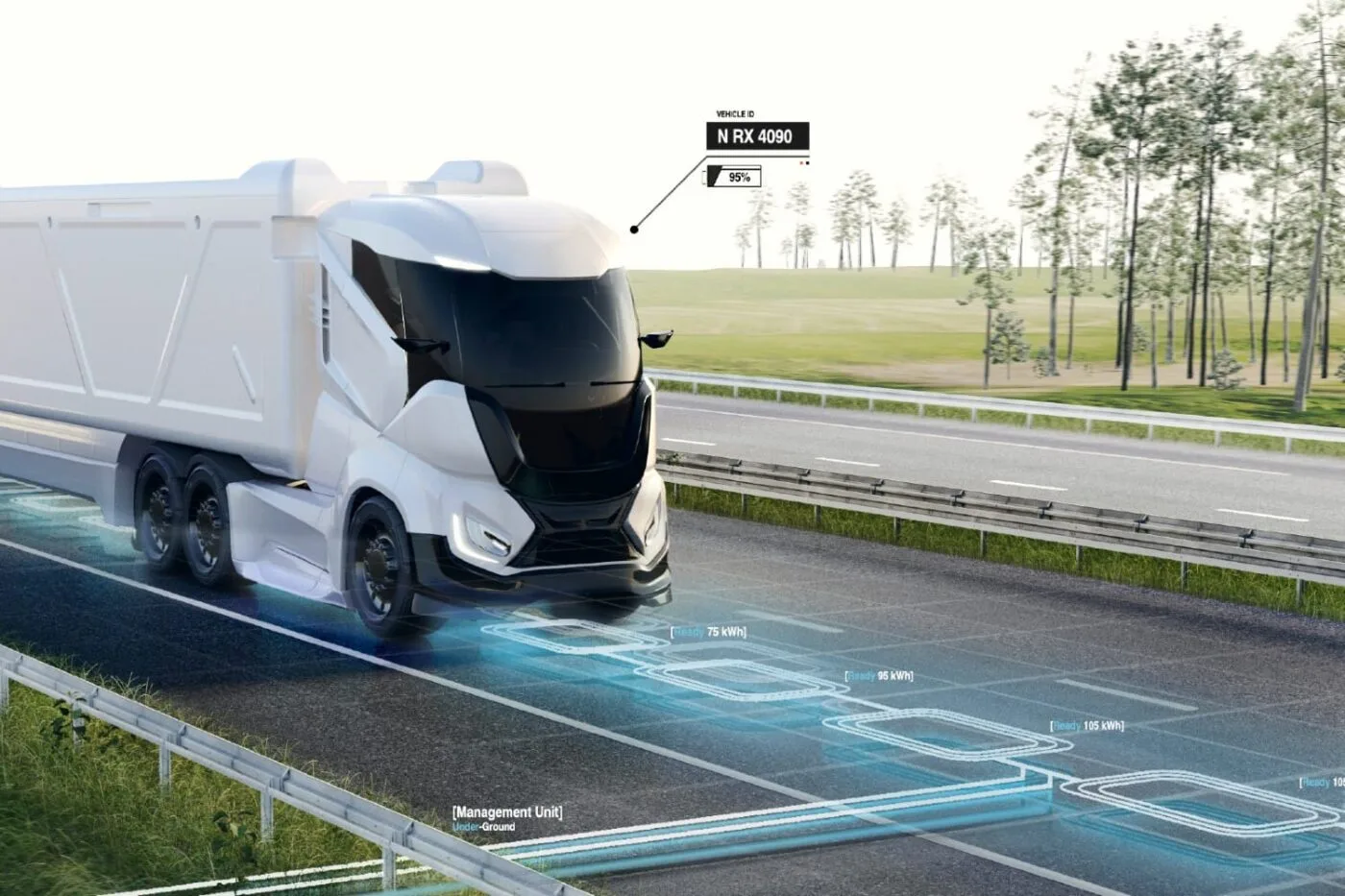
A one-kilometre test track is being constructed along Germany’s A6 motorway to trial inductive charging for electric vehicles while driving, with testing set to begin as early as late July, according to local broadcaster Bayerischer Rundfunk.
The charging section will be located between Amberg-West and Sulzbach-Rosenberg, in the direction of Nuremberg, as part of a broader 5.7-kilometre road renewal project near the ‘Oberpfälzer Alb Nord’ service area. While not the first such project in Germany, it will mark Bavaria’s debut in inductive charging on a motorway.
The initiative involves ElectReon, an Israeli company specialising in dynamic wireless charging systems. The company’s electric road system (ERS) uses inductive technology—copper coils embedded beneath the road transmit electricity to specially equipped electric vehicles via receivers mounted underneath, allowing energy transfer without physical contact, similar to wireless phone charging.
The motorway trial is part of the E|MPOWER research project, launched in 2022, which brings together the FAPS Institute at Friedrich-Alexander-Universität Erlangen-Nürnberg, ELSYS Institute at Nuremberg Institute of Technology, Risomat GmbH & Co.KG, and VIA IMC GmbH. The project is supported by Germany’s Federal Ministry of Economics and Technology and Deutsche Autobahn GmbH.
Researchers aim to gather data on efficiency, installation costs, and construction techniques that could reduce both costs and time. The A6 site will serve as the first demonstration of the technology on a German motorway, with further research continuing through 2027.
As part of a wider strategy to lead in inductive charging, Bavaria has also invested in long-term infrastructure. The Fraunhofer Institute IISB recently opened a €7.5 million technology centre in Hallstadt near Bamberg, focused on developing contactless charging solutions. The centre is expected to become a permanent facility following an initial research phase ending in late 2027.