
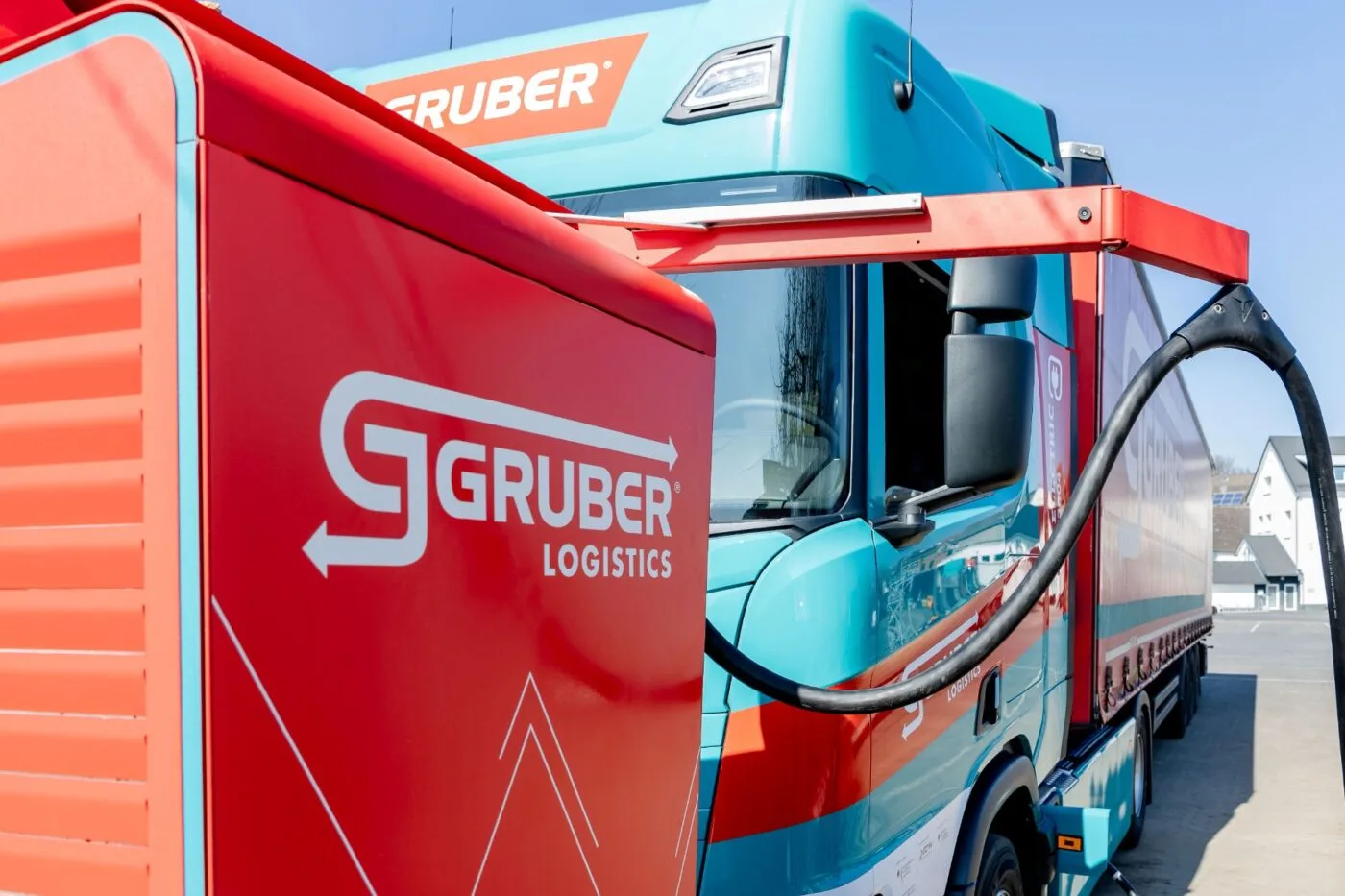
A new European Union-funded project aims to develop scalable, energy-efficient megawatt charging hubs for electric trucks, addressing infrastructure challenges in the logistics sector. The €9.69 million initiative, called FLEXMCS (Flexible Megawatt Charging Systems), brings together 15 industry and research partners from eight countries and will run through June 2028.
Led by the Vrije Universiteit Brussel (VUB), the project focuses on designing multi-charger hubs equipped with open software architectures and smart energy management tools. These hubs are intended to support large-scale electrification of freight transport by offering up to 1.2 megawatts (MW) of charging power — enough to fully charge a heavy-duty truck during a 45-minute driver break.
German logistics provider Gruber Logistics is among the participating companies and is responsible for testing the megawatt charging concept at a site in Karlsruhe. The trial will evaluate charging performance, energy efficiency, scalability, and the integration of renewable energy sources. “The switch to electric mobility is one of the biggest challenges facing the logistics industry,” said Ettore Gualandi, Team Leader Sustainability & Eco-Innovation at Gruber Logistics. “By participating in FLEXMCS, we can actively contribute to the progress of efficient charging infrastructures and accelerate the transformation.”
The project also aims to reduce operational costs and emissions for logistics operators by integrating clean energy into the charging infrastructure. Gruber Logistics noted that the systems are “not only expected to reduce CO₂ emissions, but also cut operating costs for logistics companies.”
With multiport charging, renewable power integration, and intelligent management systems, the FLEXMCS project hopes to set a new standard for Europe’s megawatt charging infrastructure and enable broader deployment across strategic freight corridors.