
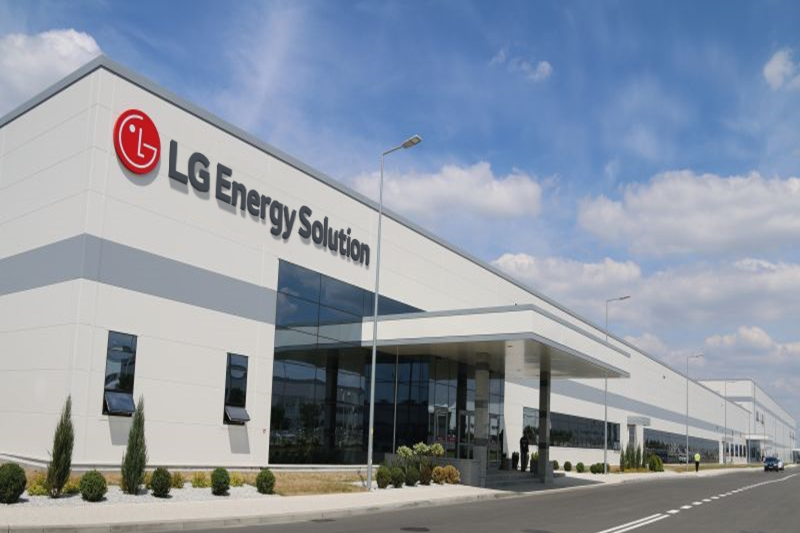
LG Energy Solution said it will establish a joint venture with French metal waste specialist Derichebourg to build a battery recycling plant in northern France, marking the South Korean firm’s first recycling partnership in Europe.
The plant, located in Bruyères-sur-Oise in the Val-d’Oise region, is scheduled to begin construction in 2026 and enter operations by 2027. It will focus on pre-processing tasks including discharging, dismantling, and shredding battery production waste and used electric vehicle (EV) batteries.
See also: LG Energy Solution Withdraws from $8.45 Billion Battery Investment in Indonesia
Once fully operational, the facility will be capable of processing over 20,000 tonnes of material annually. The resulting black mass will undergo further treatment to extract valuable raw materials such as lithium, nickel, and cobalt, which will be reintegrated into LG Energy Solution’s battery supply chain.
The move is aimed at reducing production costs and localizing raw material sourcing in Europe, where the upcoming EU Battery Regulation will enforce minimum recycled content levels for battery components starting in 2031.
See also: LG Energy Solution Forecasts 138% Rise in Quarterly Profit Despite Underlying Operating Loss
“This collaboration enables us to secure a stable and cost-competitive supply of recycled battery materials from the advanced processing of end-of-life batteries and battery scrap,” said Chang Beom Kang, Chief Strategy Officer of LG Energy Solution. “This initiative will also significantly enhance the value we deliver to customers in the recycling sector.”
LG Energy Solution will provide battery scrap from its Polish plant, while Derichebourg will collect used batteries from France and neighboring countries.
See also: LG Energy Solution to Acquire GM’s Michigan EV Battery Plant Assets for $2 Billion
Derichebourg CEO Abderrahmane El Aoufir said the project aligns with the company’s environmental goals. “This partnership fully supports our ambition to develop industrial solutions with a high environmental added value, while strengthening the local roots of our activities,” he said.
Under the EU’s phased recycling mandates, batteries sold from 2031 must contain at least 16% recycled cobalt, 85% lead, and 6% each of lithium and nickel. By 2036, these thresholds rise to 26% cobalt, 15% nickel, and 12% lithium, with the lead requirement unchanged.